Material
CNC Machining Materials
Aluminum, stainless, steels, copper alloys, titanium, specialty metals, engineering plastics and composites — properties, machinability and design guidance for every grade we stock.
Aluminum Alloys
Start with 6061-T6 — it covers most structural and enclosure work at the best machining cost. Step up to 7075 only when FEA demands aircraft-grade strength, choose 6063 when anodized cosmetics matter most, 5052/5083 for welded or marine assemblies, 2024 for fatigue-critical aerostructure, and MIC-6 cast plate when flatness and dimensional stability beat strength.
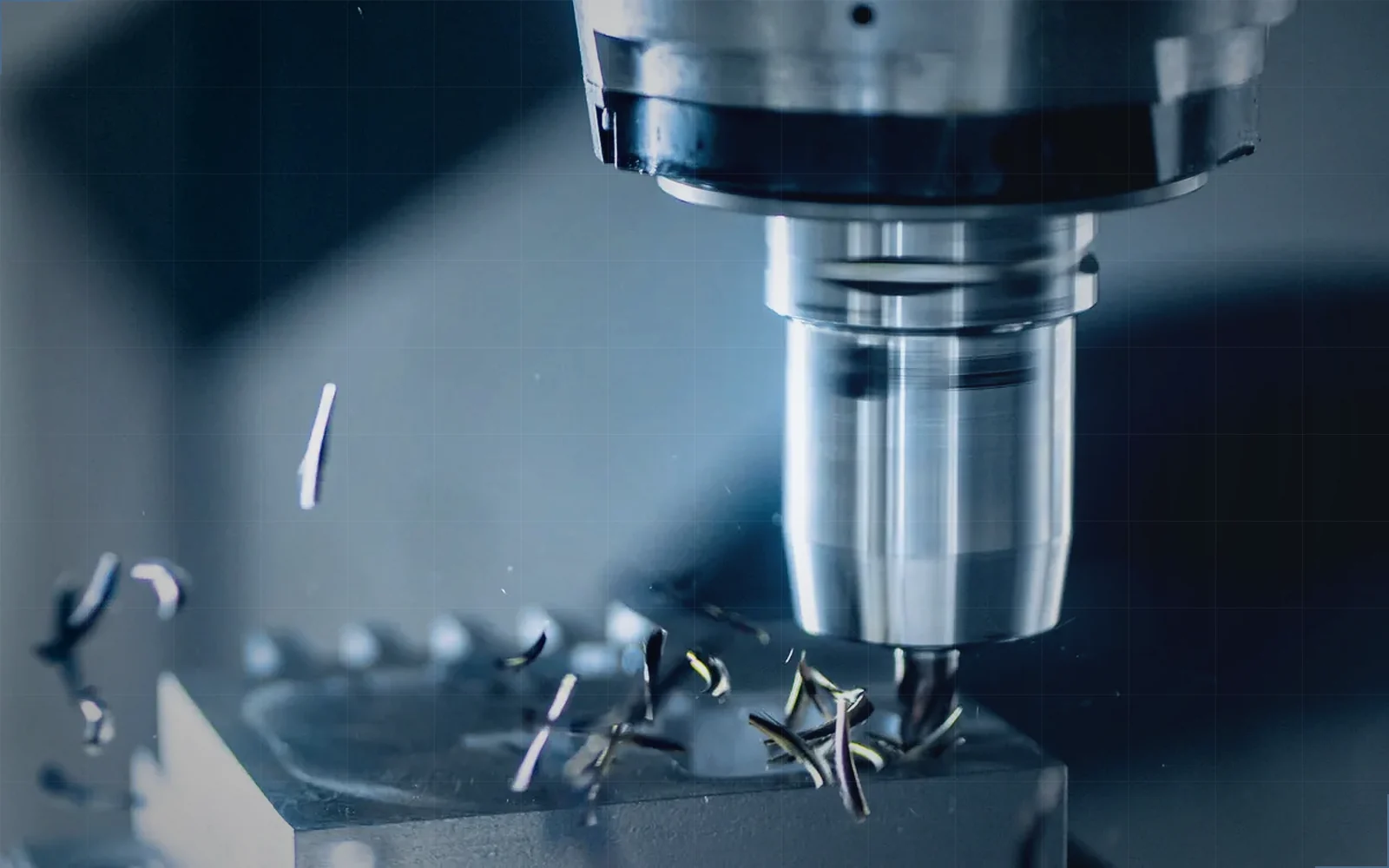
Aluminum 6061-T6
$The default CNC aluminum: strong enough for most jobs, machines fast, anodizes well.
310 MPa · 95 HB
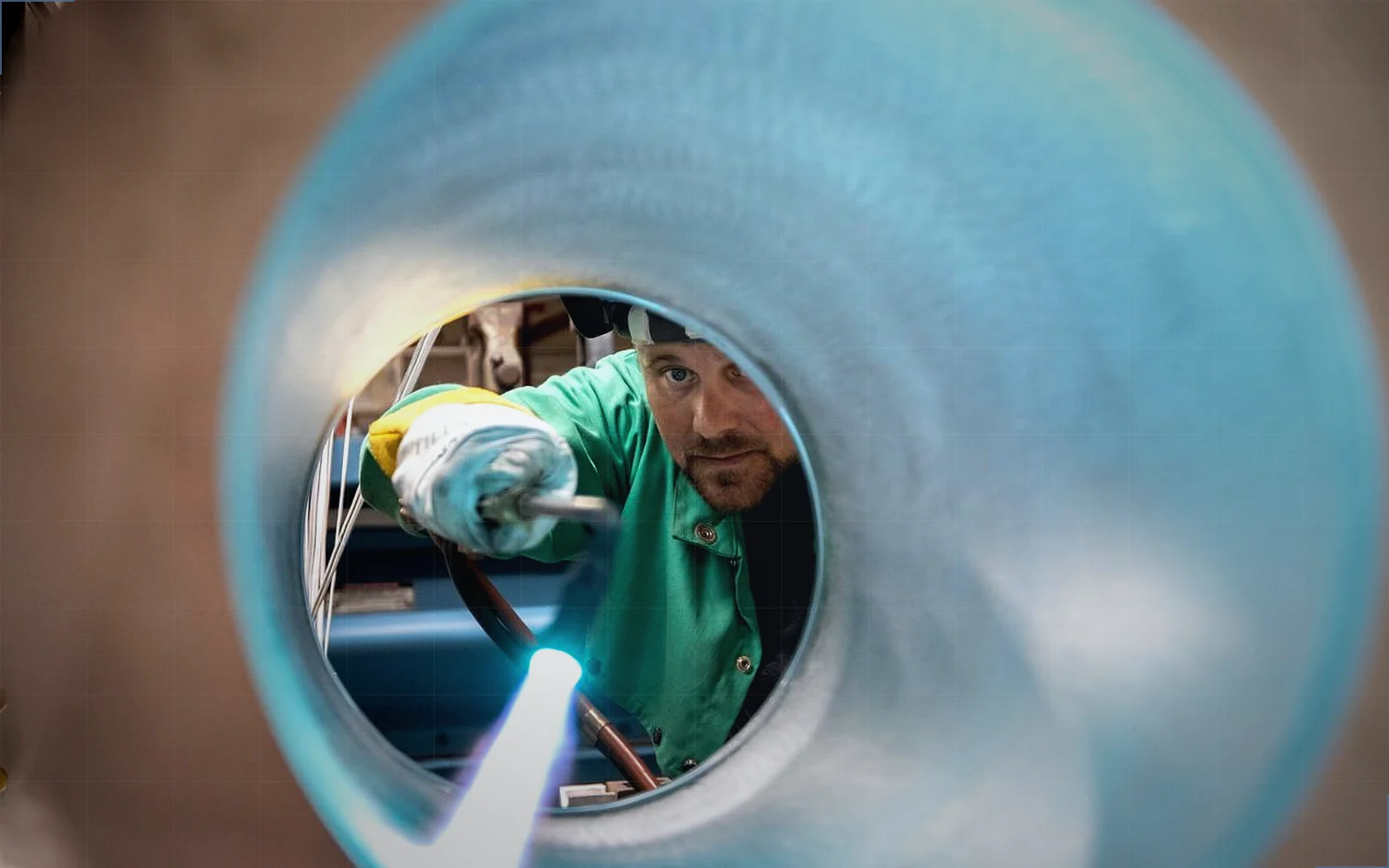
Aluminum 6063-T5
$The cosmetic-finish aluminum: silky anodized surfaces for consumer-facing parts.
186 MPa · 60 HB
Aluminum 7075-T6
$$Aircraft-grade aluminum: steel-level strength at a third of the weight.
572 MPa · 150 HB
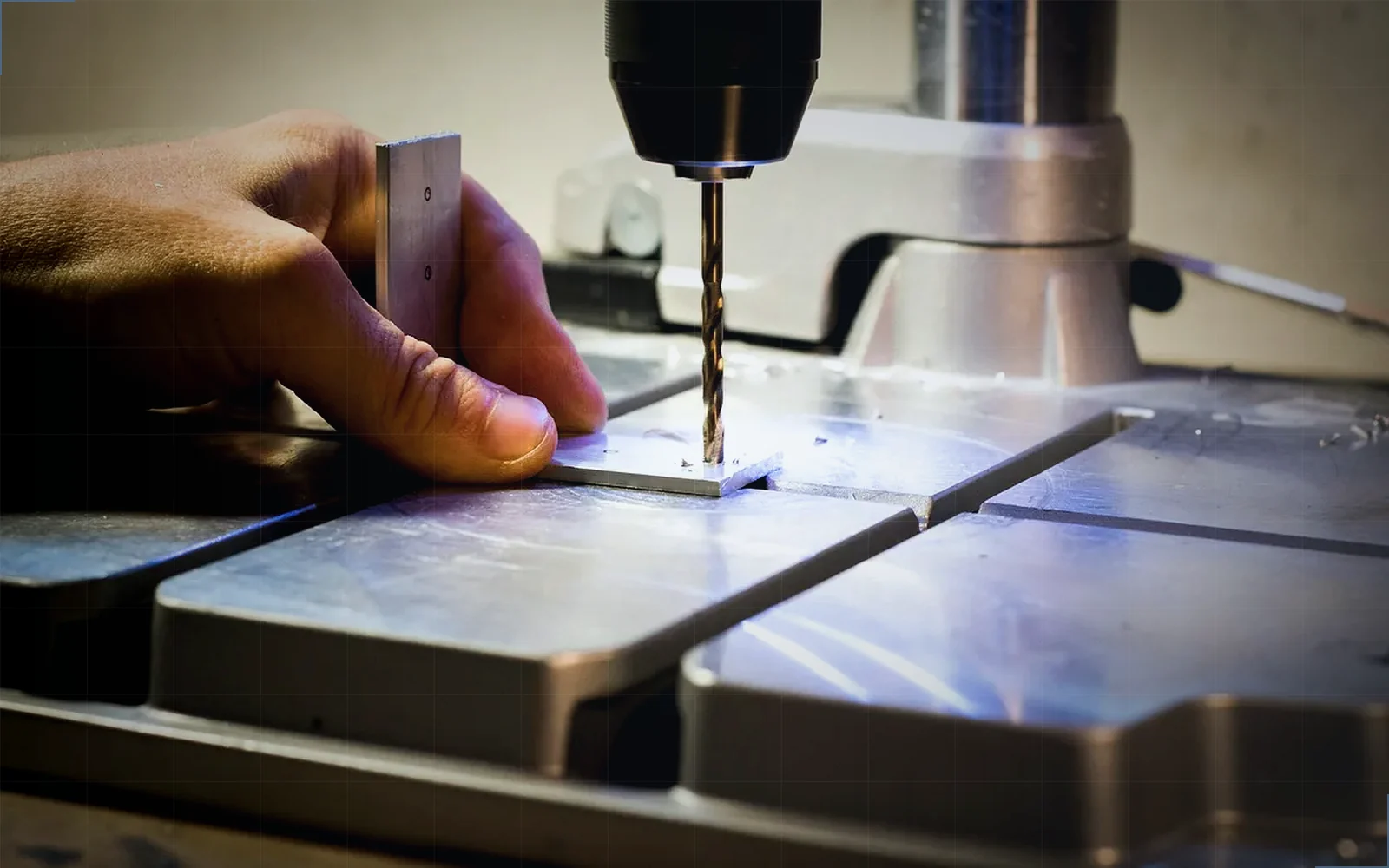
Aluminum 2024-T351
$$The aerospace fatigue specialist: damage-tolerant alloy for cyclically loaded structures.
470 MPa · 120 HB
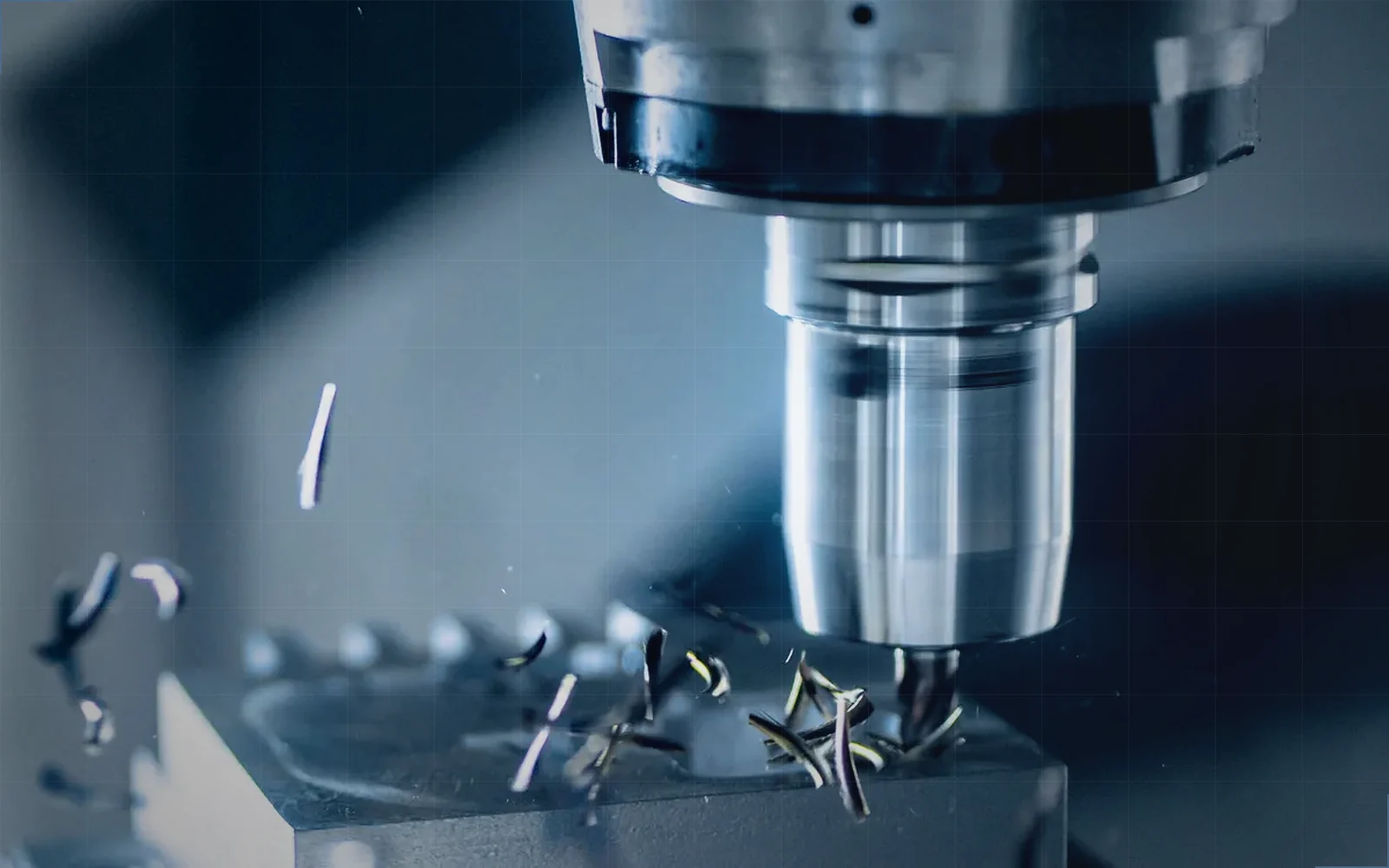
Aluminum 5052-H32
$Marine-grade and weldable: for parts joined to sheet-metal assemblies or facing salt spray.
228 MPa · 60 HB
Aluminum 5083-H111
$$The shipbuilding aluminum: highest-strength weldable 5xxx for marine and cryogenic structure.
290–320 MPa · ~75 HB
MIC-6 Cast Aluminum Plate
$$The flatness specialist: stress-relieved cast plate that will not move when you machine it.
~166 MPa · ~65 HB
Stainless Steels
Pick by environment first, strength second. 304 is the general-purpose default; 316L when chlorides or medical contact are involved; 303 when high-volume turning matters more than weldability. Need hardness? 17-4 PH gives 1300 MPa with good corrosion resistance, while 420/440C trade corrosion margin for edge and bearing hardness.
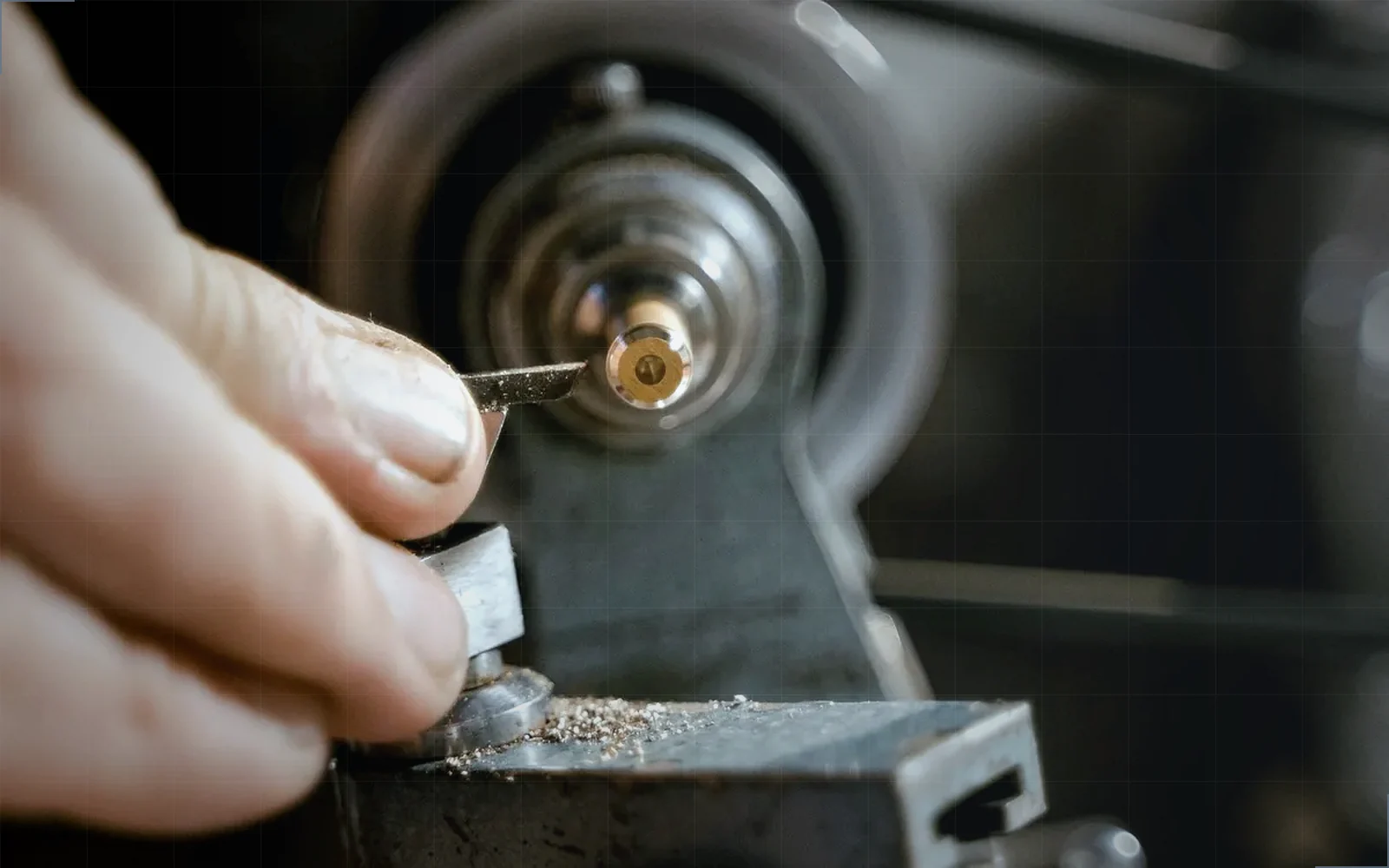
Stainless Steel 303
$$$The machinist's stainless: sulfur additions cut machining cost ~30% versus 304 on turned parts.
~620 MPa (cold drawn) · ≤228 HB
Stainless Steel 304
$$$The world's default stainless: food-safe, weldable, corrosion-resistant for everyday environments.
515 MPa · ≤201 HB
Stainless Steel 316L
$$$Marine and medical stainless: molybdenum chemistry that shrugs off chlorides and sterilization cycles.
485 MPa · ≤217 HB
Stainless Steel 17-4 PH
$$$$Stainless that hardens like tool steel: 1,310 MPa in H900 with minimal distortion.
1310 MPa (H900) · 40–44 HRC (H900)
Stainless Steel 420
$$$The cutlery stainless: hardens to ~50 HRC while keeping useful corrosion resistance.
— (specified by hardness; ~655 MPa annealed) · ~50 HRC (hardened)
Stainless Steel 440C
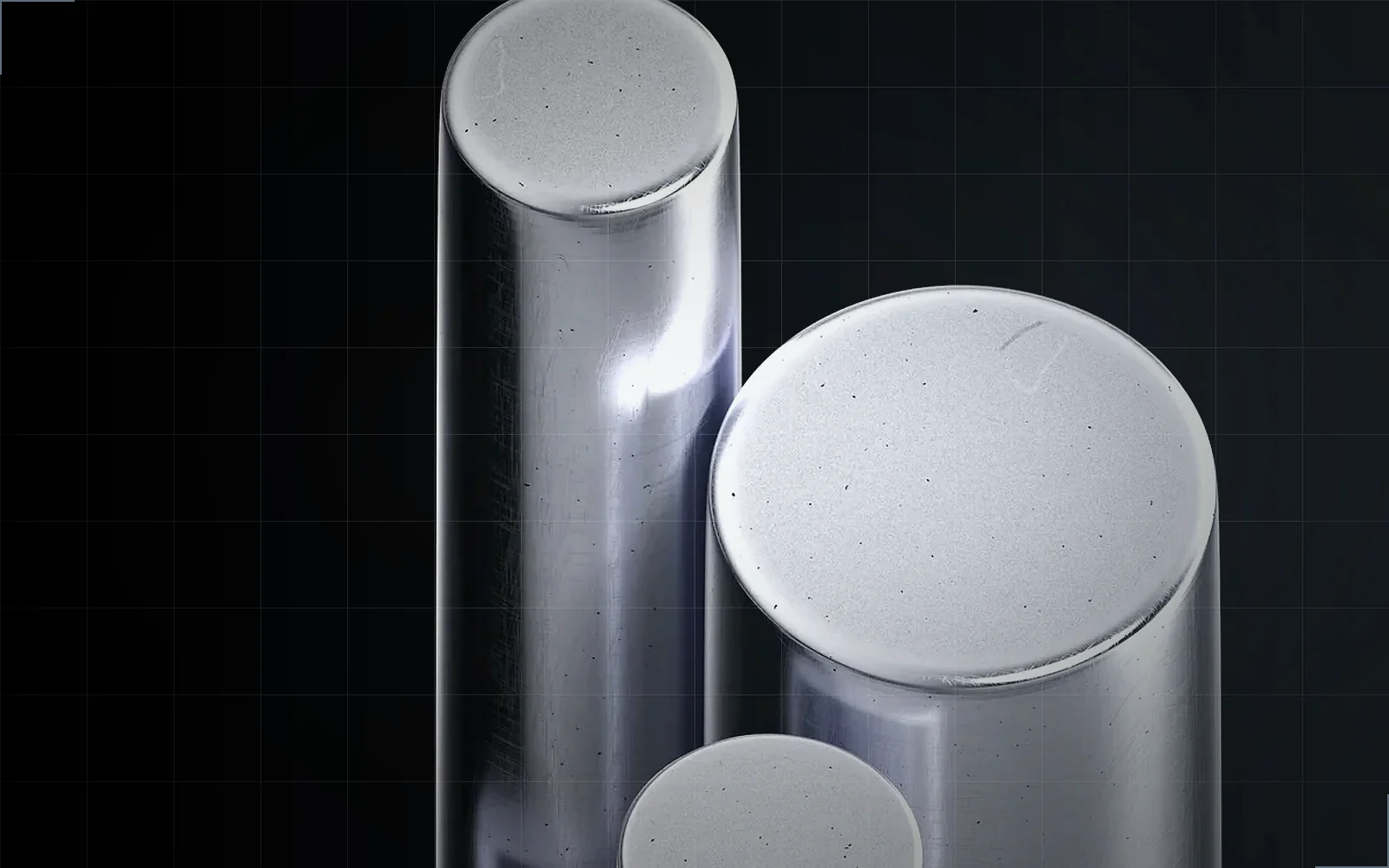
$$$The hardest standard stainless: 58–60 HRC for wear parts that cannot rust.
— (specified by hardness) · 58–60 HRC (hardened)
Carbon, Alloy & Tool Steels
Carbon steels (1018, 1045, A36) are the budget workhorses for shafts, fixtures and weldments — plan on plating or coating for corrosion. Alloy steels (4140, 4340) add through-hardening strength for high-load shafts and tooling. Tool steels (D2, A2, O1) buy wear resistance at 57+ HRC; machine soft, harden, then grind or EDM the critical features.
Low-Carbon Steel 1018
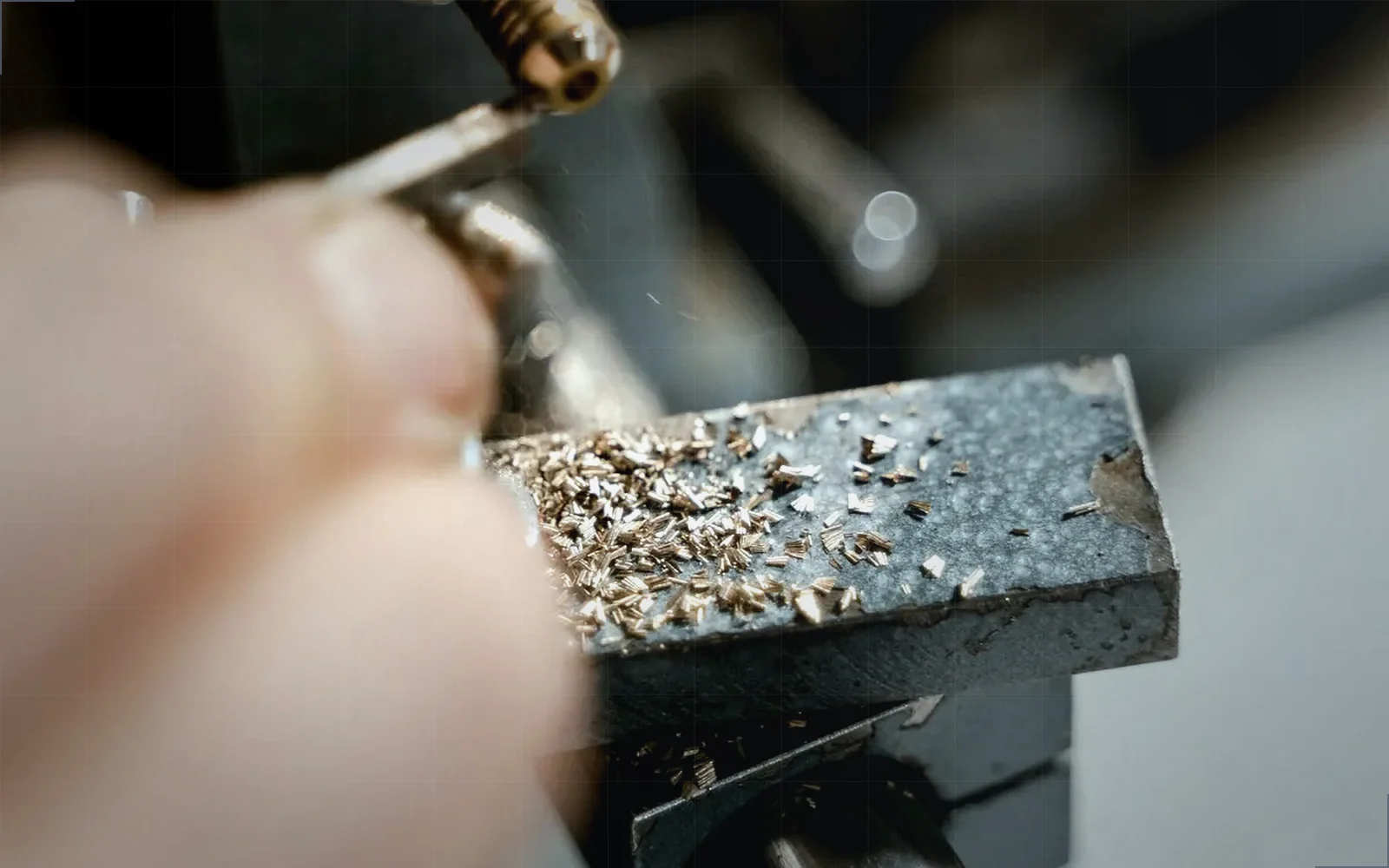
$The friendly mild steel: welds beautifully, case-hardens to a glassy skin, costs less than anything.
440 MPa (cold drawn) · 126 HB
Carbon Steel 1045
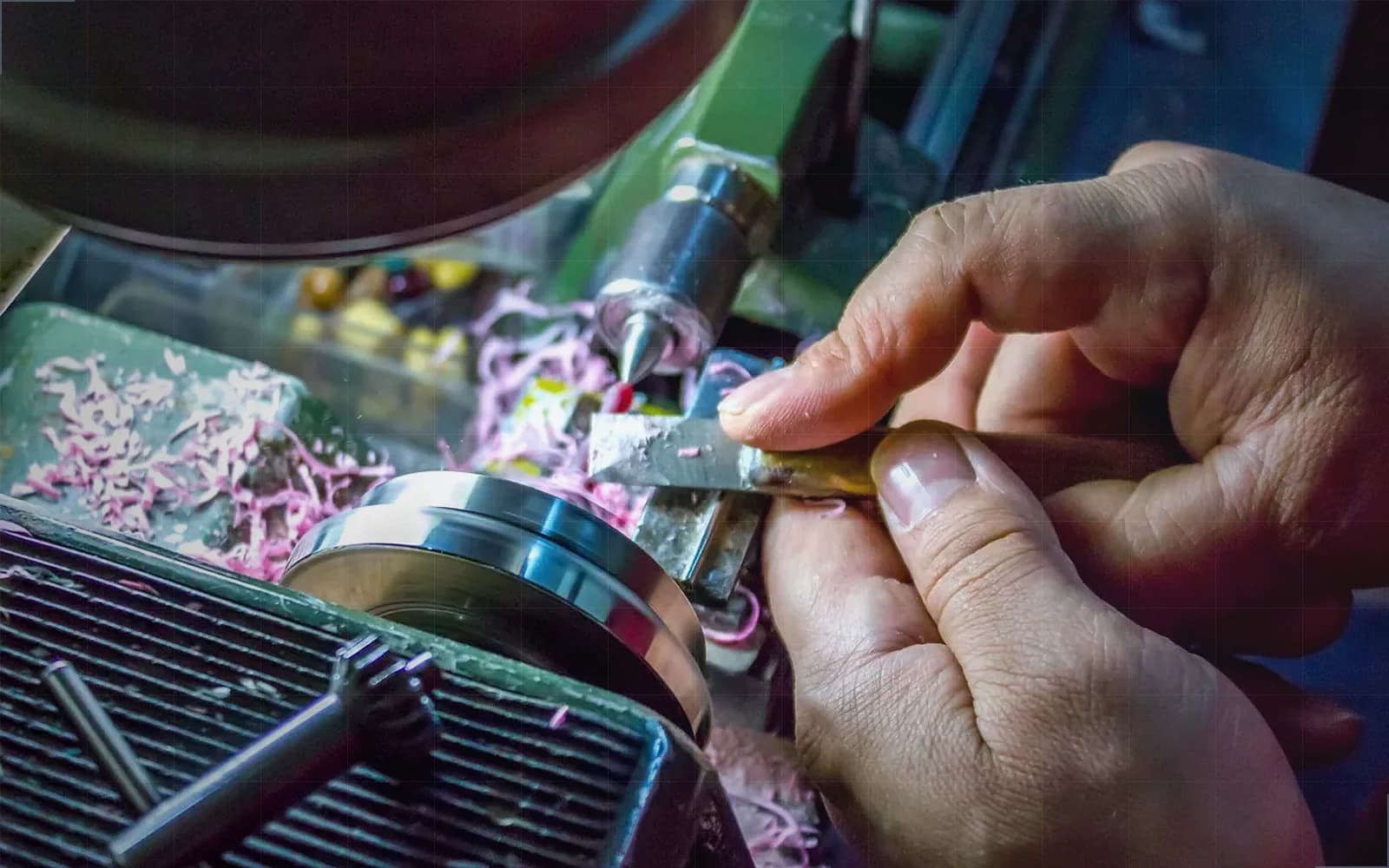
$$The shaft steel: strong, cheap, induction-hardenable exactly where it counts.
625 MPa (cold drawn) · 179–229 HB
Structural Steel A36
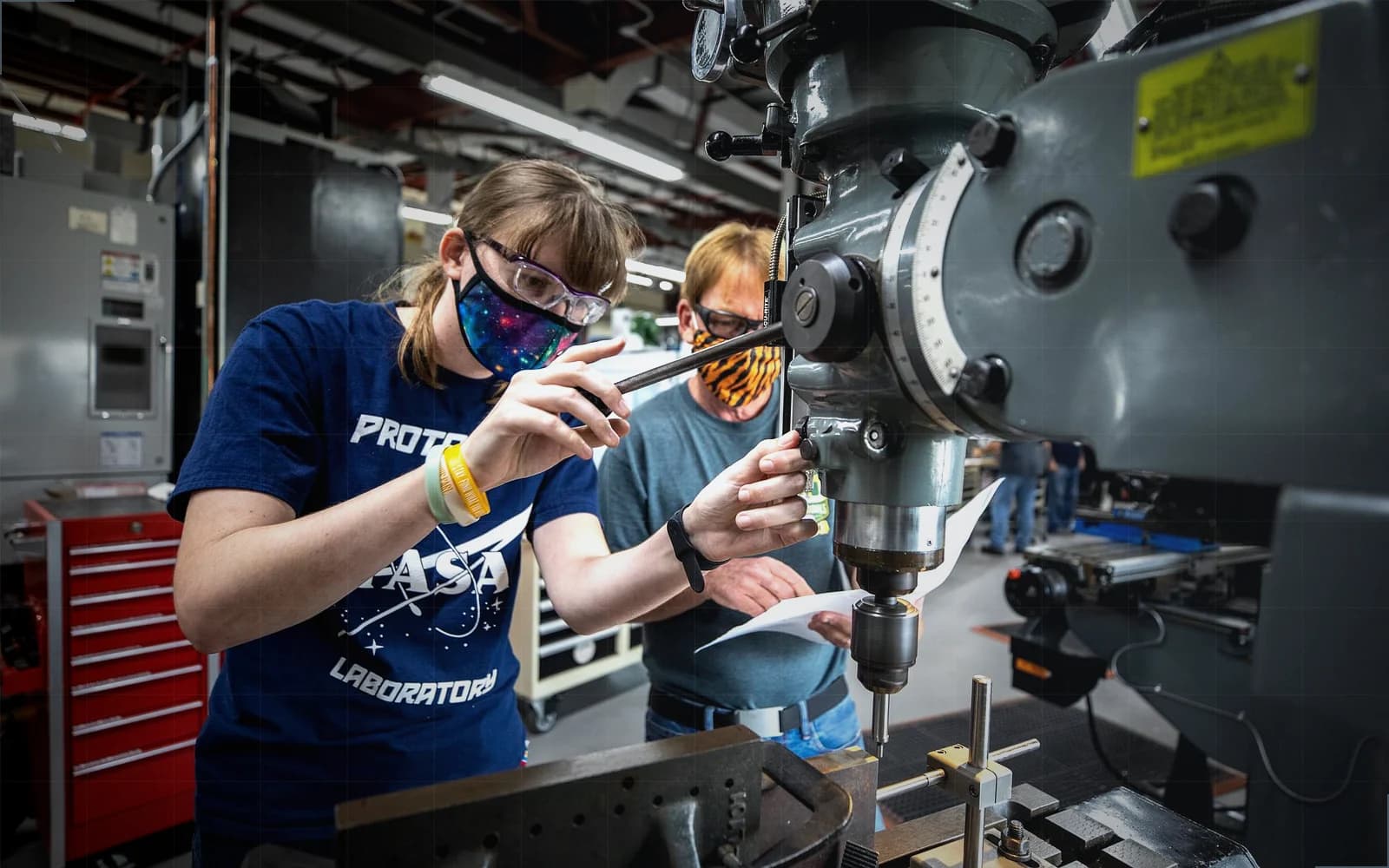
$The structural workhorse: cheapest path to welded frames, bases and brackets.
400–550 MPa · ~120 HB
Alloy Steel 4140
$$Chromoly muscle: deep-hardening alloy steel for heavily loaded shafts, tooling and gears.
~1000 MPa (Q&T) · 28–32 HRC (pre-hard)
Alloy Steel 4340
$$$The landing-gear steel: maximum strength with toughness for safety-critical rotating parts.
~1280 MPa (Q&T) · ~40 HRC (Q&T typical)
Tool Steel D2
$$$The cold-work die standard: 60 HRC, extreme abrasion resistance, semi-stainless chemistry.
— (specified by hardness) · 58–62 HRC (hardened)
Tool Steel A2
$$$The balanced tool steel: between O1 toughness and D2 wear, with air-quench stability.
— (specified by hardness) · 57–62 HRC (hardened)
Tool Steel O1
$$$The gauge-maker steel: predictable oil quench, fine edges, the easiest tool steel to work with.
— (specified by hardness) · 57–62 HRC (hardened)
Titanium Alloys
Titanium earns its cost where steel is too heavy and aluminum too weak or too corrodible: implants, aerostructure, chemical service. Grade 2 (commercially pure) is the corrosion play — formable, weldable, biocompatible. Grade 5 (Ti-6Al-4V) is the strength play at 950 MPa. Both machine slowly; budget 3–5× aluminum cycle time.
Copper Alloys
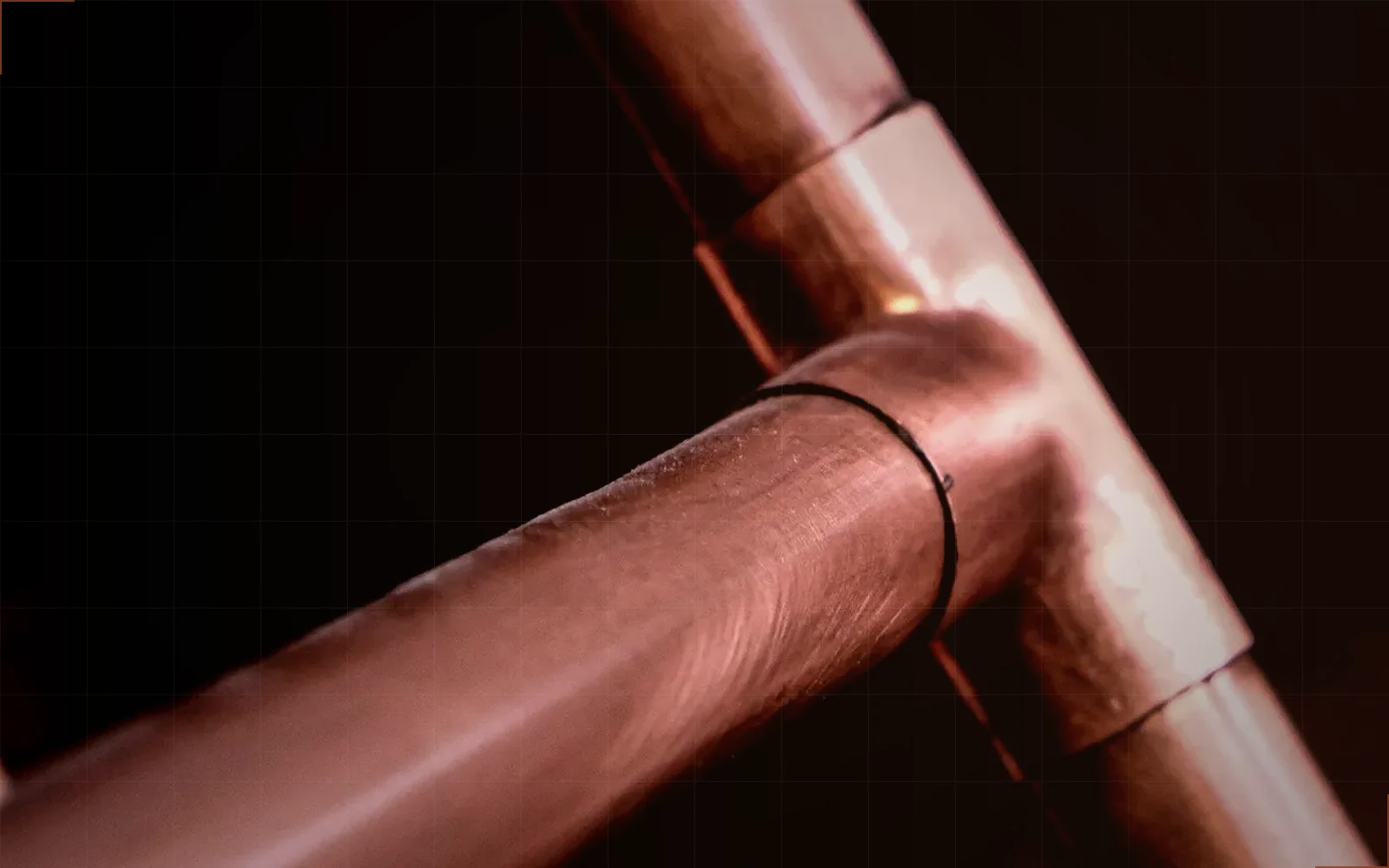
Choose by function: C110 pure copper for thermal and electrical conduction (busbars, heat sinks, EDM electrodes), C360 free-machining brass for high-volume turned fittings and valve parts, C260 cartridge brass for formed and decorative work, and C510 phosphor bronze where springs, bushings and wear surfaces need fatigue life.
Copper C110
$$$The conductivity king: when watts or amps per gram is the whole point of the part.
220–345 MPa (temper) · 40–95 HRF
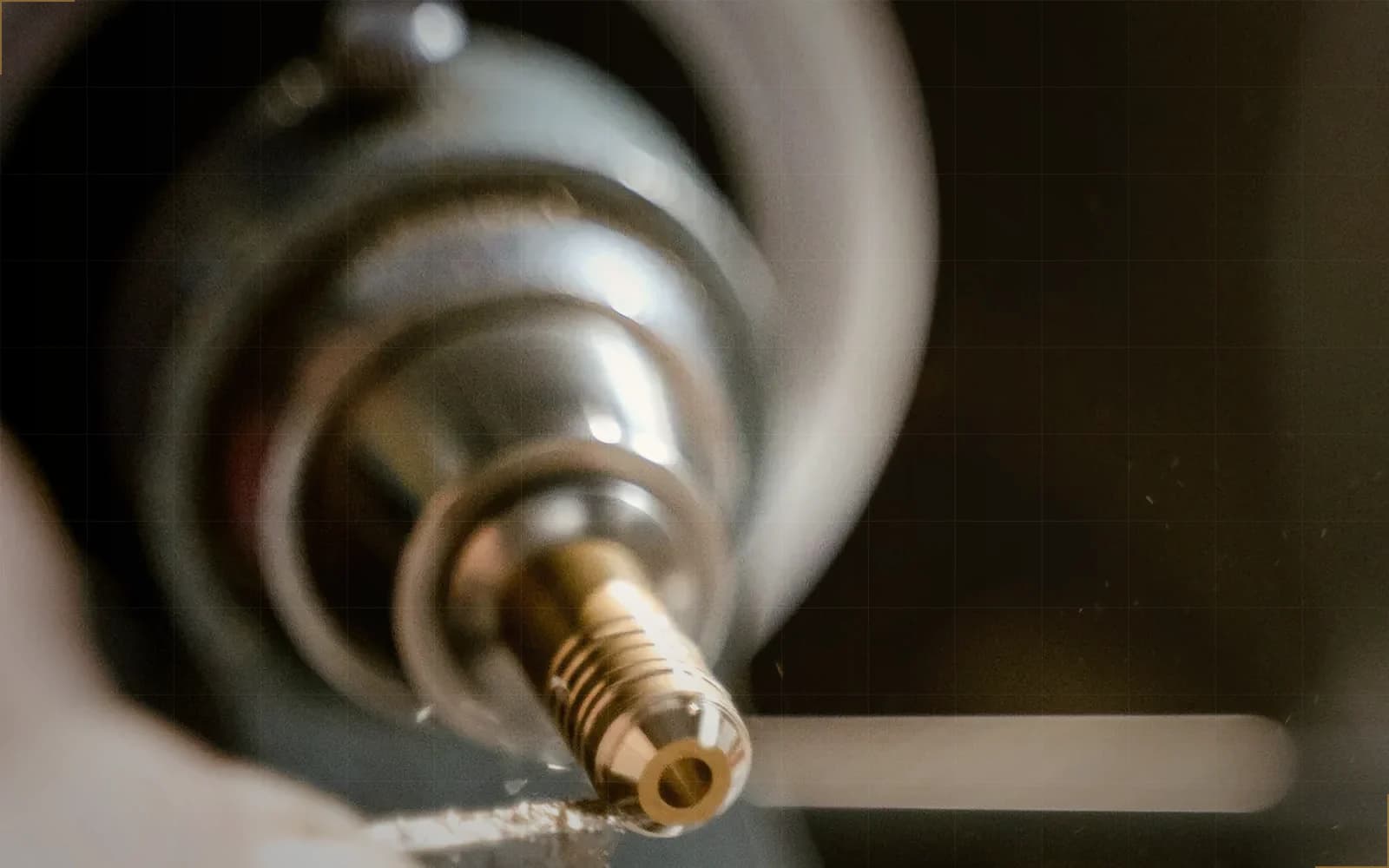
Brass C260 (Cartridge Brass)
$$$The forming brass: stronger and lower-lead than C360, with the classic warm brass look.
~370 MPa · ~55 HRB
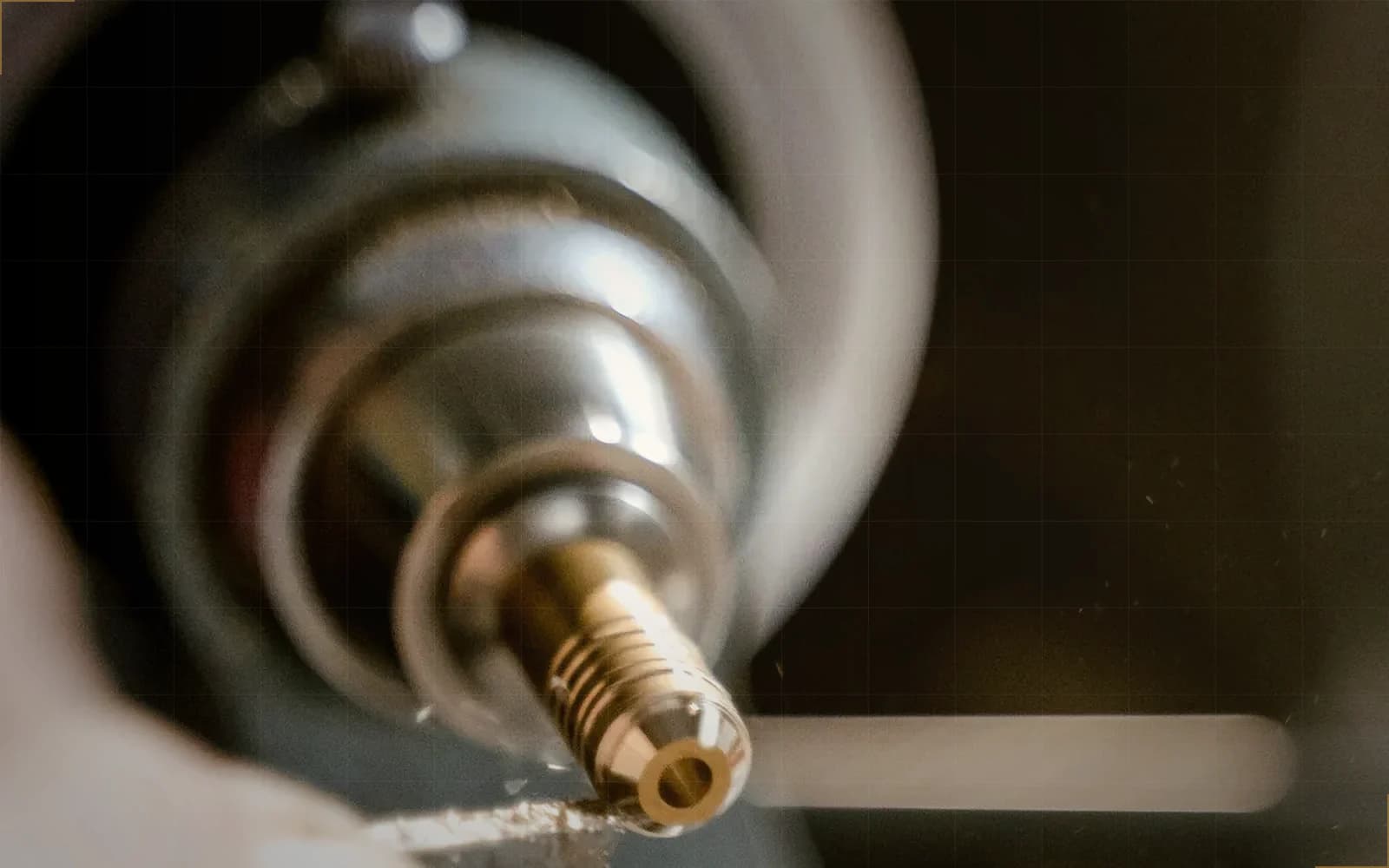
Brass C360 (Free-Machining)
$$The machinability benchmark itself: fastest cycle times in the shop, naturally low-friction.
385 MPa · 78 HRB
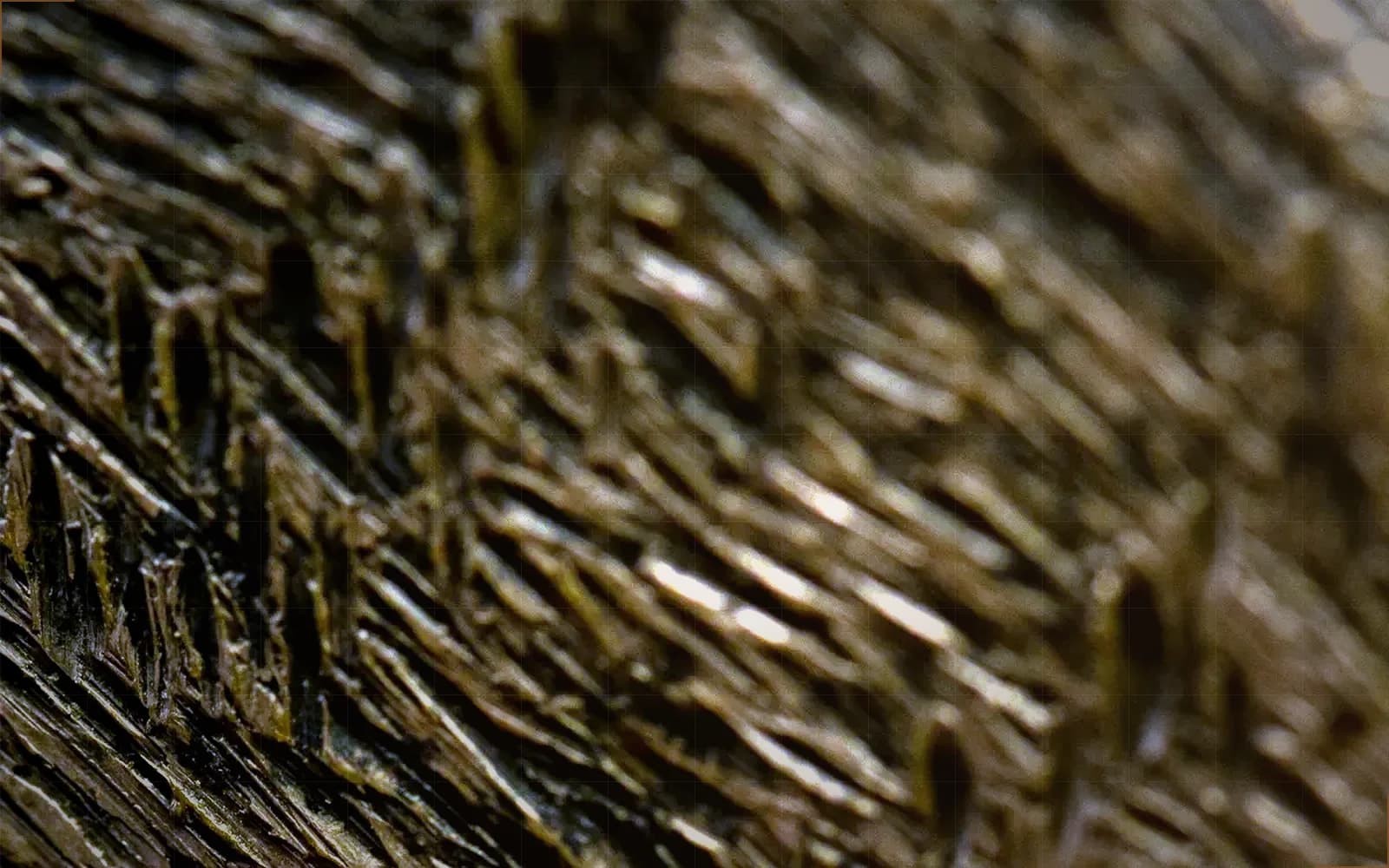
Phosphor Bronze C510
$$$The spring bronze: fatigue resistance and low-friction wear for contacts and bushings.
~470 MPa (H02) · ~80 HRB
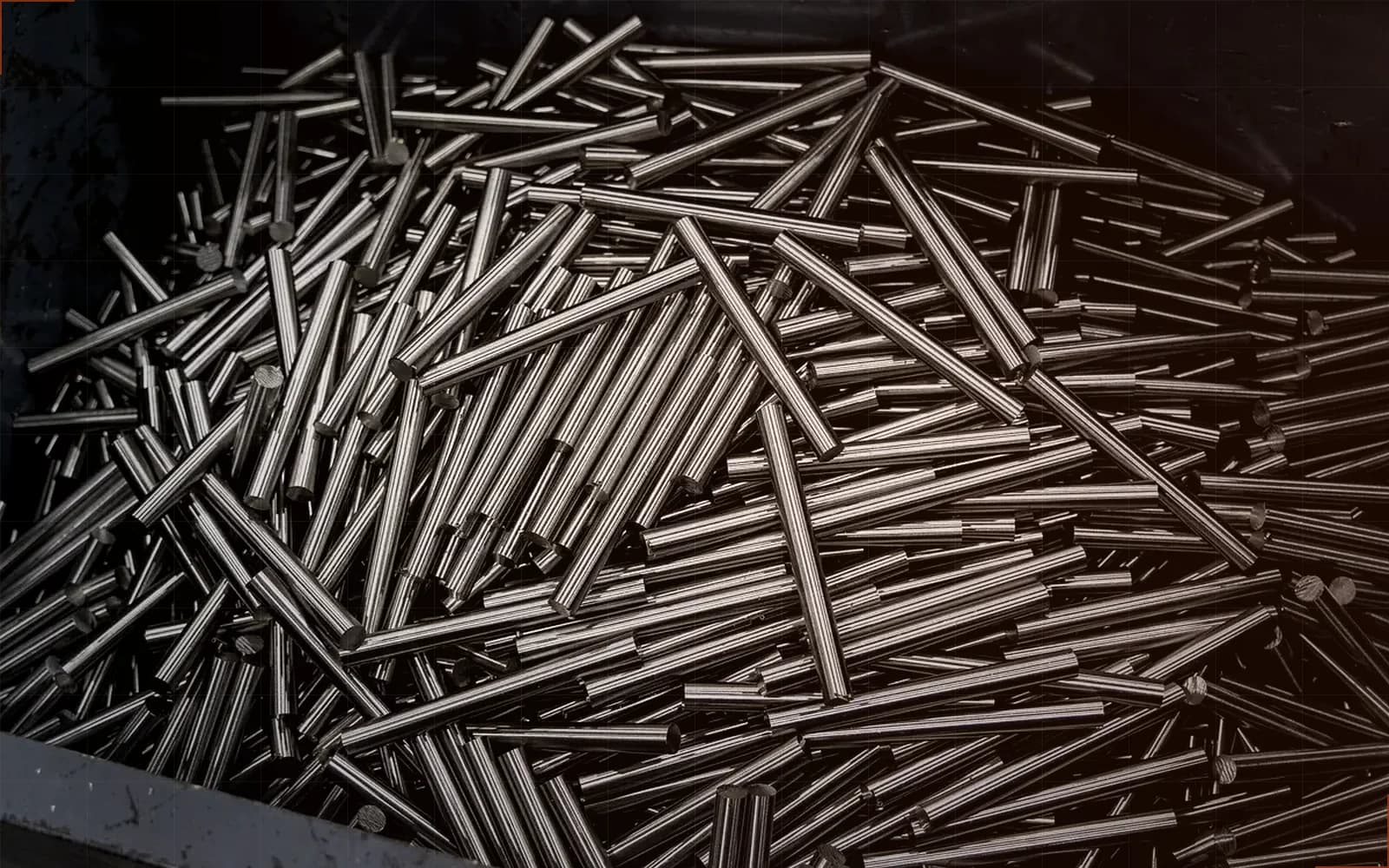
Specialty Metals
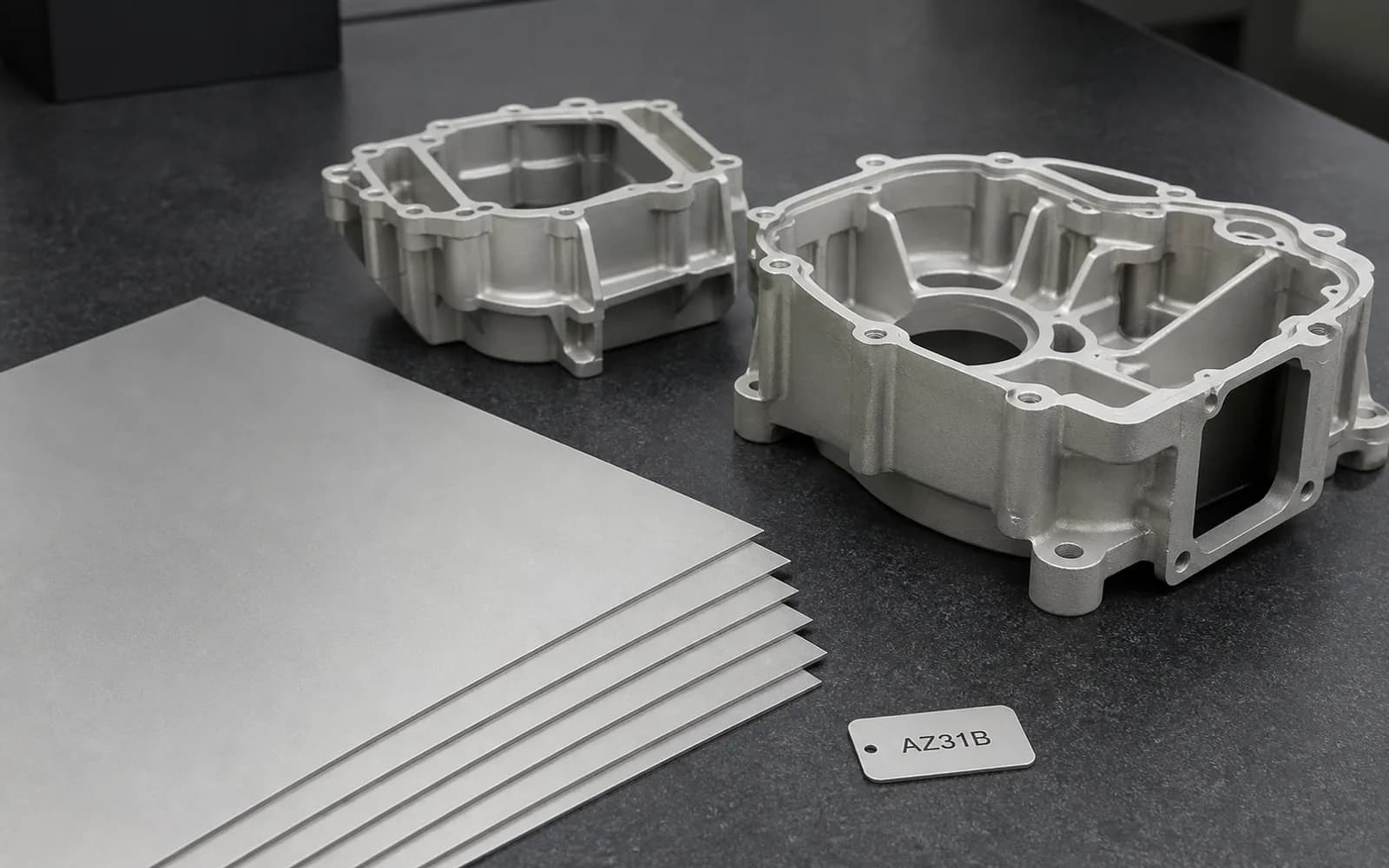
Problem-solver alloys for when standard families run out. AZ31B magnesium is the lightest structural metal (1.77 g/cm³) for weight-critical housings — accept coating requirements and shop fire controls. Invar 36 holds near-zero thermal expansion (~1.2 ppm/K) for optical mounts and metrology structures that must not drift with temperature.
Engineering Plastics
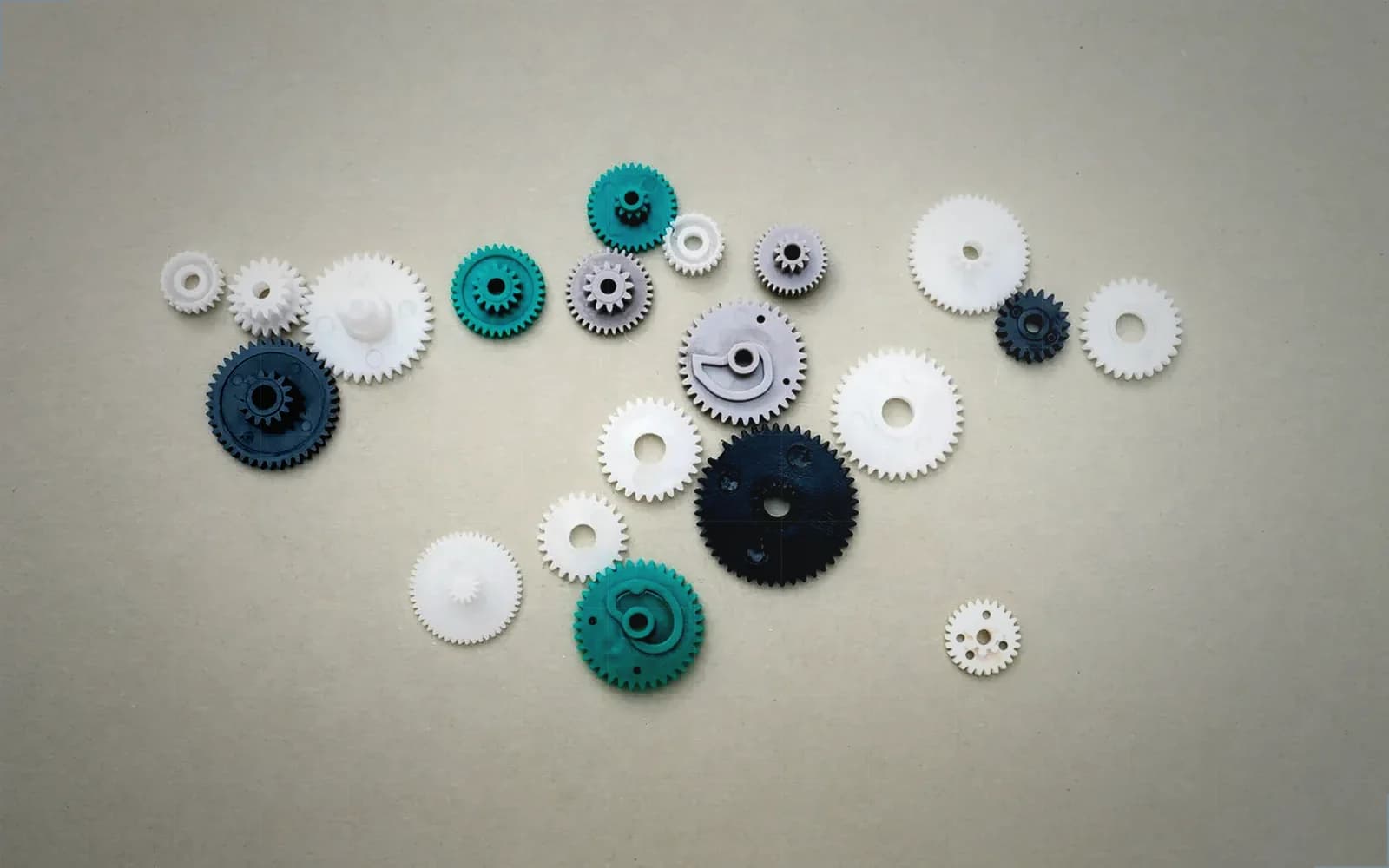
POM (Delrin) is the machining default — stiff, stable, predictable. Pick PA6/PA66 for tough wear parts that tolerate moisture growth, PC or PMMA for transparency (tough vs. optically clear), HDPE for chemical tanks on a budget. Move to the high-performance tier (PEEK, PEI, PPS, PPSU, PTFE) only when temperature, sterilization or chemistry demands it — the price step is 3–5×.
ABS
$The prototype plastic: tough, light, cheap — and it glues and paints like nothing else.
40 MPa · R105 (Rockwell)
Polycarbonate (PC)
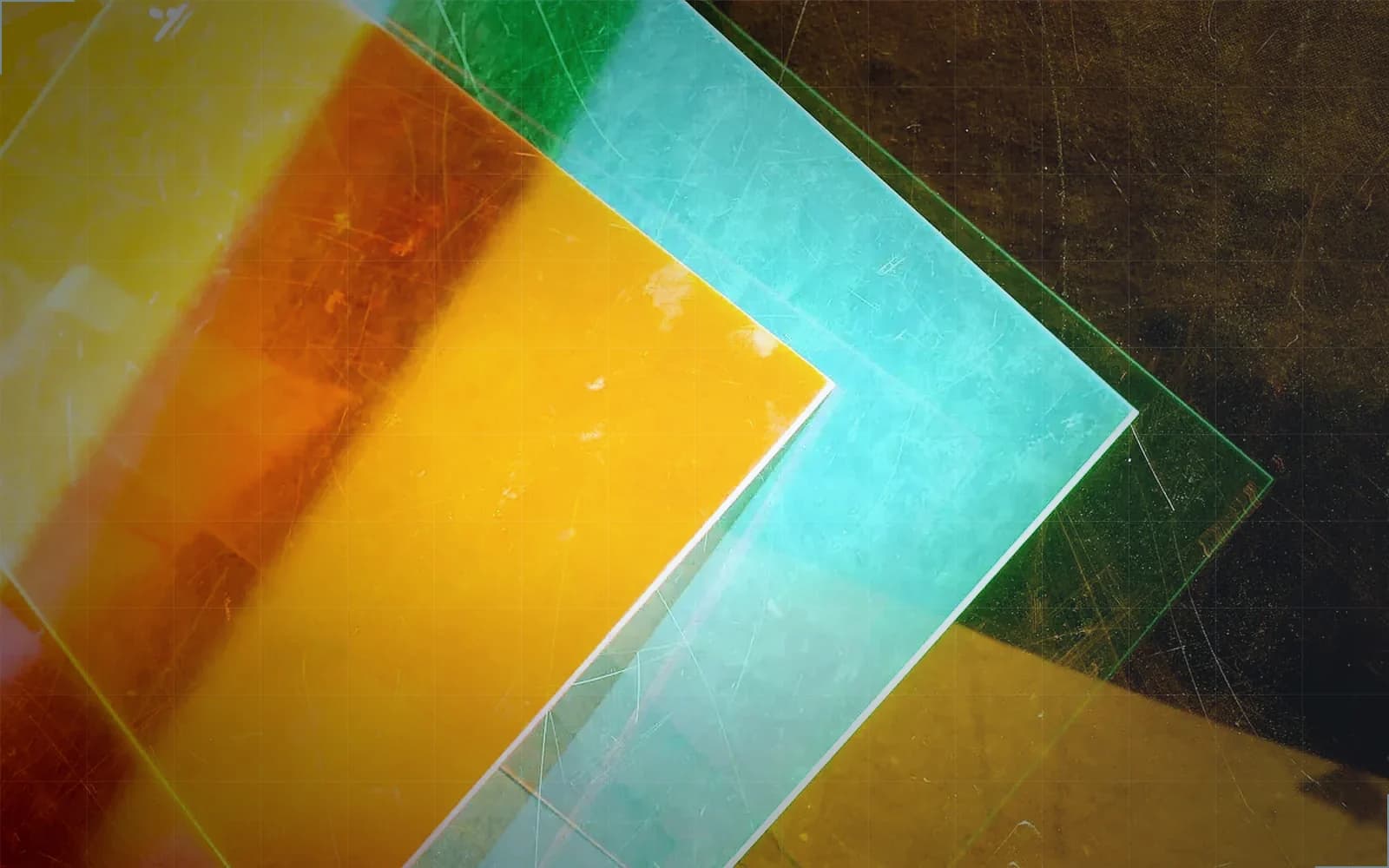
$Transparent armor: machine guards, viewports and light guides that survive real impacts.
66 MPa · R118 (Rockwell)
Nylon PA6
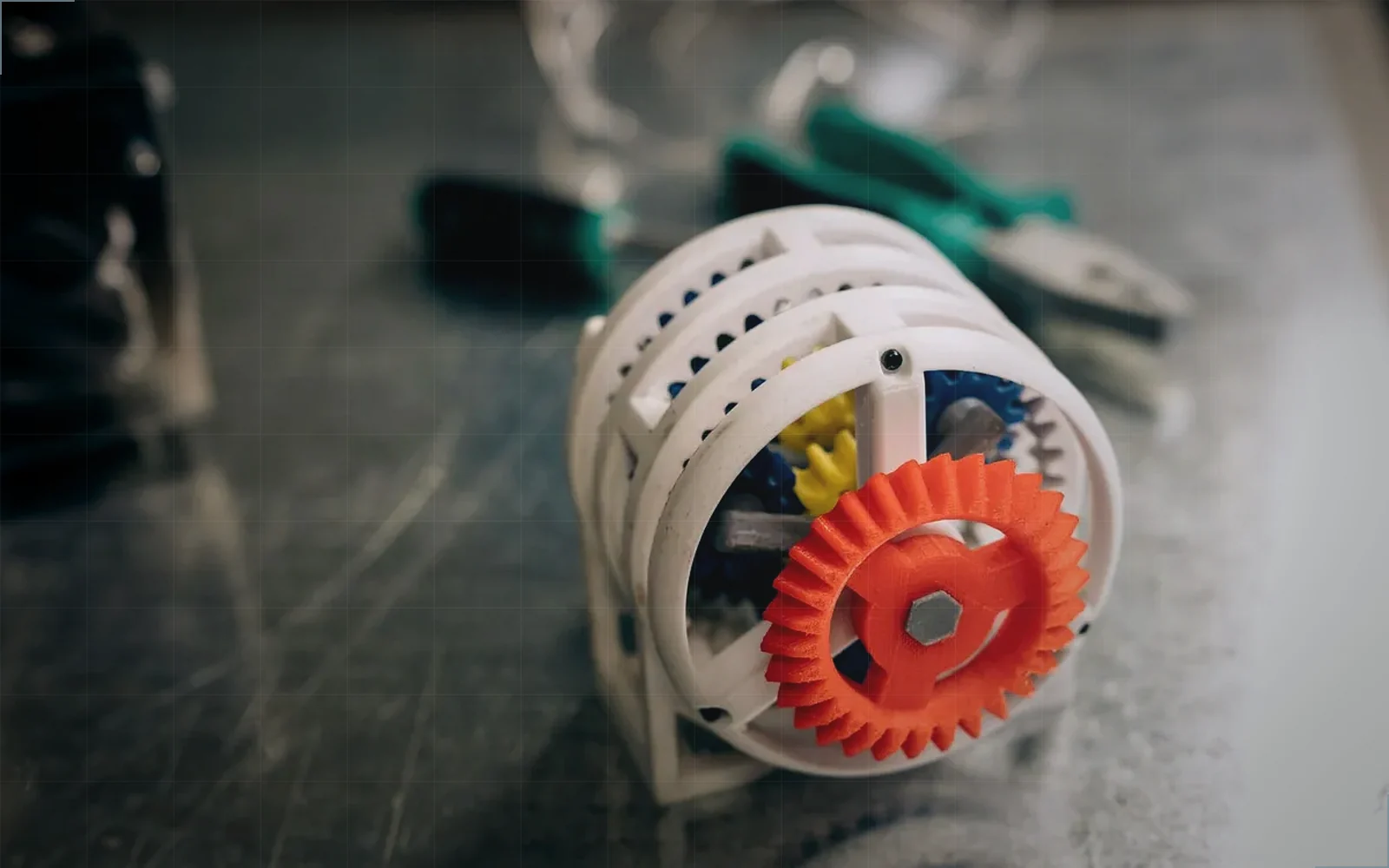
$The impact-and-abrasion eater: wear strips, rollers and guards that refuse to break.
79 MPa (dry) · R119 (Rockwell, dry)
Nylon PA66
$PA6 upgraded: higher stiffness and service temperature for gears and insulators that run hot.
83 MPa (dry) · R120 (Rockwell, dry)
POM (Delrin / Acetal)
$The machinist's favorite: stiff, slippery, stable — plastic parts with metal-like precision.
70 MPa · M89 (Rockwell)
HDPE
$The budget chemical-duty plastic: food-safe, nearly unbreakable, and the cheapest stock in the shop.
26 MPa · Shore D64
Acrylic (PMMA)
$The optical plastic: 92% light transmission, scratch-resistant, polishes to a glass-clear finish.
70 MPa · M93 (Rockwell)
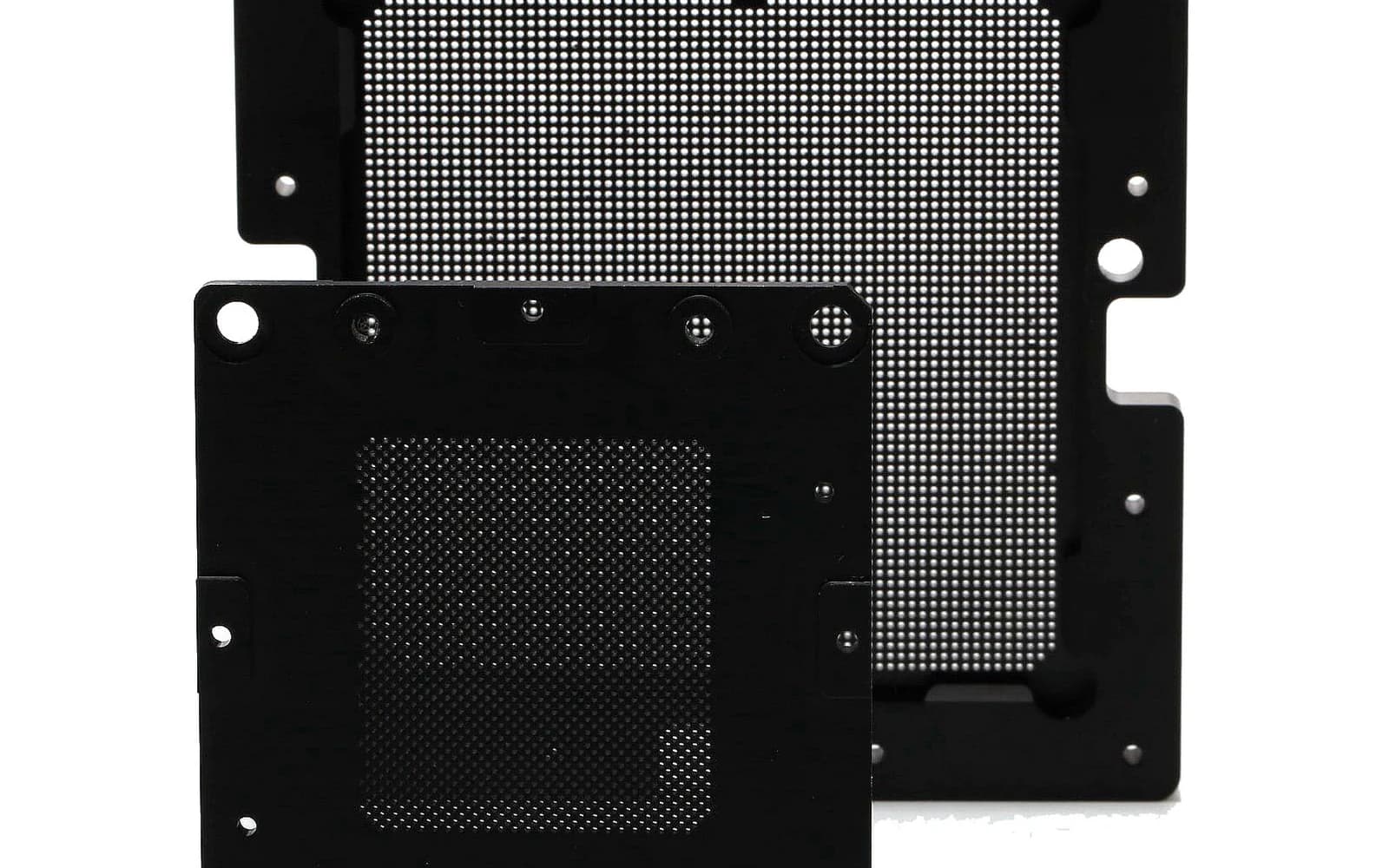
PEEK
$$$$$The polymer that replaces metal: 250 °C service, chemical immunity, implant-grade options.
100 MPa · M99 (Rockwell)
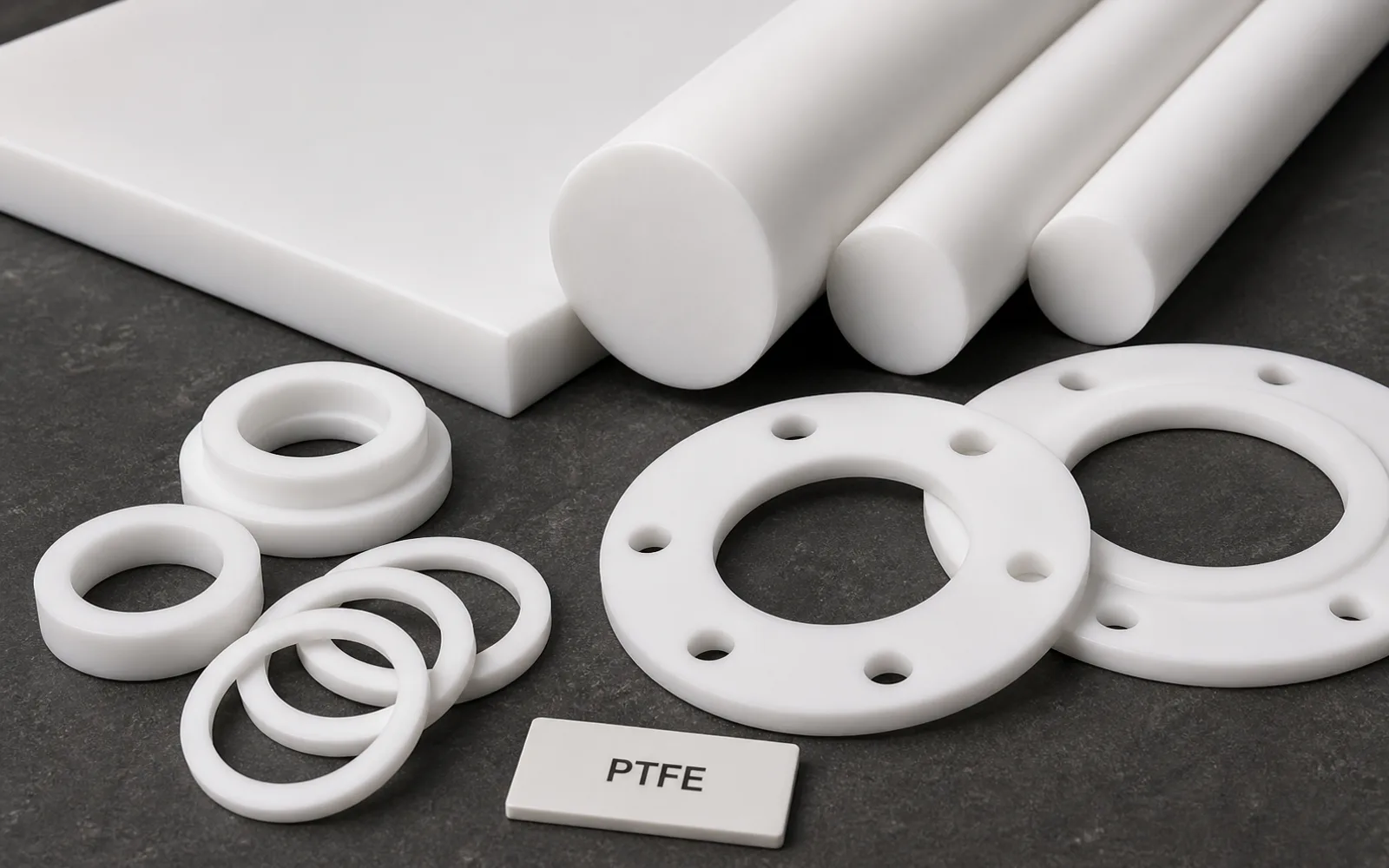
PTFE (Teflon)
$$$The slipperiest solid known: seals and insulators immune to chemistry and heat alike.
25–28 MPa · Shore D55
PEI (Ultem 1000)
$$$$The thinking engineer's high-performance pick: amber-transparent, flame-rated, autoclavable — at half the PEEK price.
110 MPa · M109 (Rockwell)
PPS
$$$$The precision high-temp polymer: near-zero moisture uptake, broad chemical resistance, 200 °C service.
90 MPa · R123 (Rockwell)
PPSU (Radel)
$$$$The sterilization survivor: tough where PEI is brittle, repeatable through thousands of steam cycles.
70 MPa · ~R120 (Rockwell)
Composites
Machined composites trade isotropy for properties metals cannot reach: G10/FR4 delivers structural electrical insulation for fixtures and energy hardware; carbon fiber sheet beats aluminum on stiffness per unit weight at roughly 60% of its density for drone and robot structures. Both are abrasive to cut and prone to delamination — design flat, plate-like parts and expect sealed edges.
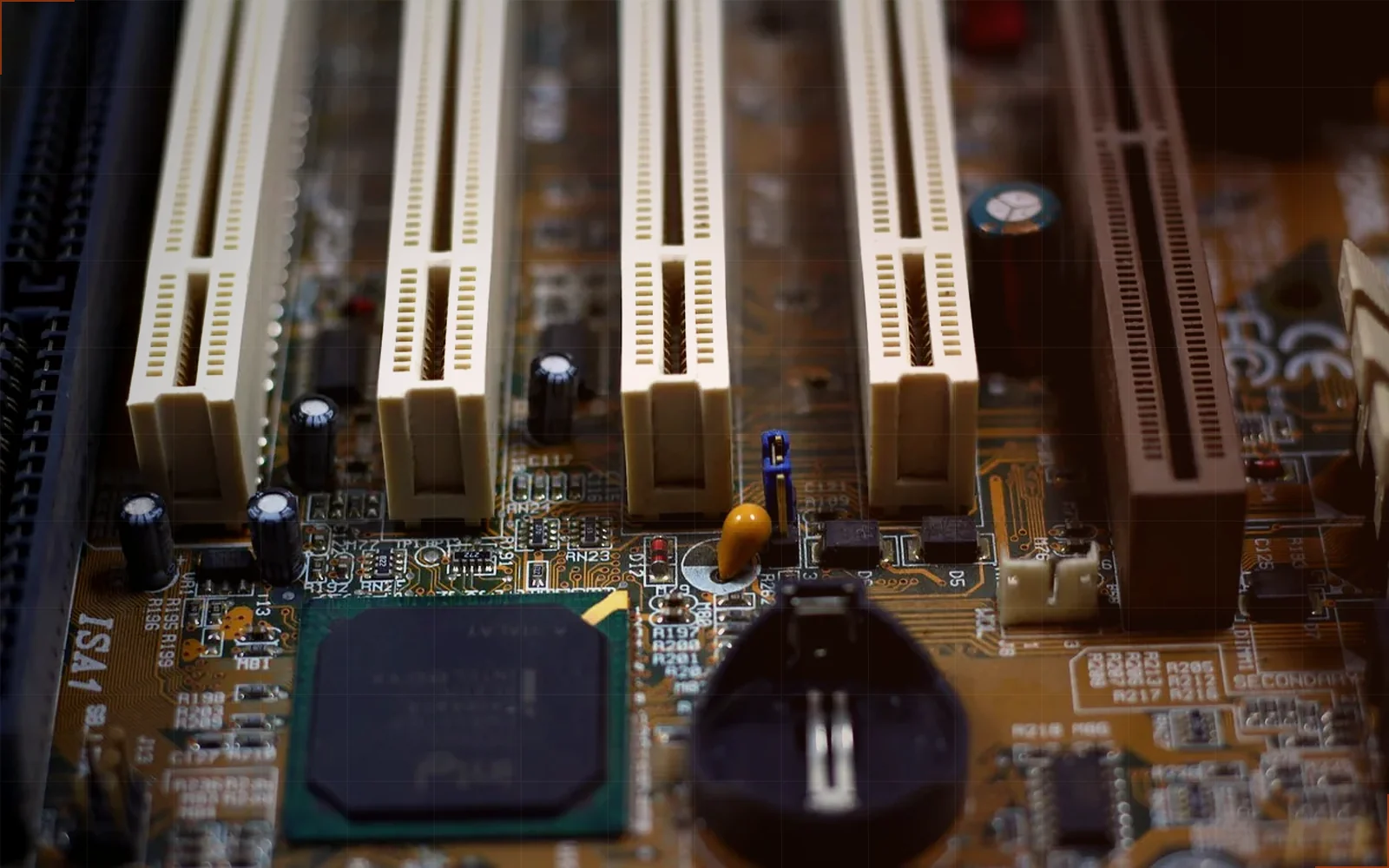
G10/FR4 Glass Epoxy
$$The insulator that carries load: glass-epoxy laminate with metal-adjacent strength and full dielectric duty.
310 MPa (lengthwise) · M110 (Rockwell)
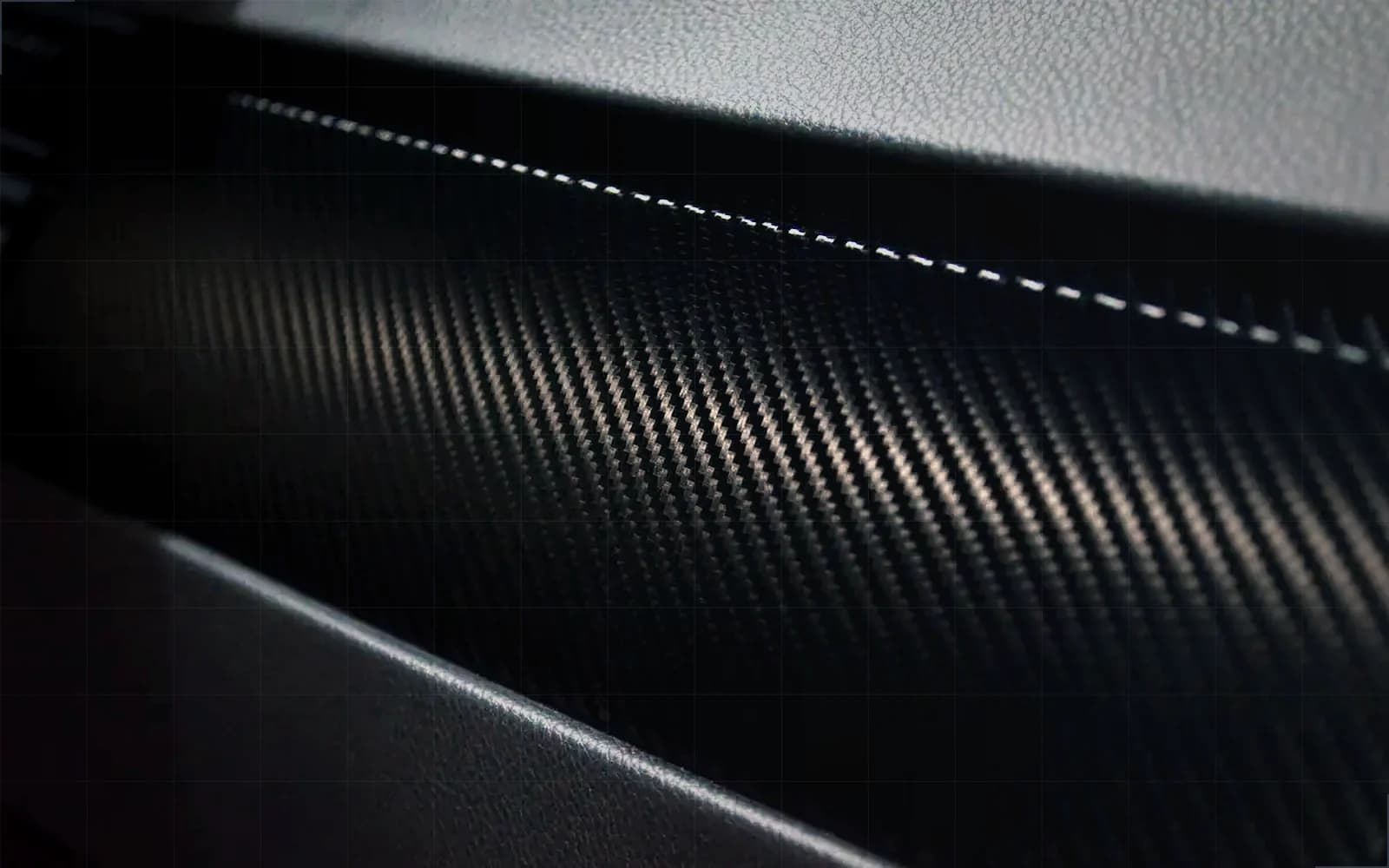
Carbon Fiber Sheet
$$$$Stiffness nothing else matches per gram: profile-cut plates for frames, arms and optical platforms.
~600 MPa (quasi-isotropic) · — (laminate)
Have a part in mind?
Upload CAD or drawings. Eligible CNC work gets an instant estimate; other processes move to engineer review. NDA-protected from the first byte.
Start an RFQ