FabVector

Manufacturing network

One supplier to contract with. A 200-factory network behind the part.

FabVector runs its own machining facility in Dongguan, Guangdong, and works with a network of 200 partner factories in the surrounding Pearl River Delta cluster. You still deal with one company, one quote and one inspection standard.

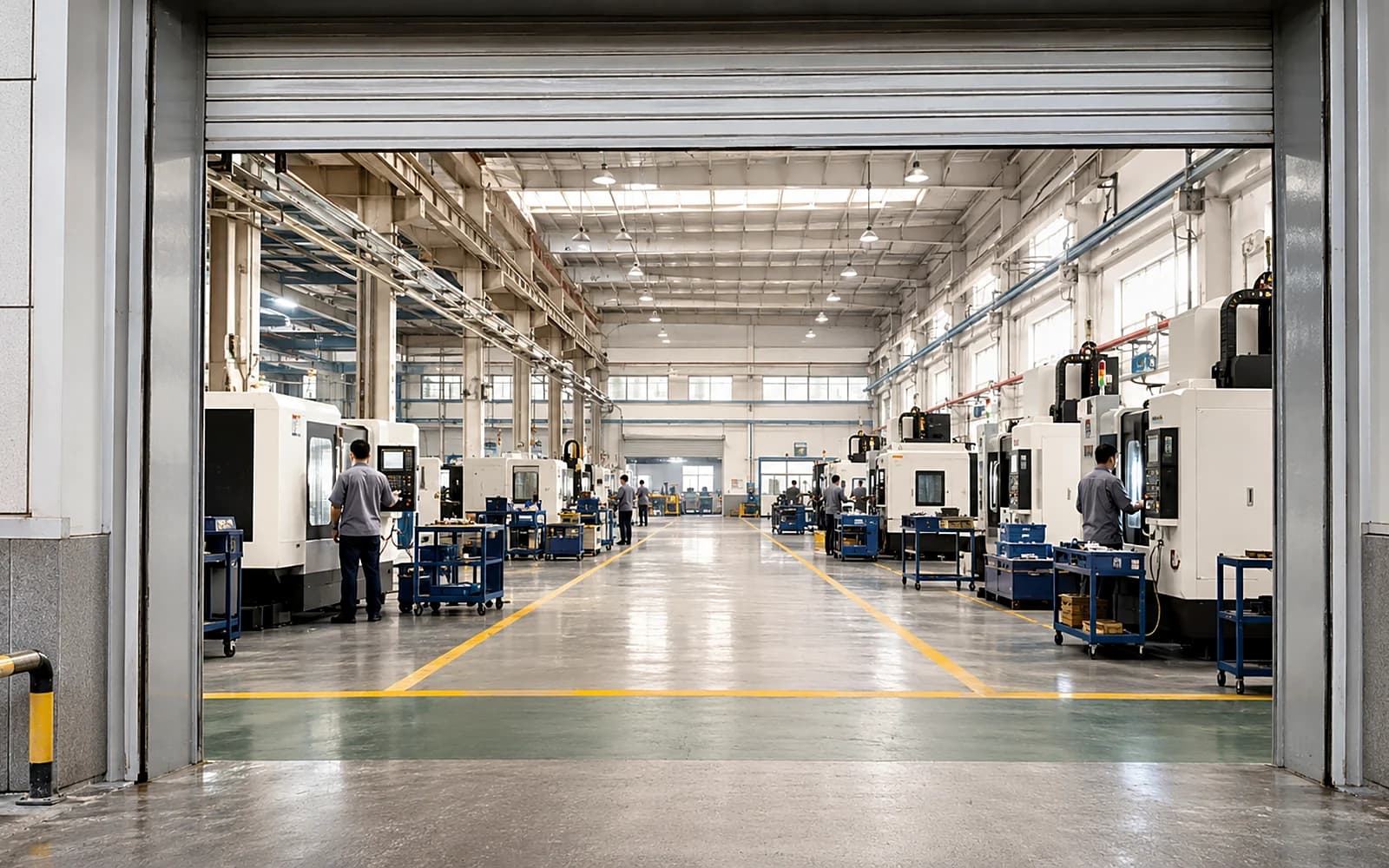
Machining floor lined with vertical machining centres and work-in-progress carts
20k
m² in-house floor space

Dongguan, Guangdong

213
In-house staff

Machinists, programmers, metrology and QA

200
Partner factories

Audited, tiered and scored monthly

10
Machining processes

3-axis to 5-axis, Swiss, EDM, grinding

43
Stocked materials

Metals and engineering plastics

Why a network

The problem is not finding a shop. It is finding one that covers the whole BOM.

01

A single shop caps what you can order

Every machine shop quotes what its own spindles can hold. Ask for a Swiss-turned pin, a 5-axis impeller and a ground plate in one BOM and most shops will quietly sub out two of the three — or decline the line items that do not fit.

02

Splitting vendors moves the cost, not the problem

Three suppliers means three quotes to reconcile, three inspection formats, three shipments to clear and nobody who owns the assembly when two parts do not fit each other.

03

Volume swings break the relationship

The shop that welcomes a 5-piece prototype is rarely priced for the 800-piece follow-on, and the production house that wants the 800 will not touch the prototype. Both jobs need the same drawing understood the same way.

How work is routed

The in-house plant and the partner network do different jobs

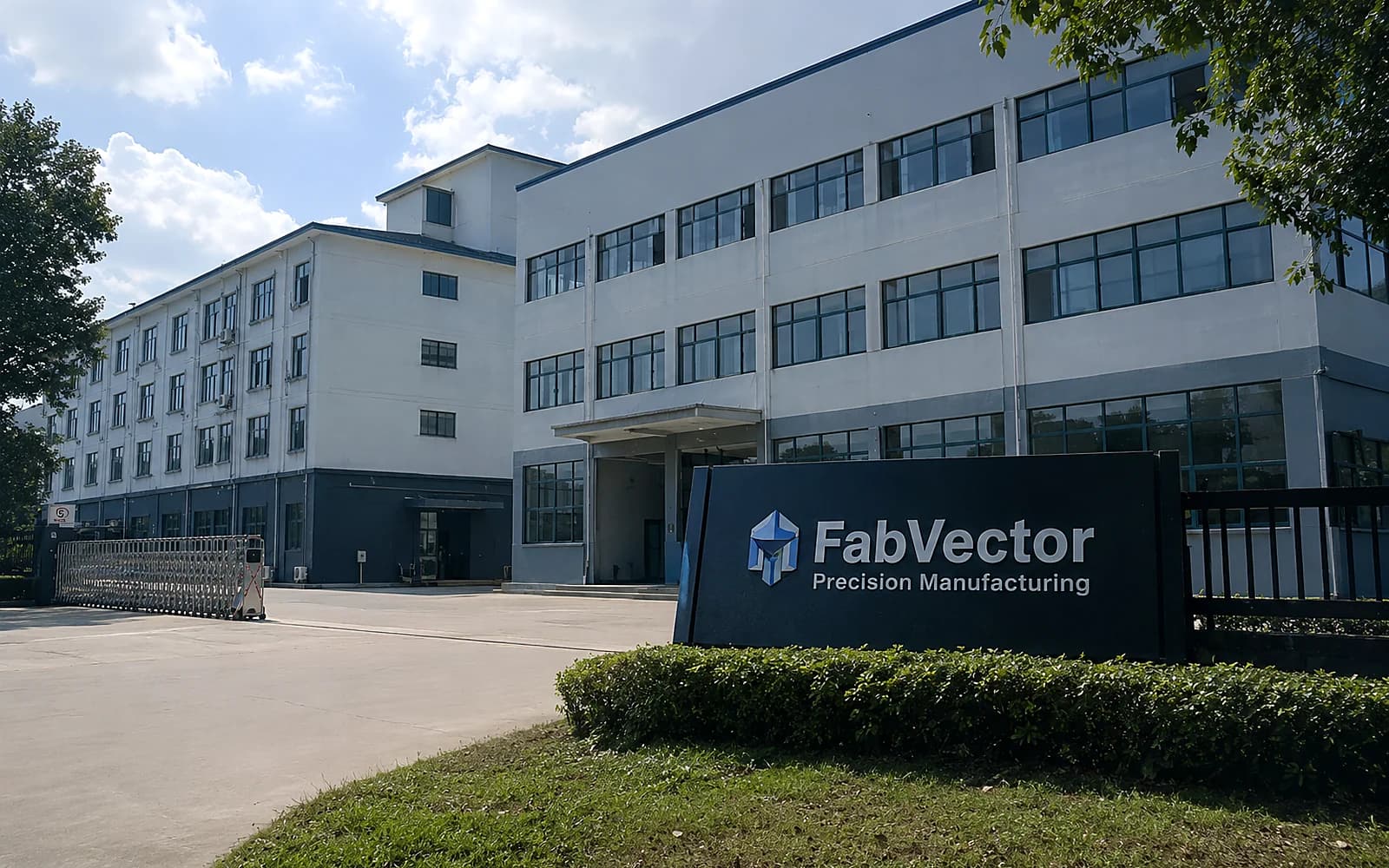
FabVector Precision Manufacturing plant entrance and signage
In-house

Where tight tolerance and first articles run

The in-house plant is where a job goes when the tolerance stack is unforgiving, when a first article has to be right before a batch is released, or when a customer wants the same operator on a repeat order. Short loops between machining and the CMM matter more here than raw capacity.

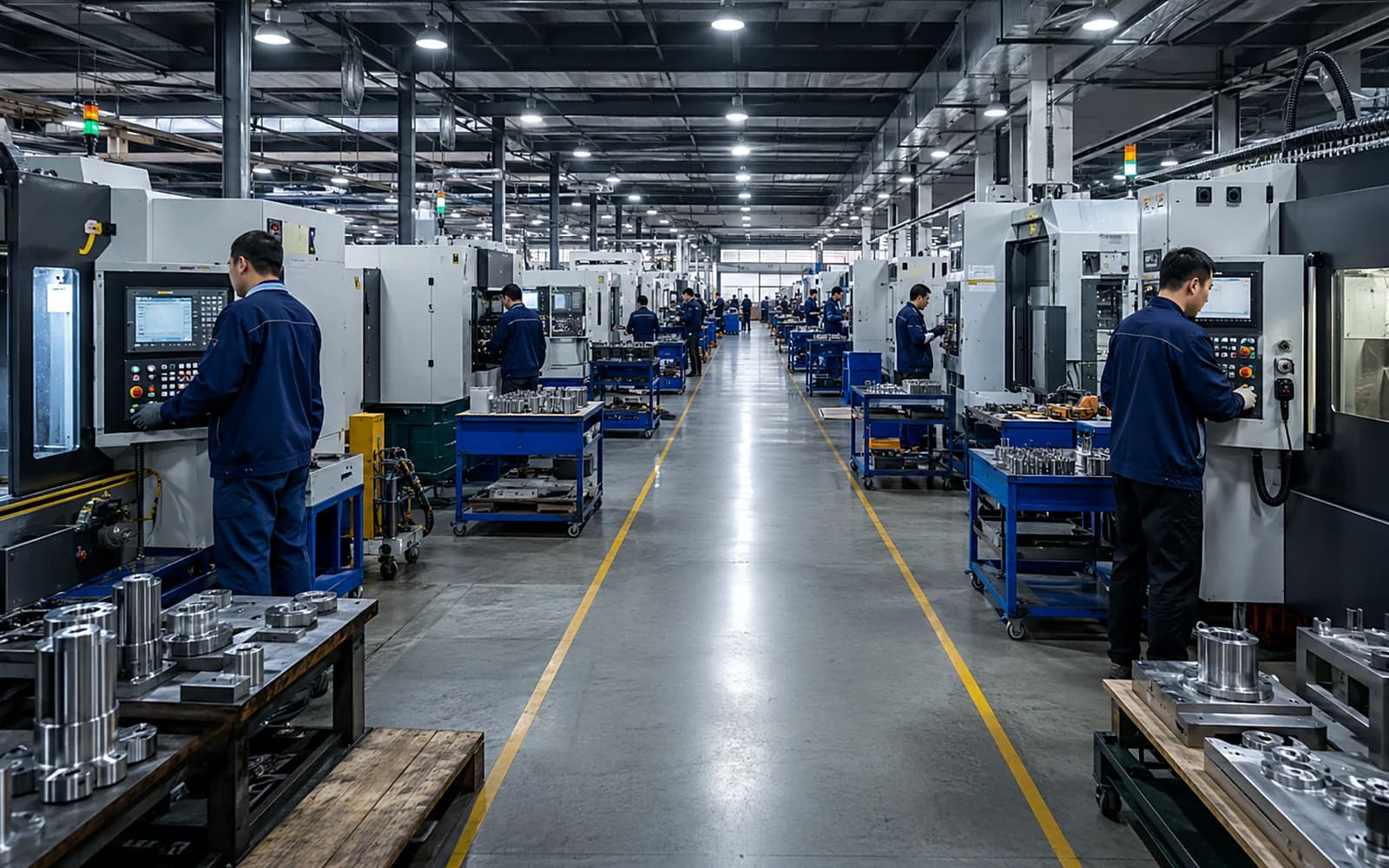
Main production aisle between rows of CNC machining centres
Partner network

Where breadth and batch capacity come from

200 plants inside one cluster means the machine class a part actually needs is usually a short drive away — a Swiss lathe for Ø6 mm pins, a large-envelope 5-axis for a housing that will not fit a standard table, a dedicated grinder for a flatness callout. Breadth is the point, not headcount.

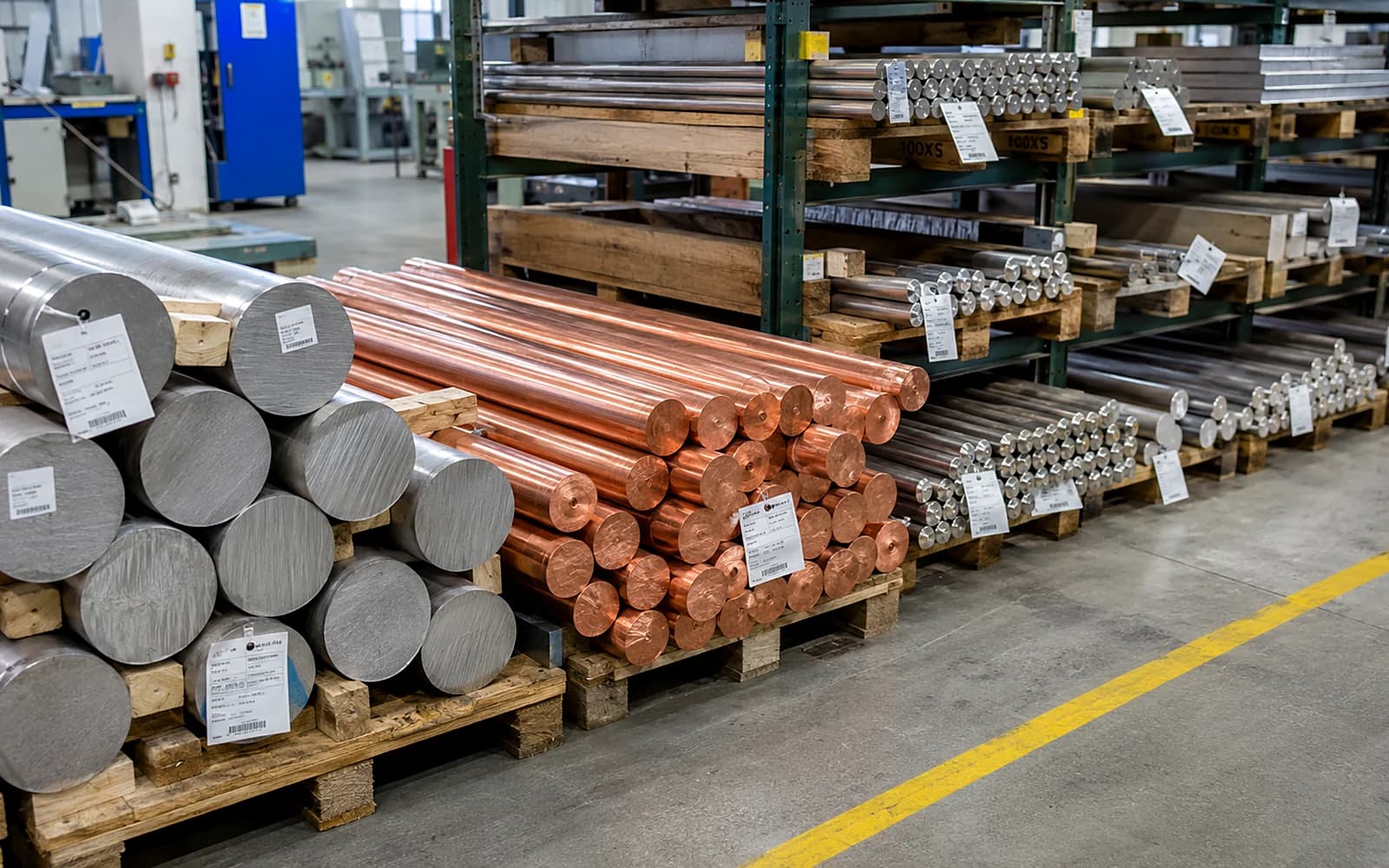
Aluminium, copper and steel bar stock racked in a material store
Material

Stock depth is part of the lead time

Lead time is usually lost waiting for bar stock or plate, not cutting it. Sitting inside the cluster means 43 listed grades are sourced locally in days rather than ordered in from another province.

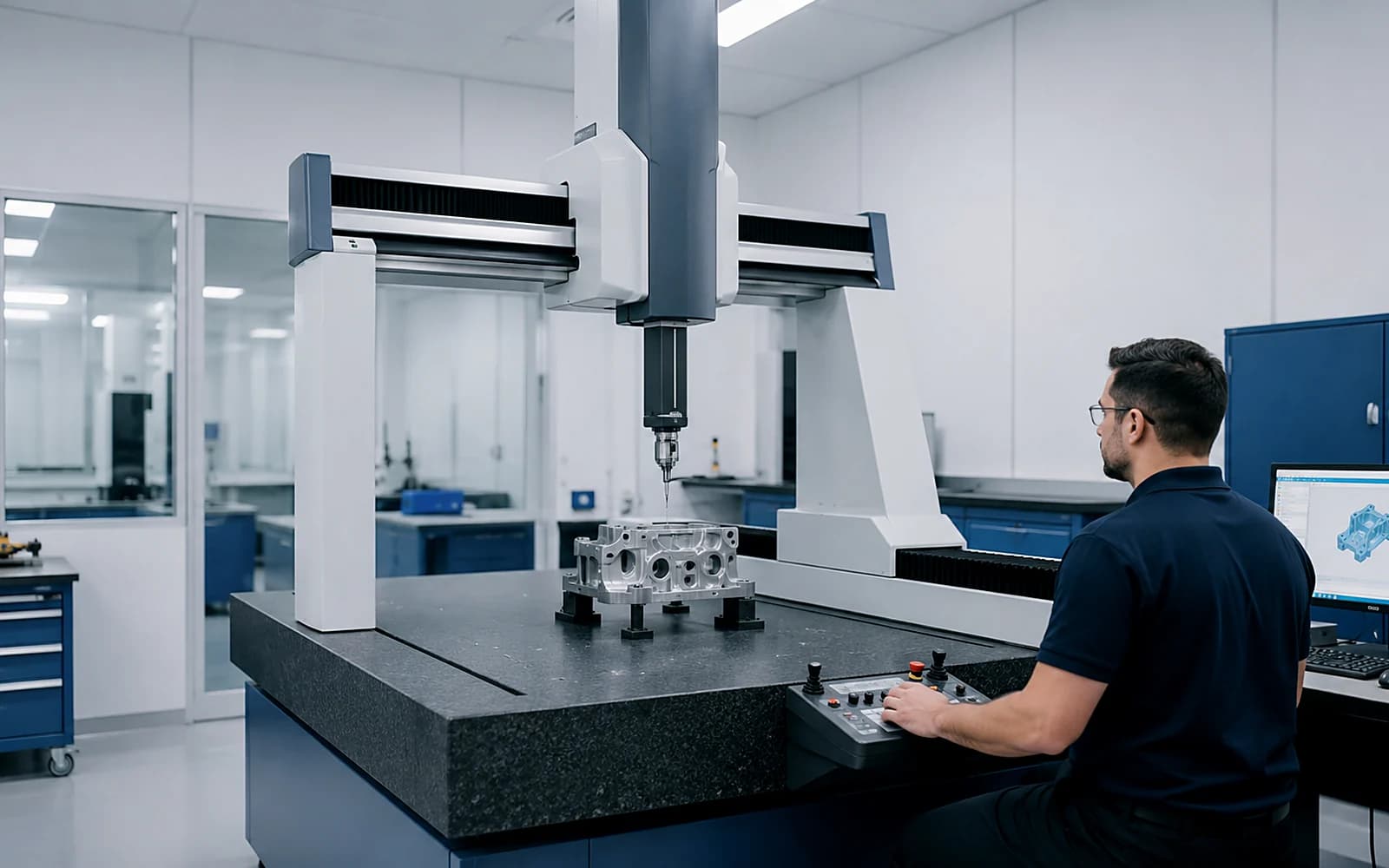
Coordinate measuring machine inspecting a machined part on a granite table
Inspection

The same report format, whoever cut it

A distributed network only works if the buyer cannot tell the difference. Inspection scope is fixed at RFQ — dimensional report, CMM data, material certificate, CoC or FAI — and comes back in one format, so incoming QC does not have to re-learn a new document set per shipment.

Qualification

How a factory gets into the 200-plant network — and out of it

A large network is only worth anything if getting in is hard. These are the six steps, including what gets a plant removed.

  1. 01

    Pre-qualification on paper

    Business licence, quality-system certification, equipment list and a capability matrix — maximum envelope, axis count and the tolerance grade the shop actually holds rather than the one it advertises. We also screen for conflicts: a plant already machining for one of our customers' direct competitors does not enter the pool for that customer's work.

  2. 02

    On-site audit, scored

    A scored walk-through with knockout items. Machine condition and calibration records, the metrology room and whether its calibration is traceable, process control (work instructions, first-article and in-process records), material control down to heat or lot number, operator certification, housekeeping — and drawing handling, which is the one our customers care about most.

  3. 03

    Sample part, measured by us

    A representative test part for the capability class the plant claims, measured in our own metrology room. We do not accept the supplier's own inspection report as qualification evidence. This is the step that converts a claim into a measurement.

  4. 04

    Trial order under real conditions

    A low-risk live order, scored on four things: on-time delivery, first-pass yield, completeness of the paperwork that ships with the parts, and how fast they respond when something goes wrong. The fourth one predicts the others.

  5. 05

    Tiering — work is routed by class, not by price

    Qualified plants are graded A, B or C by tolerance capability and working envelope, and jobs are routed to the class the part needs. A brokerage sends the drawing to whoever bids lowest; that is the difference between a network and a middleman.

  6. 06

    Monthly scorecard, and a way out

    On-time delivery, defect PPM and documentation accuracy are scored monthly, with a full re-audit on an annual cycle. Two consecutive periods below threshold means a downgrade; a serious quality or confidentiality breach means removal. Sub-contracting your part onward without our written approval is grounds for removal on its own.

Accountability

What stays with FabVector no matter which plant cut the part

A supplier network is only an advantage to the buyer if accountability does not get distributed along with the work.

RFQ

Quoting and DFM review

CAD goes to FabVector, not to a factory. Geometry is analysed, an estimate range comes back in about 60 seconds, and an engineer reviews manufacturability before anything is binding.

NDA

File custody

Drawings are encrypted and stored privately from upload, under NDA. Partner plants receive what a job needs, not your whole BOM.

QC

One inspection standard

Dimensional checks, CMM reports, material certificates, CoC and FAI are specified at RFQ and delivered in the same format regardless of which plant cut the part.

PO

One contract, one invoice

You contract with FabVector. Partner factories are our supply chain to manage — not vendors you have to qualify, chase or pay.

Process coverage

What the network covers in a single quote

Every process below can appear on the same BOM, in the same quote and in the same shipment.

ProcessWhere it fits
CNC MachiningMilling, turning, 5-axis, Swiss-type, EDM and grinding under one roof — one upload, one accountable partner.
CNC Milling3- and 4-axis vertical machining for housings, brackets, manifolds and structural parts.
CNC TurningLive-tooling lathes for shafts, pins, bushings and threaded fittings up to Ø406 mm.
5-Axis MachiningSimultaneous 5-axis machining for impellers, freeform surfaces and compound-angle features.
Swiss-Type MachiningSliding-headstock lathes for small, slender, high-precision turned parts from Ø1 mm.
Wire EDMElectrical discharge wire cutting for hardened steels, sharp internal corners and zero-force profiles.
Surface GrindingAbrasive finishing for flatness, parallelism and tight thickness control on hardened parts.
Micro MachiningHigh-speed spindles and Ø0.1 mm tooling for features below 1 mm and watch-scale parts.
Prototype MachiningFunctional prototypes in production-grade materials, shipped in days with DFM feedback included.
Production MachiningDedicated fixturing, in-process CMM and SPC documentation for repeatable volume runs.

Next step

Send the hardest part on your BOM first

Upload a STEP/STL and get a price range in about 60 seconds, reviewed by an engineer before anything is binding.

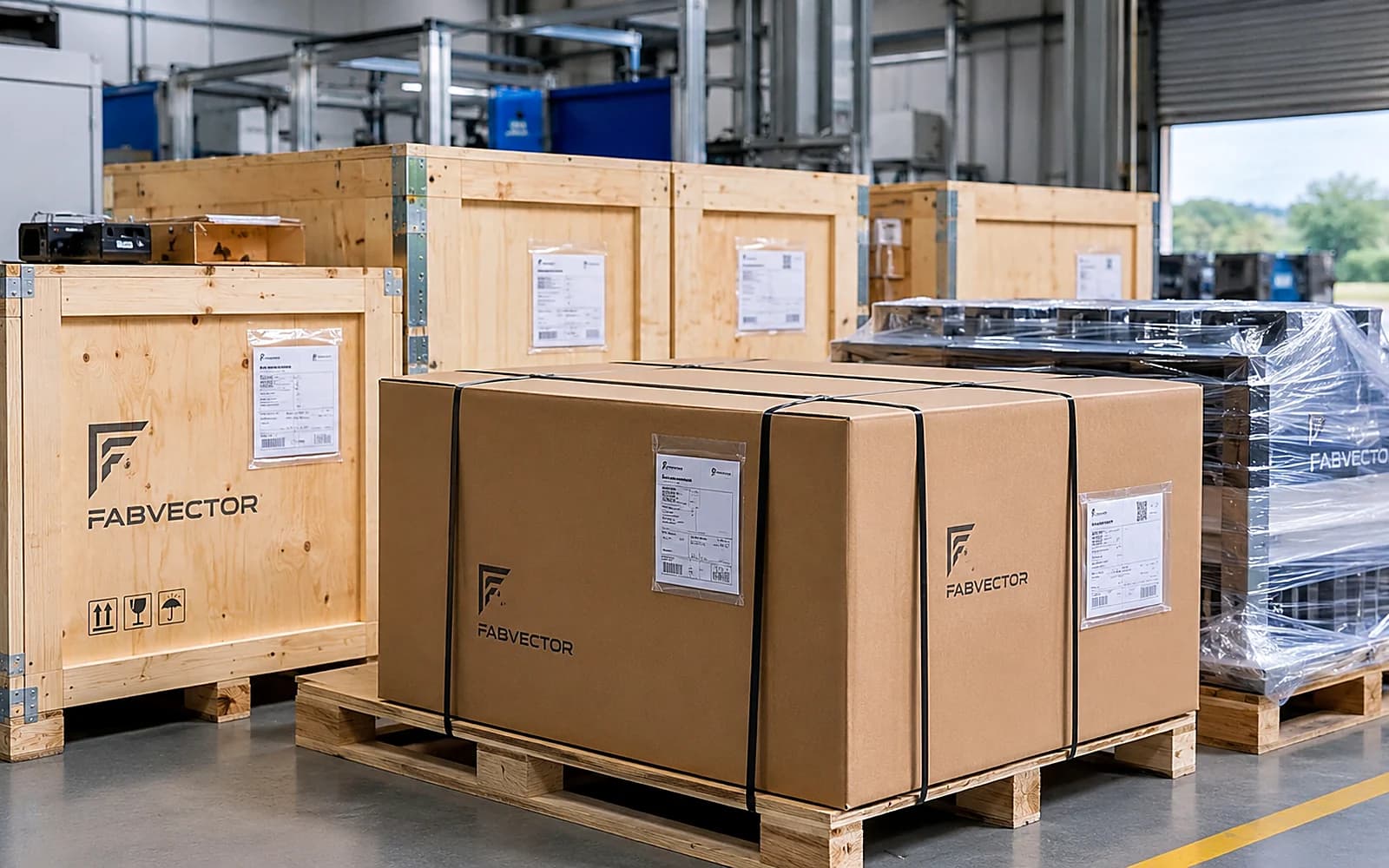
Machined parts crated and labelled for export shipping
NDA protected · files encrypted