Material · Stainless Steels
Stainless Steel 17-4 PH
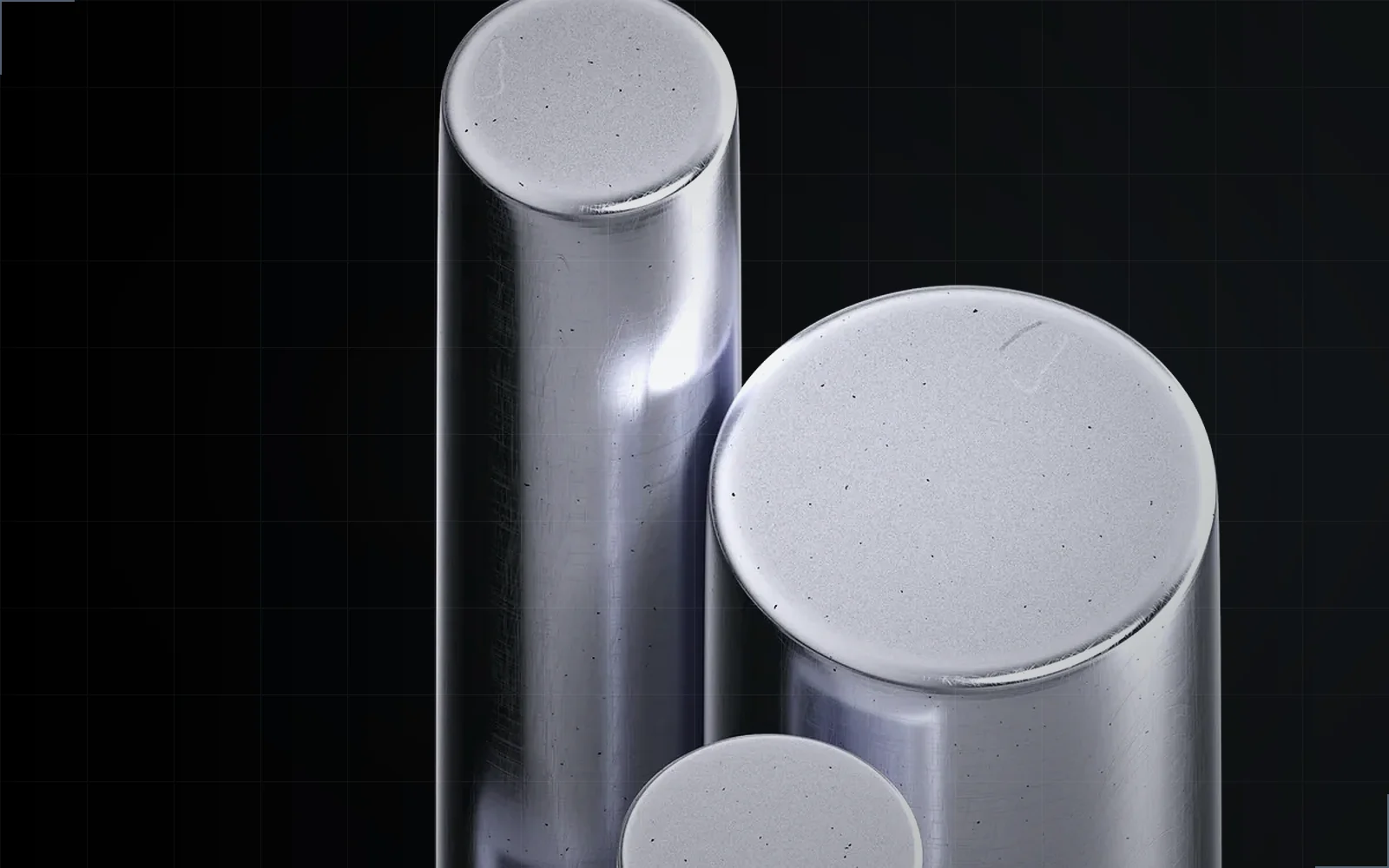
Stainless that hardens like tool steel: 1,310 MPa in H900 with minimal distortion.
Price index: $$$$
Material properties
| Parameter | Value |
|---|---|
| Tensile strength | 1310 MPa (H900) |
| Yield strength | 1170 MPa (H900) |
| Hardness | 40–44 HRC (H900) |
| Density | 7.75 g/cm³ |
Choose it when
When stainless must also be strong: machine near-final in soft Condition A, age at 482 °C with almost no distortion, and finish-grind only critical features — far simpler than quench-and-temper steels.
Look elsewhere when
Not a 316L substitute in chlorides, and H900 has reduced stress-corrosion resistance (use H1025+ in aggressive environments). For simple corrosion-only duty, 304 costs far less.
Compatible finishes
As-Machined
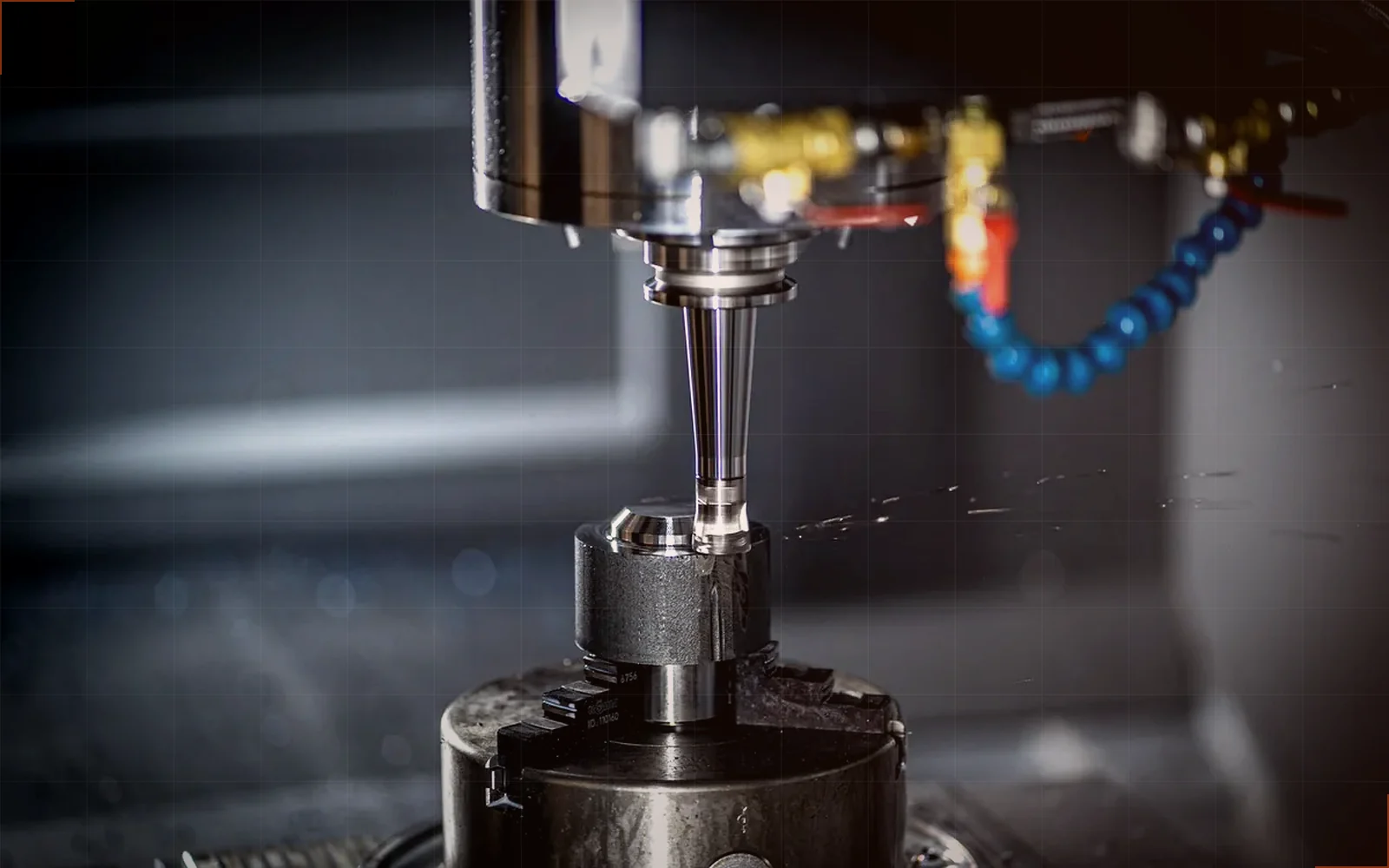
The baseline finish: straight off the machine, fastest and cheapest.
Passivation
Chemical hygiene for stainless: strips embedded iron so the steel can be as stainless as advertised.
Electropolishing
Reverse plating that brightens, deburrs and passivates stainless in one step.
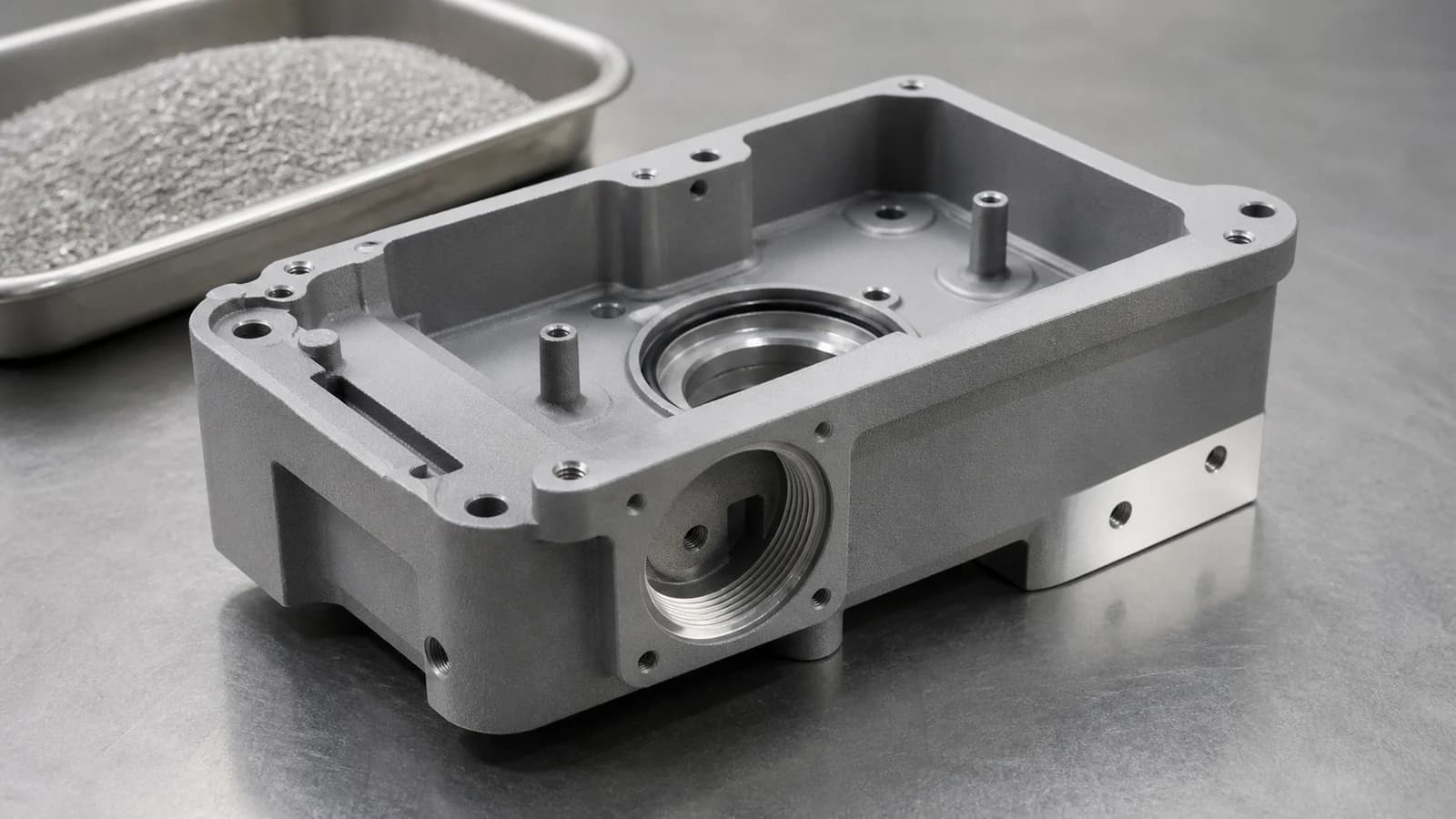
Bead Blasting
The uniform matte look: erases tool marks, hides fingerprints, preps perfect anodizing.
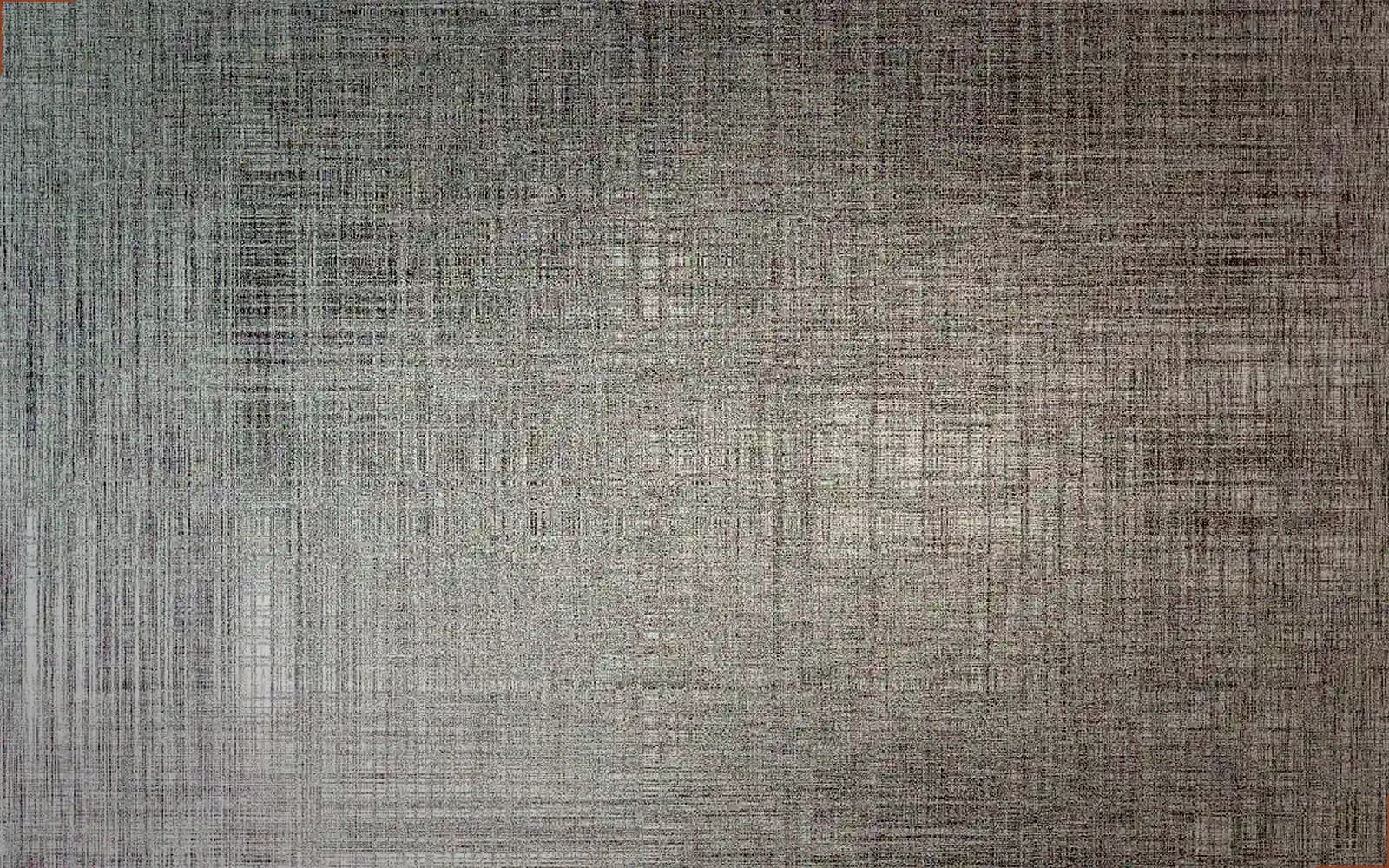
Brushed Finish
The appliance-grade look: directional satin grain on panels, bezels and show faces.
Polishing
Progressive abrasives down to mirror: the finish for optics, molds and show surfaces.

Vibratory Tumbling
Batch deburring by the bowl-full: every edge broken, every burr gone, at volume prices.
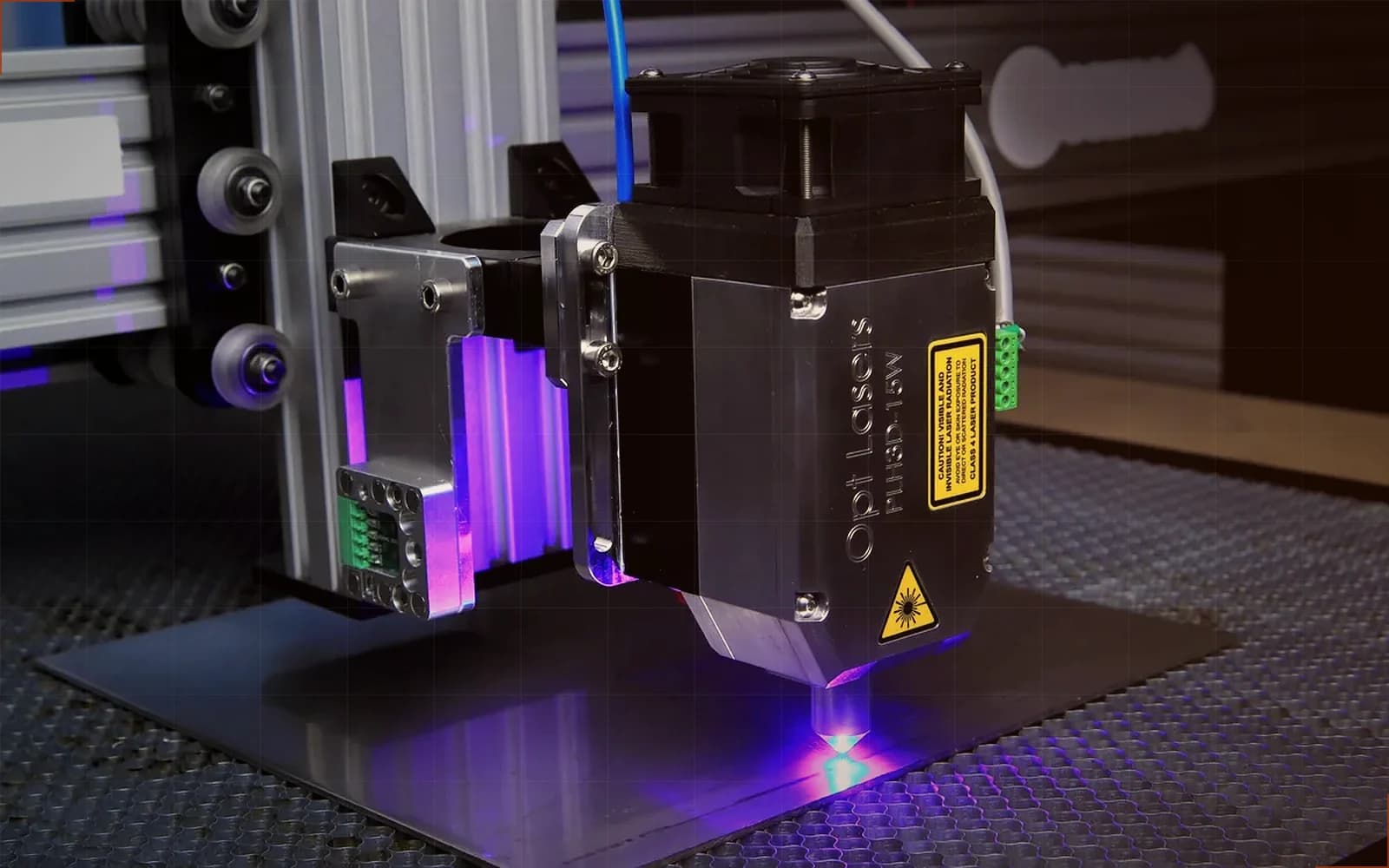
Laser Marking
Permanent identification with zero dimensional change: serials, logos and codes burned in, not stuck on.
PTFE Coating (Teflon)
The slippery armor: fluoropolymer for low friction, non-stick release and chemical inertness.
Typical applications
- Pump and valve shafts
- Robot gearbox components
- Aerospace fasteners and fittings
- Loaded surgical instrument hinges
Compared with similar grades
| Property | Stainless Steel 17-4 PH | Stainless Steel 303 | Stainless Steel 304 | Stainless Steel 316L |
|---|---|---|---|---|
| Tensile strength | 1310 MPa (H900) | ~620 MPa (cold drawn) | 515 MPa | 485 MPa |
| Yield strength | 1170 MPa (H900) | ~415 MPa (cold drawn) | 205 MPa | 170 MPa |
| Hardness | 40–44 HRC (H900) | ≤228 HB | ≤201 HB | ≤217 HB |
| Density | 7.75 g/cm³ | 8.00 g/cm³ | 8.00 g/cm³ | 7.98 g/cm³ |
| Price index | $$$$ | $$$ | $$$ | $$$ |
| Machinability | 2/5 | 4/5 | 3/5 | 3/5 |
Stainless Steel 17-4 PH buyer questions
01Should 17-4 PH be machined before or after heat treatment?
Mostly before. The normal route is to machine in Condition A (solution-annealed, roughly 33–38 HRC), then age. Precipitation hardening is a low-temperature step with small, predictable dimensional change — published data put the contraction around 0.04–0.06% for H900 and roughly double that for H1150 — so most features can be finished in the soft condition and only the tightest fits ground after ageing. That is the whole attraction of the alloy compared with quench-and-temper steels. Tell the supplier which condition the drawing dimensions apply to; "after H900" and "before ageing" are different parts.
02H900, H1025 or H1150 — which condition should I specify?
H900 (aged at 482 °C) gives the highest strength and hardness, about 40–44 HRC, with the lowest toughness and the least resistance to stress-corrosion cracking. H1025 (552 °C) lands around 35 HRC with noticeably better toughness and is the common general-purpose choice. H1150 (621 °C) is the softest, roughly 28–32 HRC, with the best toughness and SCC resistance; sour-service and pressure-retaining specifications typically call for H1150 variants. Specify the condition on the drawing rather than the hardness alone, and if the part sees chlorides under sustained stress, avoid H900.
03How does 17-4 PH compare with 304 and 316L for corrosion?
In mild atmospheres and fresh water it behaves much like 304. It is below 316L in chlorides and in aggressive cleaning chemistry, so it is not a drop-in for wetted process parts. Two practical differences matter on the drawing: 17-4 PH is martensitic and therefore magnetic, unlike 304 and 316L; and it needs passivation after machining (ASTM A967 is the usual reference) to restore the passive layer that cutting disrupts. For product-contact surfaces, electropolishing on top of passivation is the normal route.
04Is 17-4 PH difficult to machine?
In Condition A it machines like a tough stainless: rigid setups, sharp positive-rake tooling and a steady feed so the tool does not rub and work-harden the surface. It is easier than 304 in one respect — the chips break better. In the aged conditions it is markedly harder and cutting speeds fall; finishing after ageing is usually confined to grinding critical diameters and faces. Call out surface finish only on the surfaces that need it, and expect the supplier to plan roughing, ageing and finish operations around those callouts.
0517-4 PH or 316L for a machined stainless part?
Choose 17-4 PH when the part needs strength or wear resistance — its yield strength in H900 is roughly three times that of 316L — such as shafts, gearbox components, loaded instrument hinges and fittings. Choose 316L when chloride corrosion, cleaning chemistry or a non-magnetic requirement dominates: wetted process parts, product-contact surfaces, implants. In medical work both are common, for different jobs: 17-4 PH in loaded instrument mechanisms, 316L where the part touches tissue or product.
CNC machining service by country
Have a part in mind?
Upload CAD or drawings. Eligible CNC work gets an instant estimate; other processes move to engineer review. NDA-protected from the first byte.
Start an RFQ