Material · Engineering Plastics
PEEK
The polymer that replaces metal: 250 °C service, chemical immunity, implant-grade options.
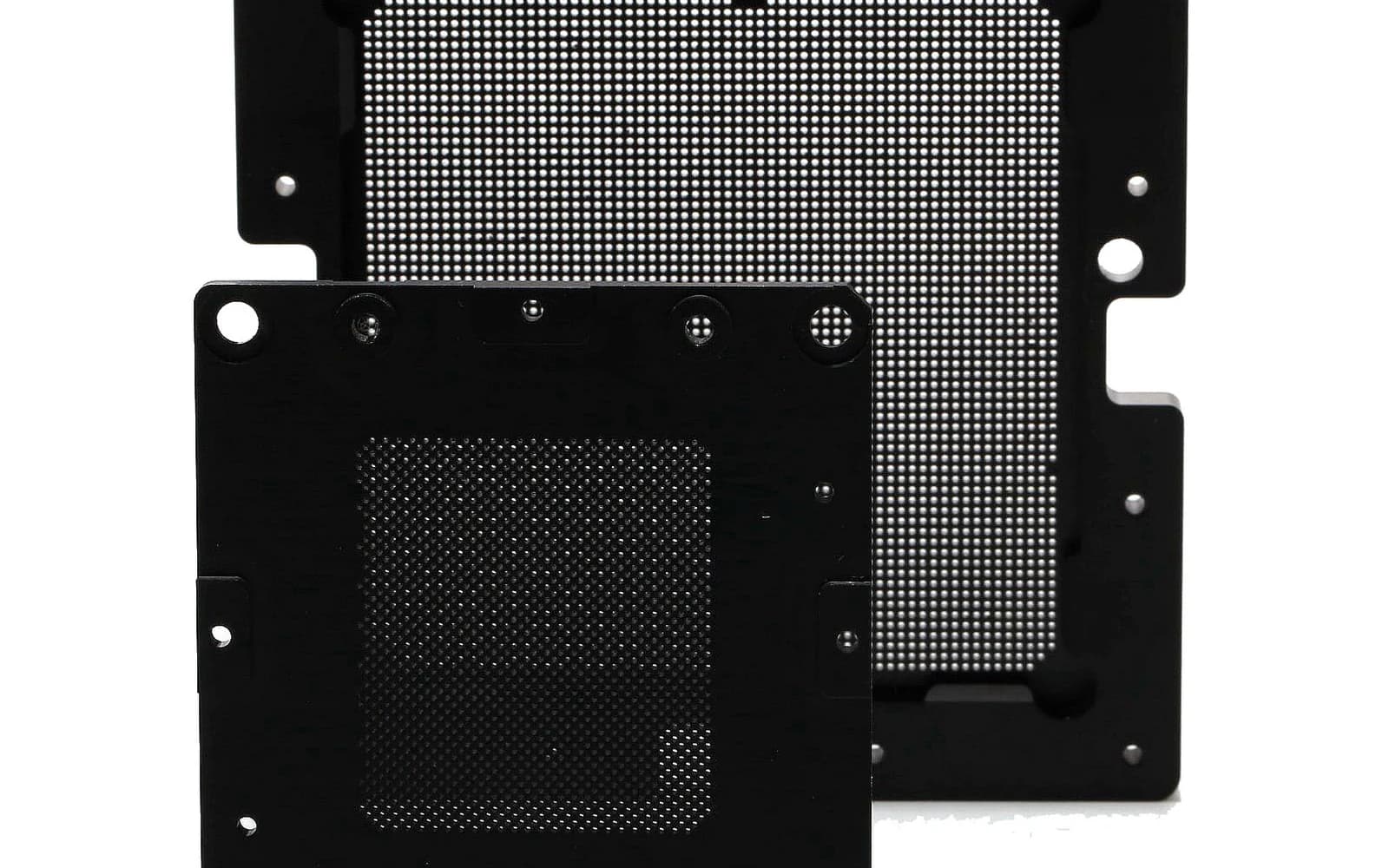
Price index: $$$$$
Instant quote onlineMaterial properties
| Parameter | Value |
|---|---|
| Tensile strength | 100 MPa |
| Yield strength | ~100 MPa |
| Hardness | M99 (Rockwell) |
| Density | 1.30 g/cm³ |
Choose it when
The environment eliminates everything cheaper: above ~150 °C continuous, aggressive chemicals, repeated sterilization, vacuum/outgassing limits or implantation. Nothing else machinable survives all five.
Look elsewhere when
The part lives at room temperature in air — POM does the job at a fraction of the cost. If 170 °C and sterilizability are enough, PEI (Ultem) delivers most of PEEK for far less.
Compatible finishes
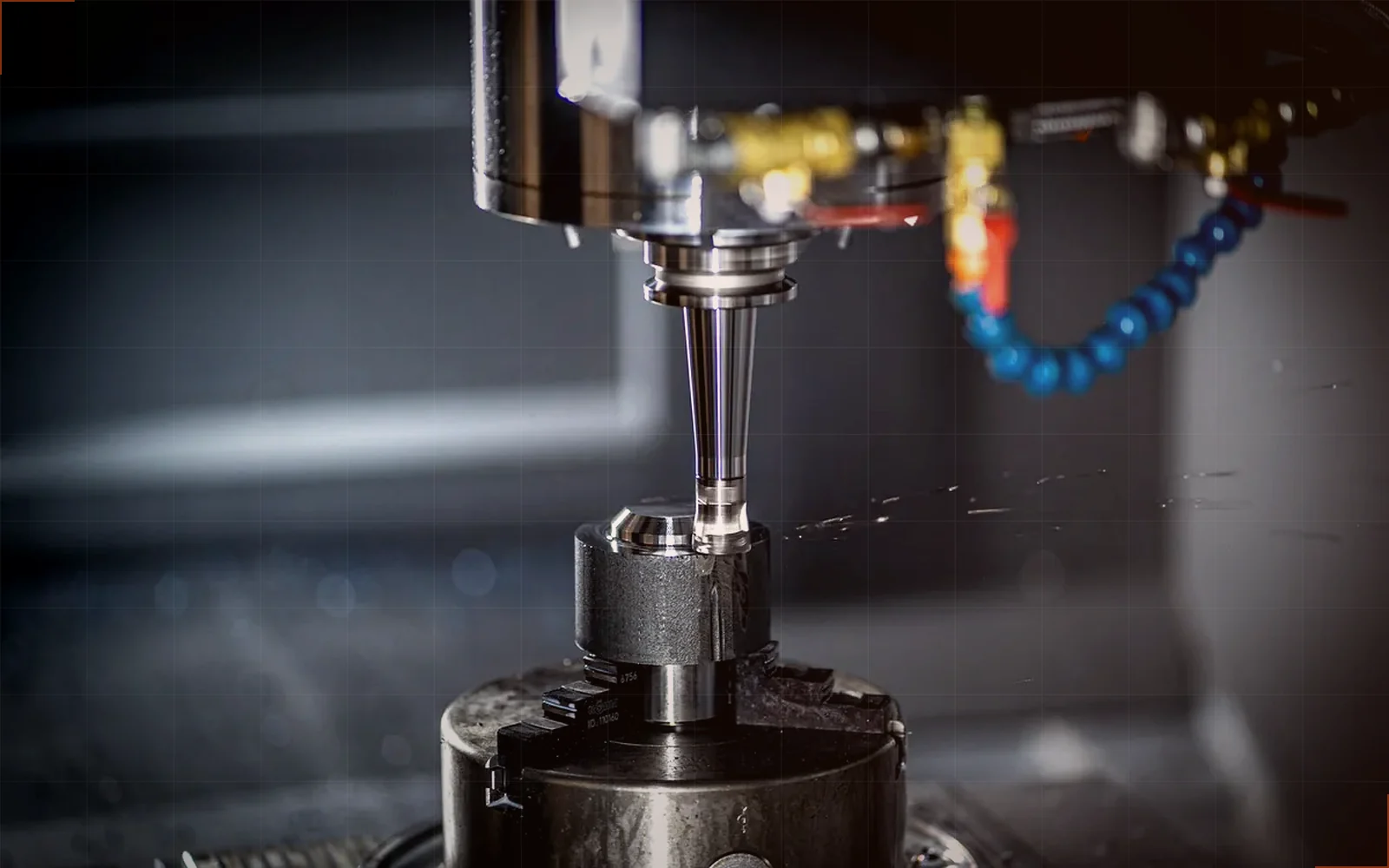
As-Machined
The baseline finish: straight off the machine, fastest and cheapest.

Vibratory Tumbling
Batch deburring by the bowl-full: every edge broken, every burr gone, at volume prices.
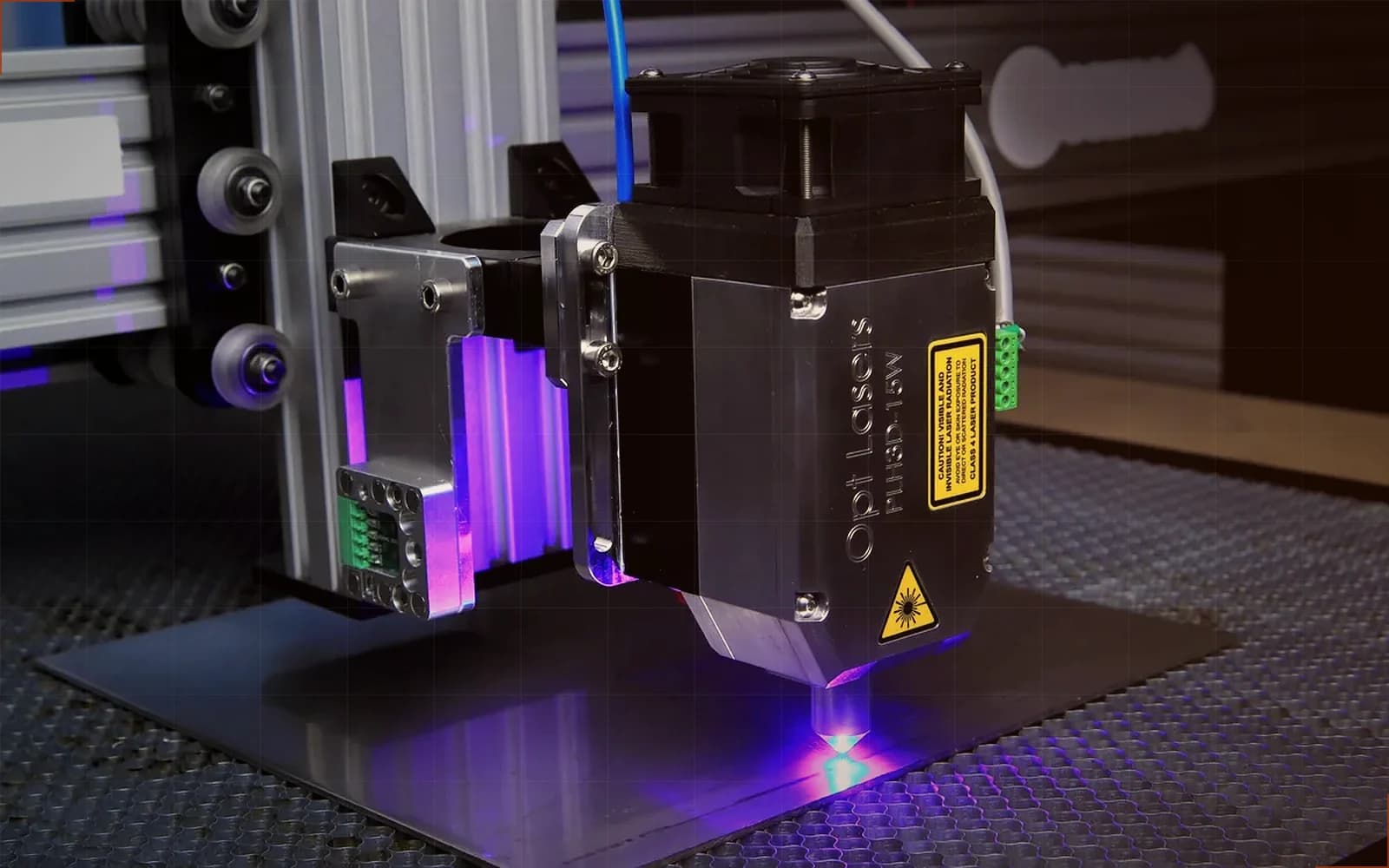
Laser Marking
Permanent identification with zero dimensional change: serials, logos and codes burned in, not stuck on.
Typical applications
- Semiconductor wafer-handling components
- Down-hole oil & gas seals and bushings
- Implant trials and surgical components (implant grade)
- Aerospace brackets and high-temp insulators
Compared with similar grades
| Property | PEEK | ABS | Polycarbonate (PC) | Nylon PA6 |
|---|---|---|---|---|
| Tensile strength | 100 MPa | 40 MPa | 66 MPa | 79 MPa (dry) |
| Yield strength | ~100 MPa | ~40 MPa | ~62 MPa | ~79 MPa (dry) |
| Hardness | M99 (Rockwell) | R105 (Rockwell) | R118 (Rockwell) | R119 (Rockwell, dry) |
| Density | 1.30 g/cm³ | 1.05 g/cm³ | 1.20 g/cm³ | 1.14 g/cm³ |
| Price index | $$$$$ | $ | $ | $ |
| Machinability | 3/5 | 4/5 | 3/5 | 3/5 |
PEEK buyer questions
01Unfilled, glass-filled or carbon-filled PEEK — which should the drawing call out?
Unfilled PEEK is the default: the toughest of the three, the only one normally considered for wear against a soft mating surface, and the grade family that implantable and food-contact versions come from. Glass-filled (typically 30%) roughly doubles stiffness and improves creep resistance under sustained load, at the cost of toughness — and glass is abrasive, so tooling wears faster and the price of the machined part rises. Carbon-filled (typically 30%) gives similar stiffness plus much better thermal conductivity and wear behaviour, a lower thermal expansion coefficient, and it is electrically dissipative rather than insulating — which matters both ways: good for static-sensitive handling, wrong if you needed an insulator. Name the exact grade on the drawing, not just "PEEK"; the three behave differently enough that substituting one is a design change.
02Why do machined PEEK parts move after machining, and what does annealing do?
Extruded and compression-moulded PEEK stock carries internal stress from the way it was cooled, and it is semi-crystalline — so removing material lets that stress redistribute, and the part relaxes out of tolerance hours or days later. Thin walls, deep pockets and asymmetric geometry make it worse. The standard answer is a stress-relief anneal: on stock before machining for demanding parts, and again between roughing and finishing when tolerances are tight, with the finishing cut taken after the part has settled. Ask for it explicitly on tight-tolerance work — it costs time in the route and a supplier will not add it unless the drawing or the RFQ says the tolerance depends on it.
03PEEK, PEI (Ultem), PTFE or POM — when is PEEK actually necessary?
PEEK earns its price when several demands stack. Its glass transition is around 143 °C and it melts near 343 °C, which is what supports continuous service around 250 °C and repeated steam autoclaving — PEI softens well below that and is not a steam-sterilisation material in the same way. PEEK also resists nearly every industrial chemical except concentrated sulphuric acid and some halogenated media, which is where PEI gives up first. If the requirement is only chemical inertness and low friction with no structural load, PTFE is cheaper and easier but creeps badly and cannot hold a tolerance under load. If the part lives at room temperature in air under moderate load, POM machines faster and costs a fraction. The honest test: write down the maximum continuous temperature, the chemicals, the sterilisation cycles and the load. If fewer than two of the four are demanding, something cheaper will do.
04What limits tolerances on a machined PEEK part?
Three things that do not apply to metal. Thermal expansion: unfilled PEEK expands roughly an order of magnitude more than steel per degree, so a tight fit has to state the temperature it applies at, and a part measured warm off the machine will not measure the same cold. Filled grades expand less, which is one reason they get specified for dimensionally critical work. Residual stress: see annealing above — the part can be in tolerance at inspection and out of it a week later. And cutting heat: PEEK is a poor conductor, so heat stays in the cut; dull tools or heavy finishing passes soften the surface and leave dimensions that drift as the part cools. Practically, this means dimensioning only the features that matter, stating a reference temperature for critical fits, and generous internal radii — PEEK is notch-sensitive and sharp internal corners are where stress cracks start.
05Can machined PEEK be sterilised, and what about implantable grades?
Industrial PEEK withstands repeated steam autoclaving, gamma irradiation and ethylene oxide, which is a large part of why it displaced metal in reusable surgical instrumentation and lab hardware. Implantable grades are a separate matter: they are distinct product lines sold under their own certification, lot traceability and supply agreements by the resin producers, and compliance is a property of the resin and its documented chain of custody, not of the machining. If your part is implantable or long-term body-contact, name the exact implantable grade on the drawing, expect the supplier to buy it through the controlled channel and pass the producer’s documentation through unaltered, and do not accept an "equivalent". For non-implant medical and lab parts, standard grades with the producer’s USP Class VI or food-contact declaration are the normal route.
Related engineering guides
PEEK CNC machining
PEEK CNC Machining Design Guide: Tolerances, Applications and RFQ Checklist
How to design and quote CNC machined PEEK parts for medical, semiconductor, aerospace and high-temperature applications.
CNC machining for semiconductor fixtures
CNC Machining for Semiconductor Fixtures: Clean, Stable and Documented Parts
How to source CNC machined semiconductor fixtures, vacuum plates, wafer handling parts and inspection-ready tooling.
plastic CNC machining PEEK POM PTFE
Plastic CNC Machining: PEEK vs POM vs PTFE for Precision Parts
Compare PEEK, POM/Delrin and PTFE for CNC machined plastic parts, including tolerances, wear, heat, chemistry and cost.
PEEK surgical guide CNC machining
PEEK Surgical Guide CNC Machining: Medical Fixtures, Edges and Documentation
RFQ guide for PEEK surgical guide CNC machining: material grade, non-implant vs implant context, sterilization exposure, burr control and documentation.
CNC machining service by country
Have a part in mind?
Upload CAD or drawings. Eligible CNC work gets an instant estimate; other processes move to engineer review. NDA-protected from the first byte.
Start an RFQ