Service
5-Axis Machining
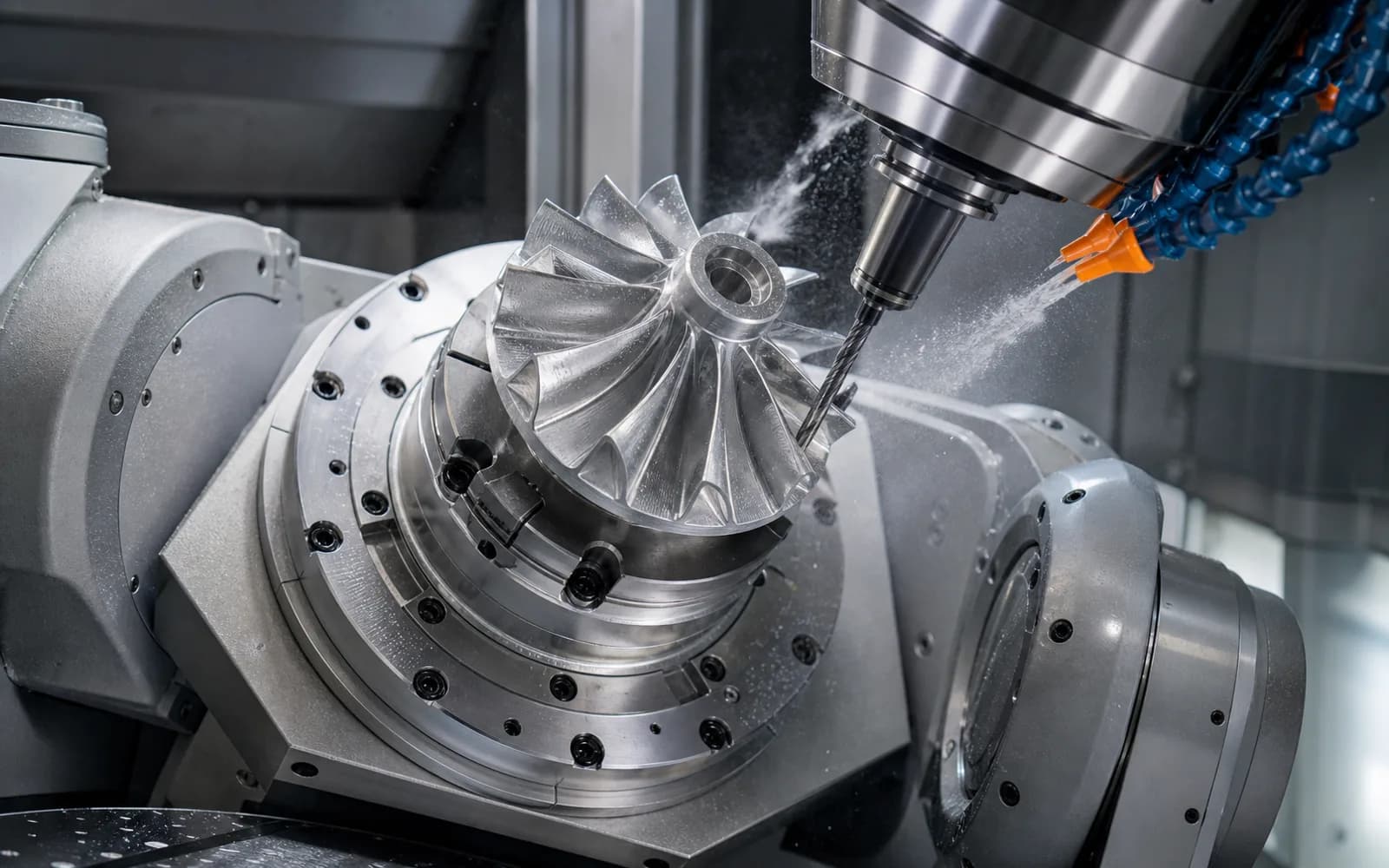
Simultaneous 5-axis machining for impellers, freeform surfaces and compound-angle features.
Capabilities
| Parameter | Value |
|---|---|
| Configuration | Trunnion table, simultaneous 5-axis |
| Max part envelope | Ø650 × 500 mm |
| Positioning accuracy | ±0.005 mm |
| Modes | Full simultaneous + 3+2 positional |
| Typical lead time | 5–10 business days |
Typical applications
- Robot joint and wrist housings
- Impellers and turbomachinery blades
- Orthopedic implant prototypes
- Aerospace structural brackets
Parts made with this process
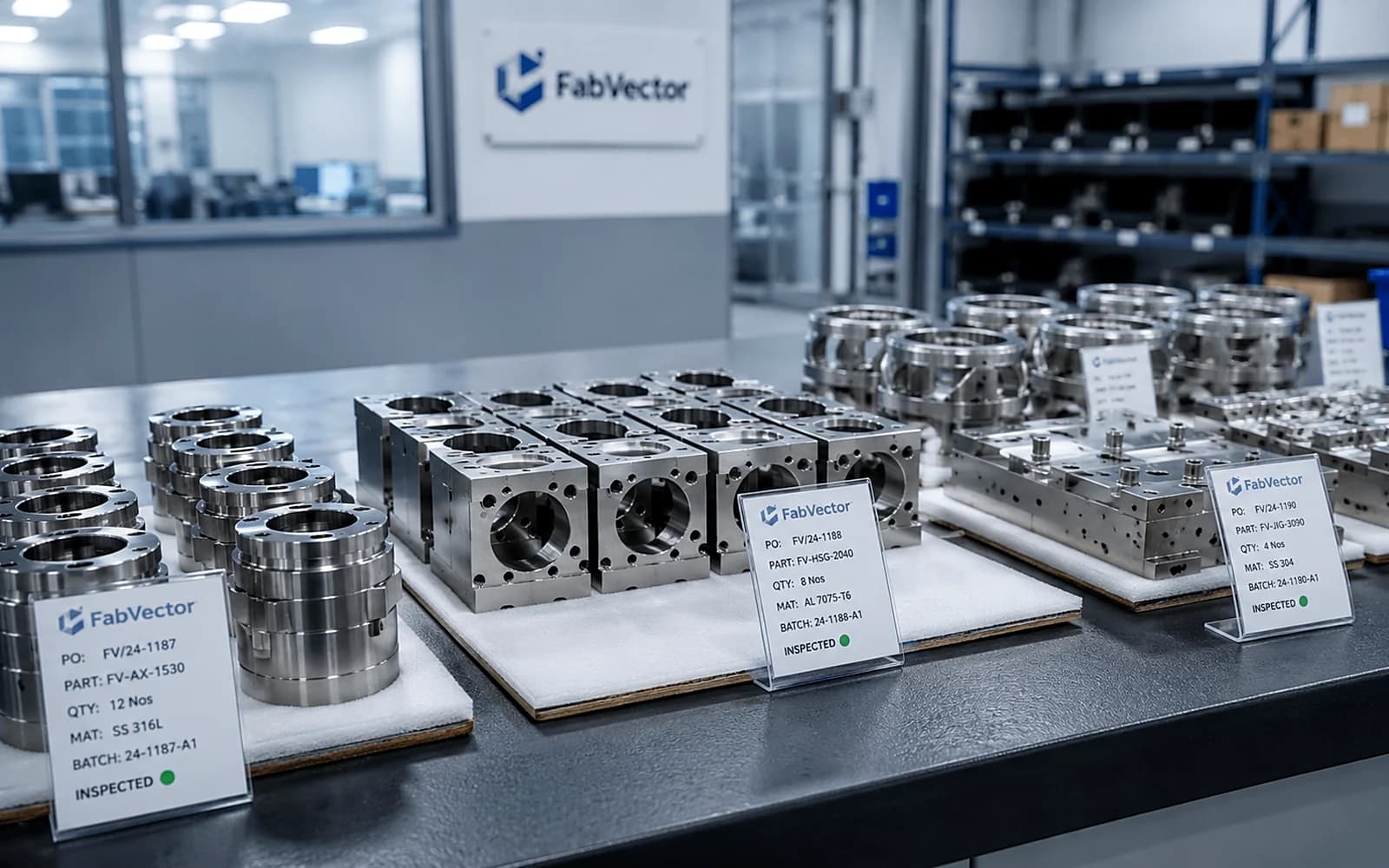
CNC Machined Enclosures & Housings
One-piece housings with controlled datums, sealed interfaces and assembly-ready finishes.
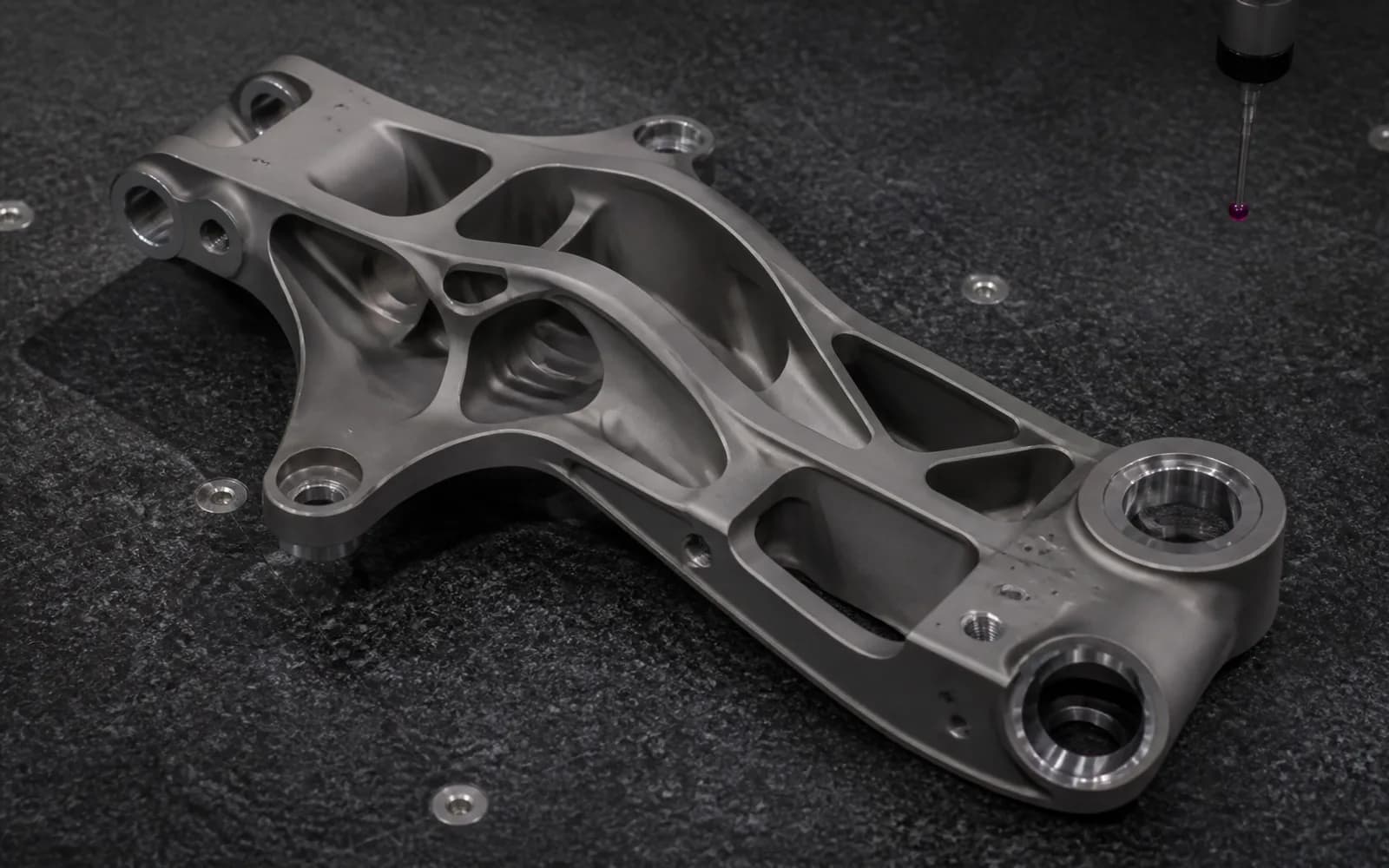
CNC Machined Brackets & Mounts
Structural parts that keep interfaces aligned without carrying unnecessary mass.
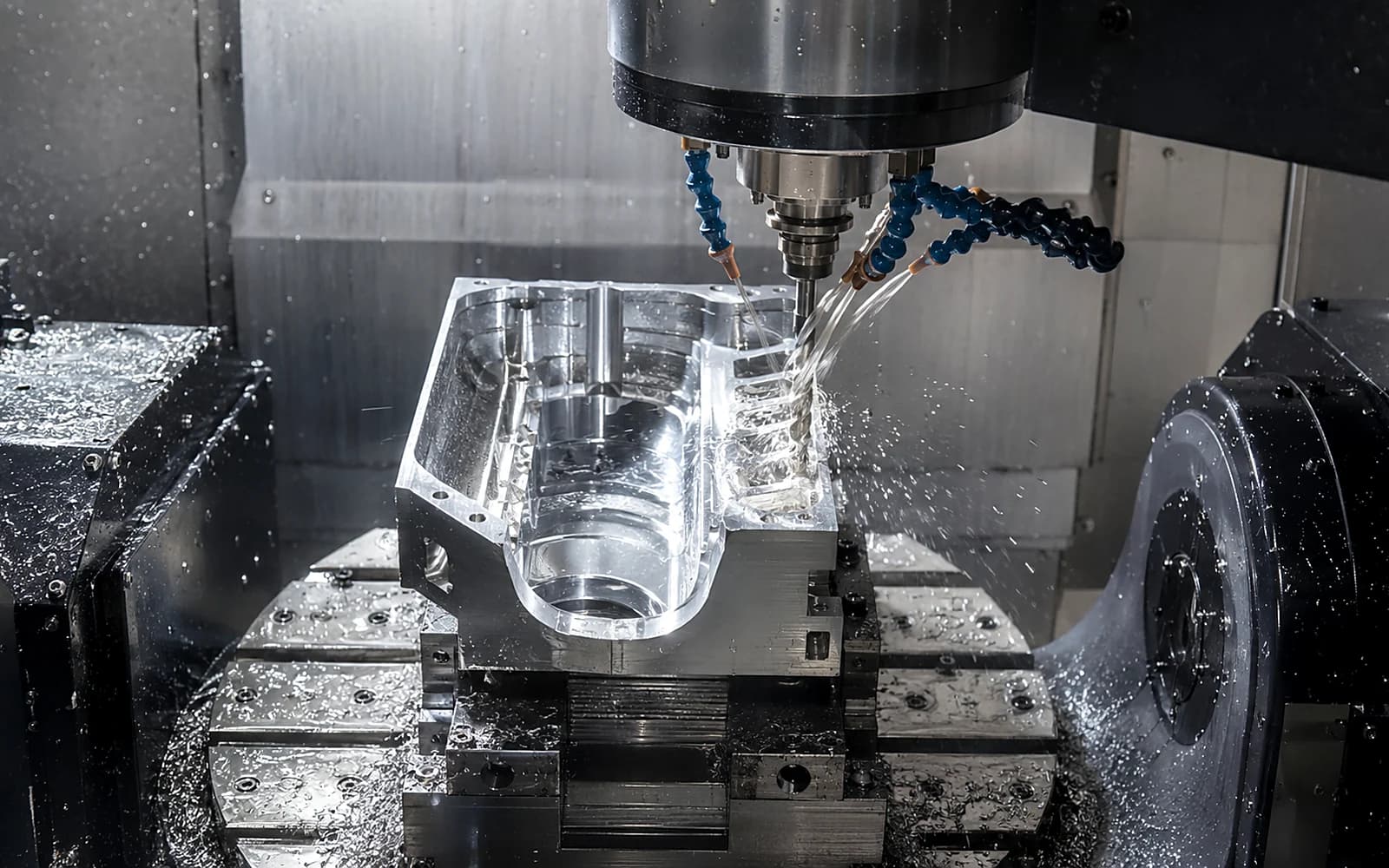
CNC Machined Manifolds
Cross-drilled flow paths, clean intersections and sealing geometry controlled as one part.
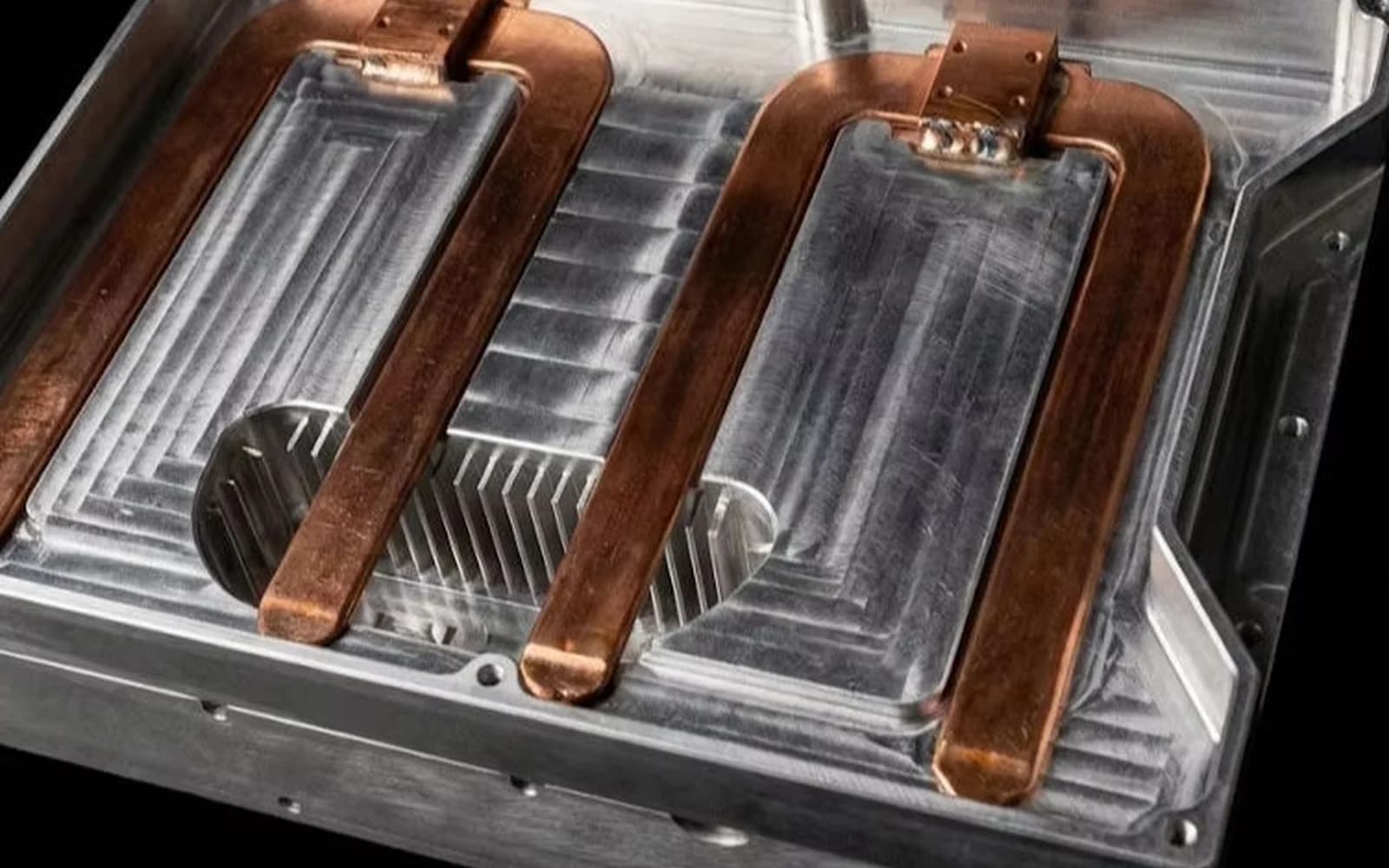
CNC Machined Heat Sinks & Cold Plates
Thermal surfaces, flow channels and sealed interfaces manufactured as one controlled system.
5-Axis Machining buyer questions
01When does a part actually need 5-axis machining instead of 3-axis?
Three situations. First, when features on several faces must hold a tight relationship to one datum scheme — every refixturing on a 3-axis machine adds setup error, and 5-axis removes it by cutting those faces in one clamping. Second, when the geometry is freeform: impeller blades, turbine passages, organic housings, anything where the tool axis has to tilt continuously to follow the surface. Third, when compound-angle holes or pockets would otherwise need custom angle fixtures. A prismatic part with features on one or two faces gains nothing from 5-axis and costs more; send it as 3-axis work.
023+2 positional or simultaneous 5-axis — which one does my part need?
3+2 tilts the part to a fixed angle and then machines in three axes: the accuracy and surface finish of 3-axis work with the access of five, and it covers most compound-angle features, angled holes and multi-face parts. Simultaneous 5-axis moves all five axes at once and is needed when the surface itself is curved and blended — impellers, sculptured faces, undercuts that follow a curved path — or when a uniform scallop pattern on a freeform face matters. You do not specify the method on the drawing; you specify geometry and tolerances, and process planning picks the mode. If witness lines between tool paths are unacceptable on a visible face, say so — that is what pushes a job from 3+2 to simultaneous.
03Is 5-axis machining more expensive?
Per machine-hour, yes. Per finished part, often not. Five-axis removes setups and the fixtures that go with them, shortens the route through the shop, and takes away the refixturing error that is where tolerance stacks between faces are usually lost — so it frequently saves rework and inspection time as well. The honest way to decide is to count what the part would need on a 3-axis machine: how many setups, how many fixtures, and how many tolerances have to hold across faces. A simple part is cheaper on 3-axis. A multi-face precision part is usually cheaper on 5-axis once those costs are counted, and the lead time is shorter.
04How should I dimension a 5-axis part on the drawing?
Start from one primary datum scheme — A, B, C — that the part can realistically be fixtured on for the main operation, and reference everything to it; that is what lets the machine hold the relationships in one clamping. Use profile-of-a-surface for freeform faces with a stated tolerance zone instead of scattering point dimensions across the surface. Reference compound-angle holes with position tolerances to the same datums. Avoid chained dimensions that cross faces. And state how freeform surfaces will be accepted — CMM scanning against the CAD model is the usual method — so inspection is planned before the part is cut, not argued after.
05What are the practical limits — tool reach, internal corners, undercuts?
Reach is set by the tool length-to-diameter ratio: a deep, narrow feature needs a long slender tool that deflects and chatters, so open the feature, add draft, or accept a coarser finish at the bottom. Internal vertical corners carry the radius of the tool that cuts them — call out a corner radius at least as large as the tool you expect, or the corner goes to EDM. Undercuts are possible on 5-axis, but every one needs clearance for the tool holder as well as the cutter; model the holder path, not just the tool. The cheapest fix for all three is a manufacturability review on the STEP file before the drawing is frozen.
Recommended materials
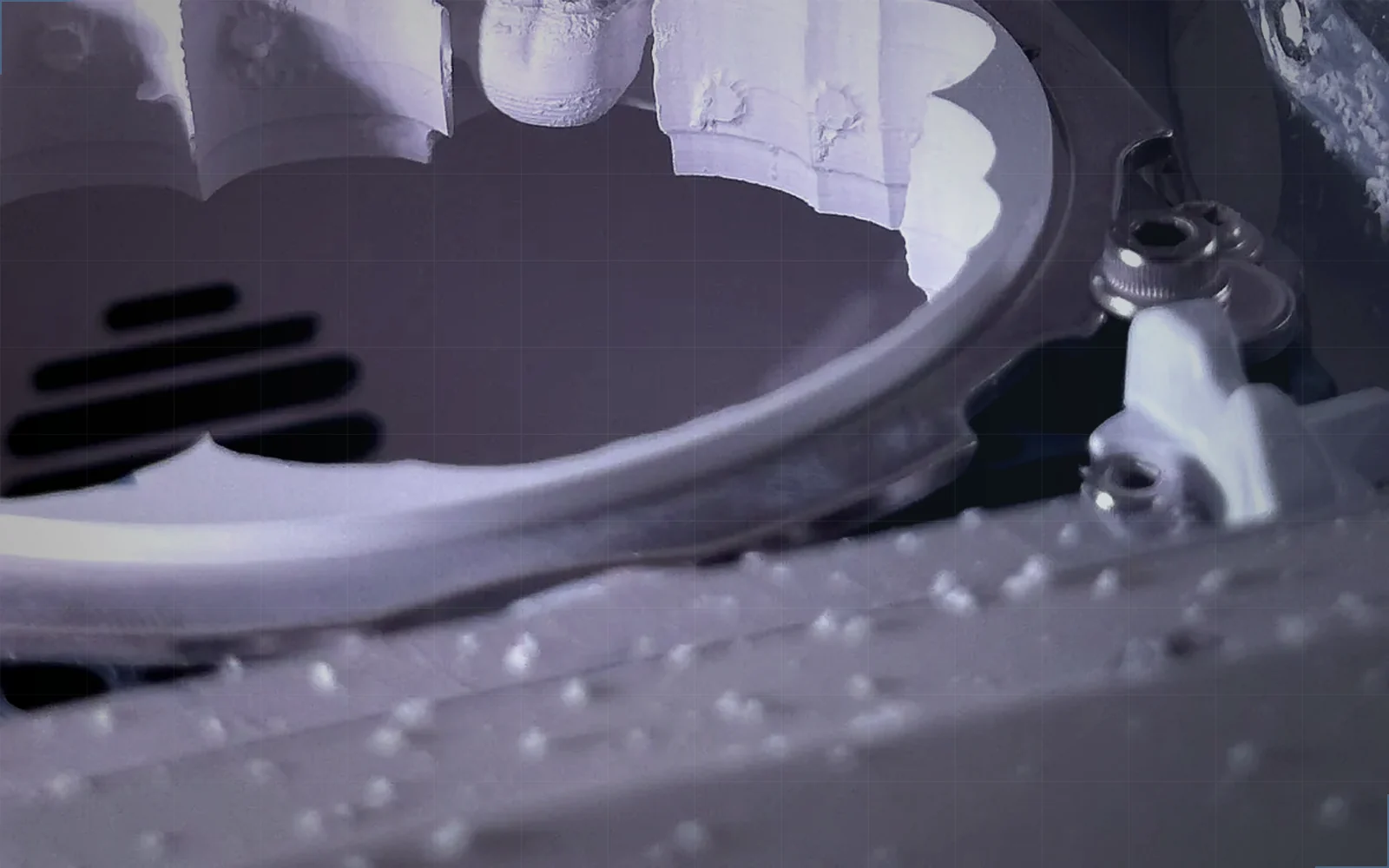
Aluminum 7075-T6
Aircraft-grade aluminum: steel-level strength at a third of the weight.
Titanium Grade 5 (Ti-6Al-4V)
Half the weight of steel at full strength, bio-inert, corrosion-proof — and priced accordingly.
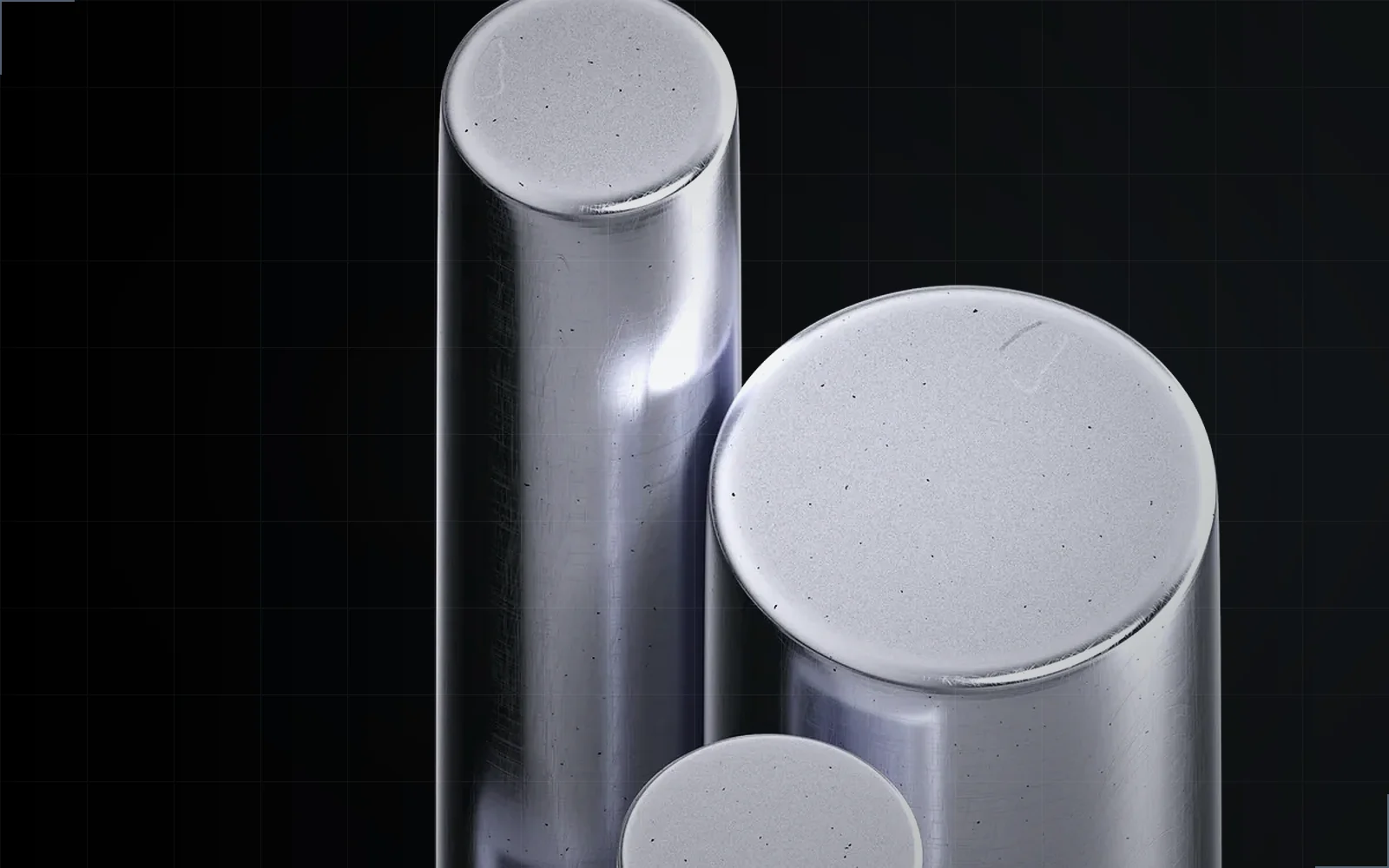
Stainless Steel 17-4 PH
Stainless that hardens like tool steel: 1,310 MPa in H900 with minimal distortion.
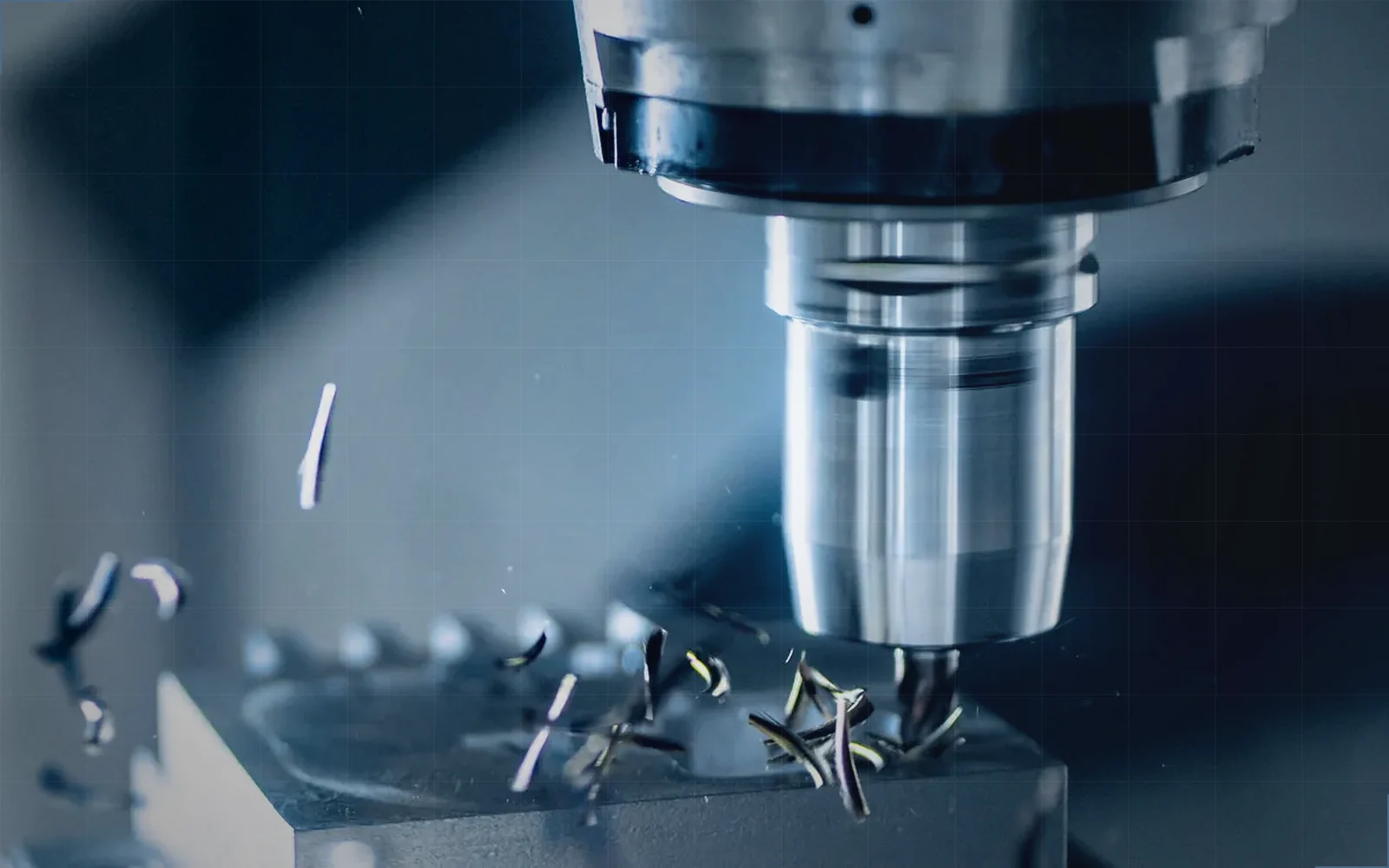
Aluminum 6061-T6
The default CNC aluminum: strong enough for most jobs, machines fast, anodizes well.
Related pages
CNC Machining
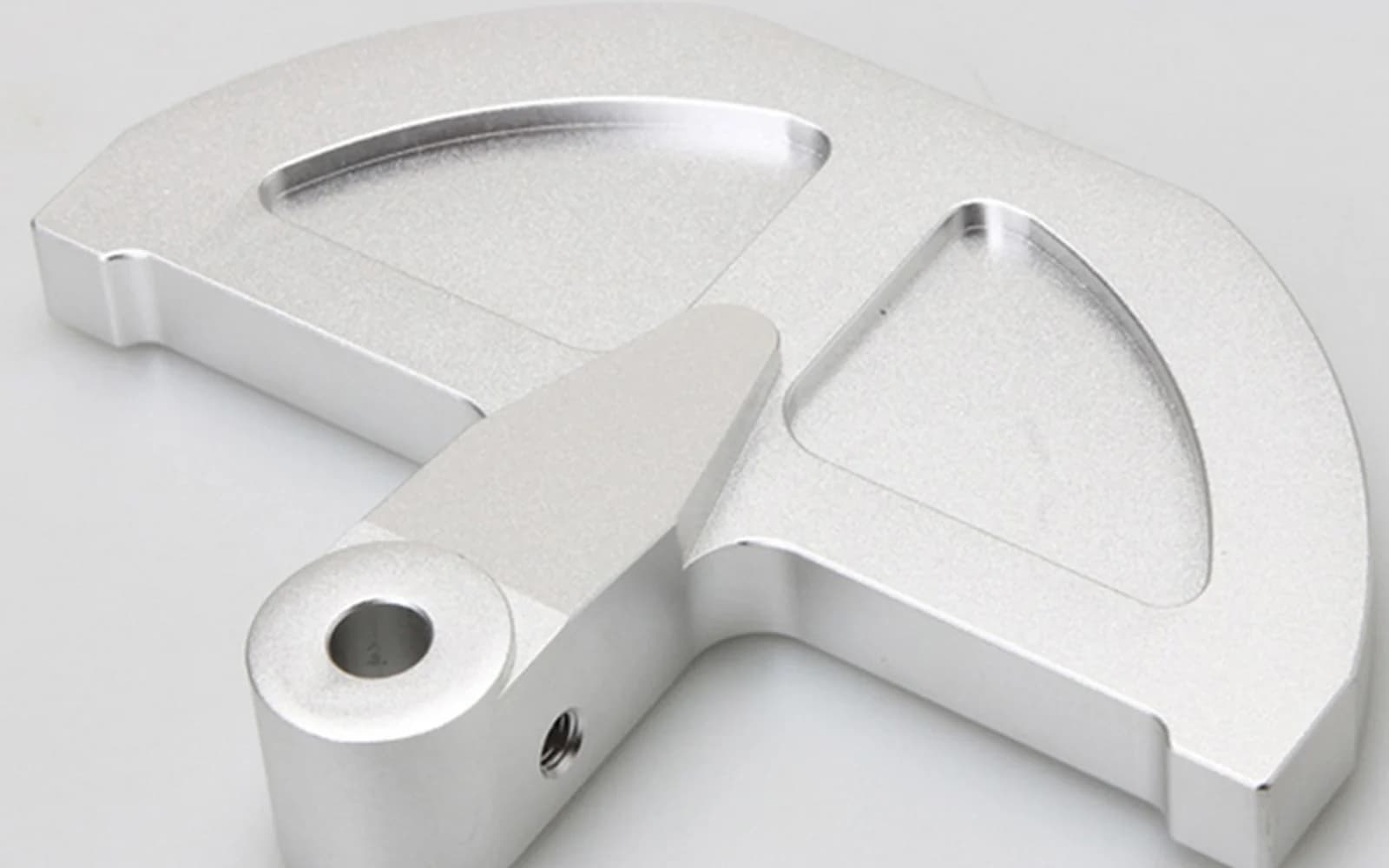
Milling, turning, 5-axis, Swiss-type, EDM and grinding under one roof. One upload, one accountable partner.
CNC Milling
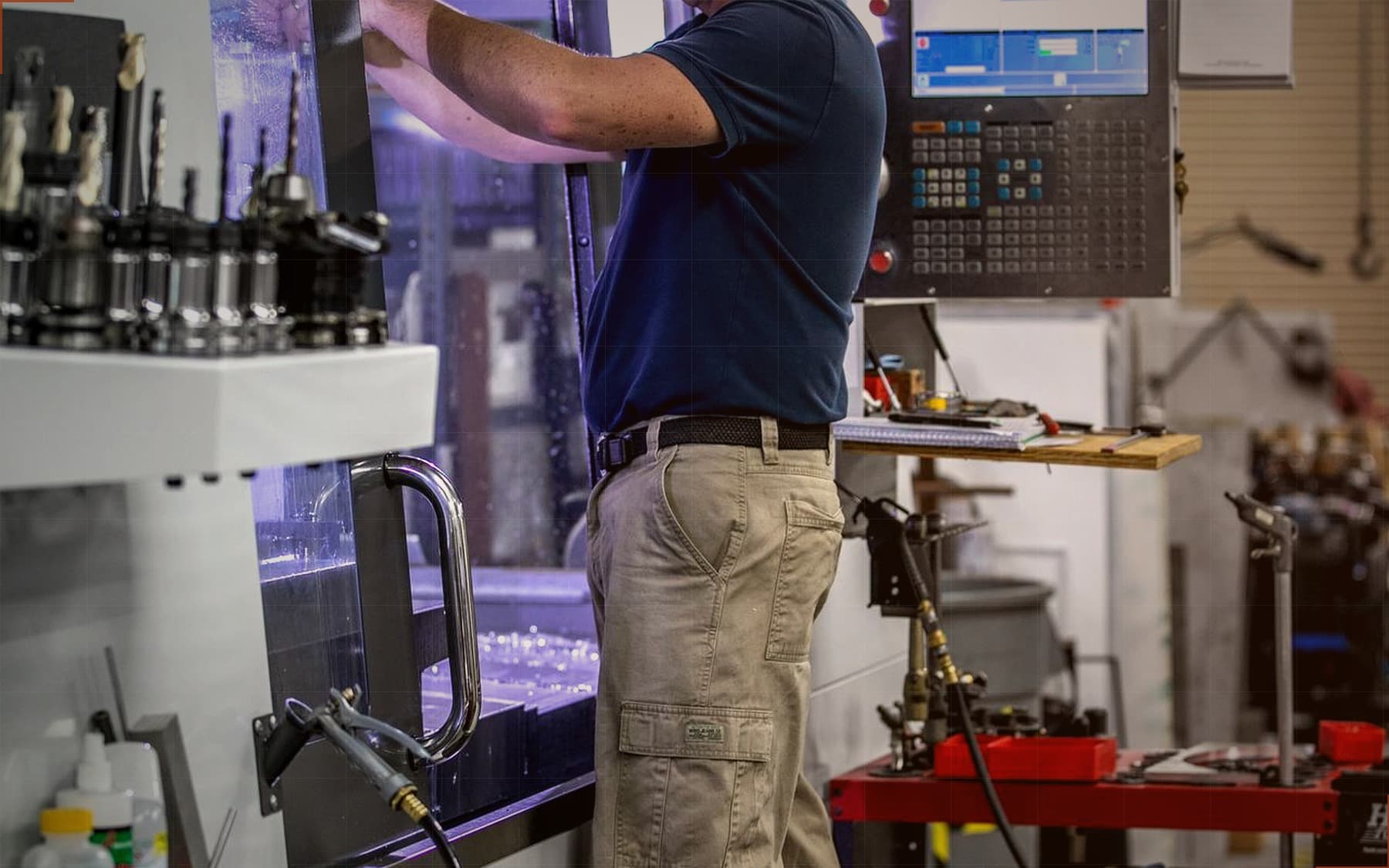
3- and 4-axis vertical machining for housings, brackets, manifolds and structural parts.
CNC Turning
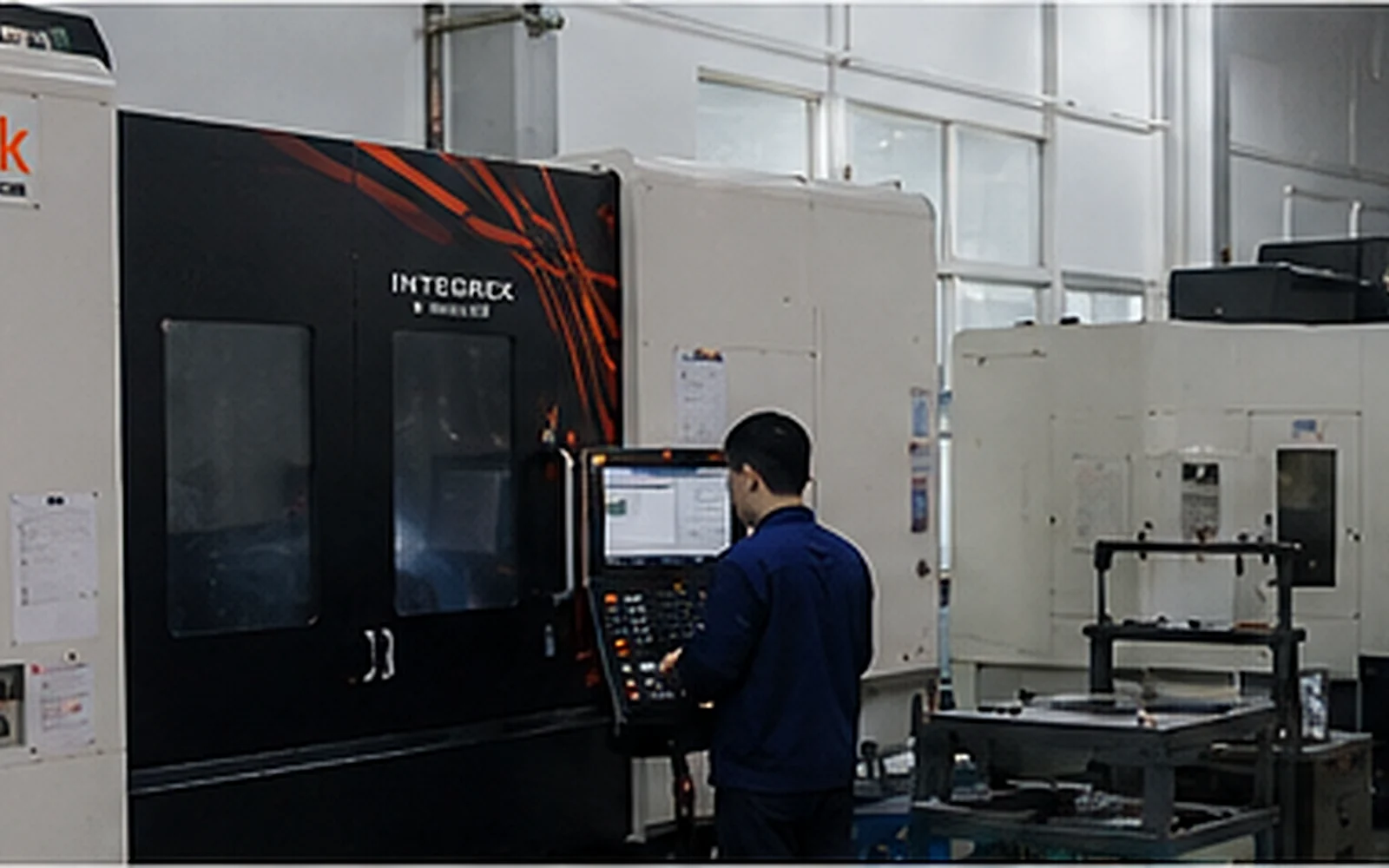
Live-tooling lathes for shafts, pins, bushings and threaded fittings up to Ø406 mm.
Swiss-Type Machining
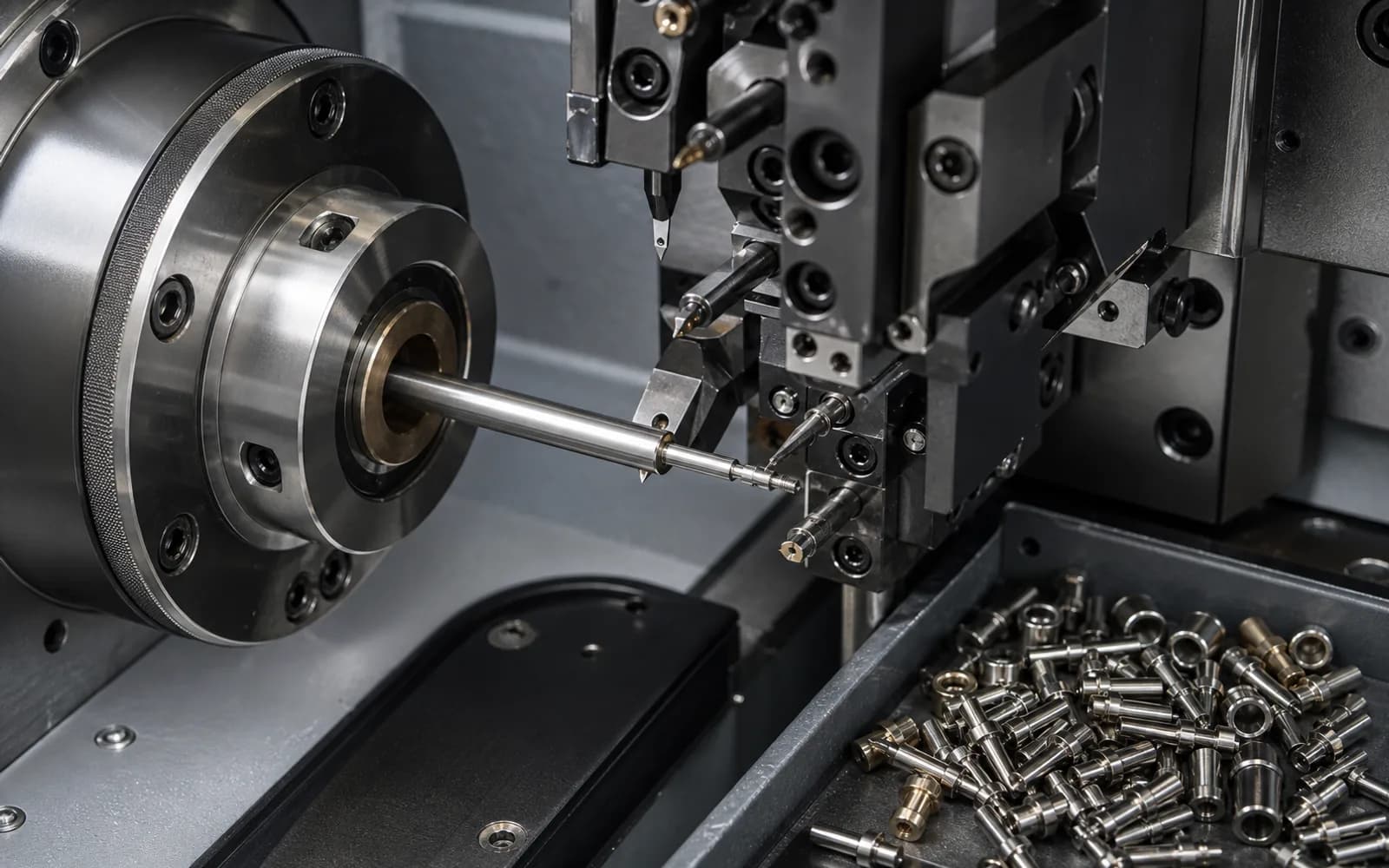
Sliding-headstock lathes for small, slender, high-precision turned parts from Ø1 mm.
Related engineering guides
liquid cooling cold plate CNC machining
Liquid Cooling Cold Plate CNC Machining: Design, Tolerances and Inspection
How to specify CNC machined cold plates for servers, power electronics and AI accelerators: channels, sealing faces, flatness, leak testing and plating.
5-axis CNC machining service
5-Axis CNC Machining Service: When It Beats 3-Axis and How to Quote It
A practical 5-axis CNC machining service guide for complex angles, impellers, robotics housings, aerospace brackets and tight multi-face tolerances.
humanoid robot joint housing CNC machining
Humanoid Robot Joint Housing CNC Machining: 7075, Bearing Fits and Anodizing
RFQ guide for humanoid robot joint housing CNC machining: 7075 aluminum, bearing bores, harmonic drive interfaces, cable ports, anodizing and CMM inspection.
aerospace titanium bracket 5-axis CNC machining
Aerospace Titanium Bracket 5-Axis CNC Machining: Ti-6Al-4V, FAI and Traceability
Long-tail aerospace RFQ guide for titanium bracket 5-axis CNC machining: Ti-6Al-4V, weight pockets, datums, FAI, CMM and traceability.
Five-axis parts carry the most undocumented setup knowledge, which is exactly what fails to transfer. Which setup knowledge has to be written down is worth settling before you request a quote.
Have a part in mind?
Upload CAD or drawings. Eligible CNC work gets an instant estimate; other processes move to engineer review. NDA-protected from the first byte.
Start an RFQ