Material · Aluminum Alloys
Aluminum 7075-T6
Aircraft-grade aluminum: steel-level strength at a third of the weight.
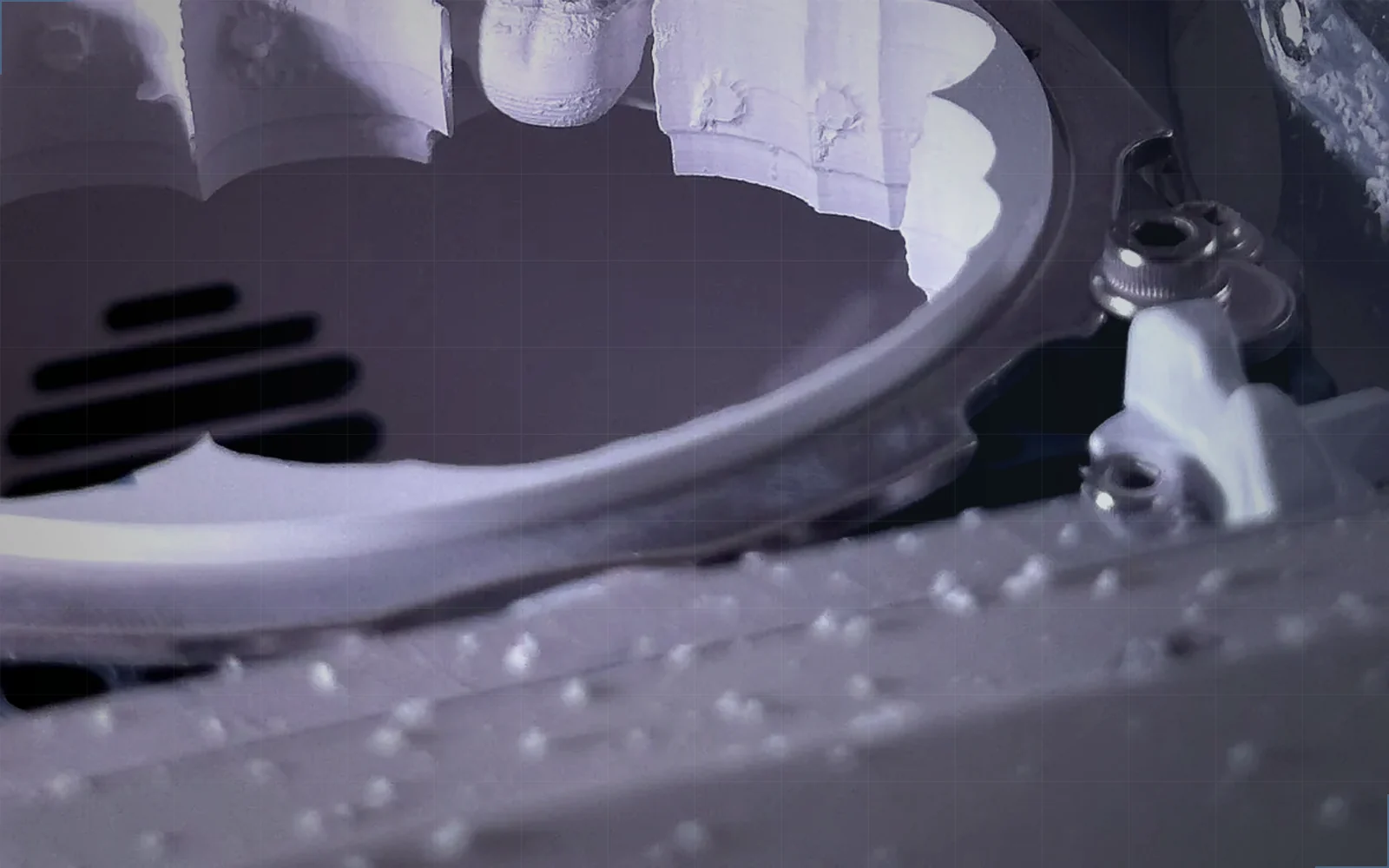
Price index: $$
Instant quote onlineMaterial properties
| Parameter | Value |
|---|---|
| Tensile strength | 572 MPa |
| Yield strength | 503 MPa |
| Hardness | 150 HB |
| Density | 2.81 g/cm³ |
Choose it when
Pick 7075 when the part is strength- or fatigue-limited: 82% higher yield than 6061 lets you thin walls and recover the cost premium in weight savings.
Look elsewhere when
Skip it for welded assemblies (crack-prone) and stiffness-limited parts — the elastic modulus equals 6061, so it will not deflect less. Anodize any exposed surface.
Compatible finishes
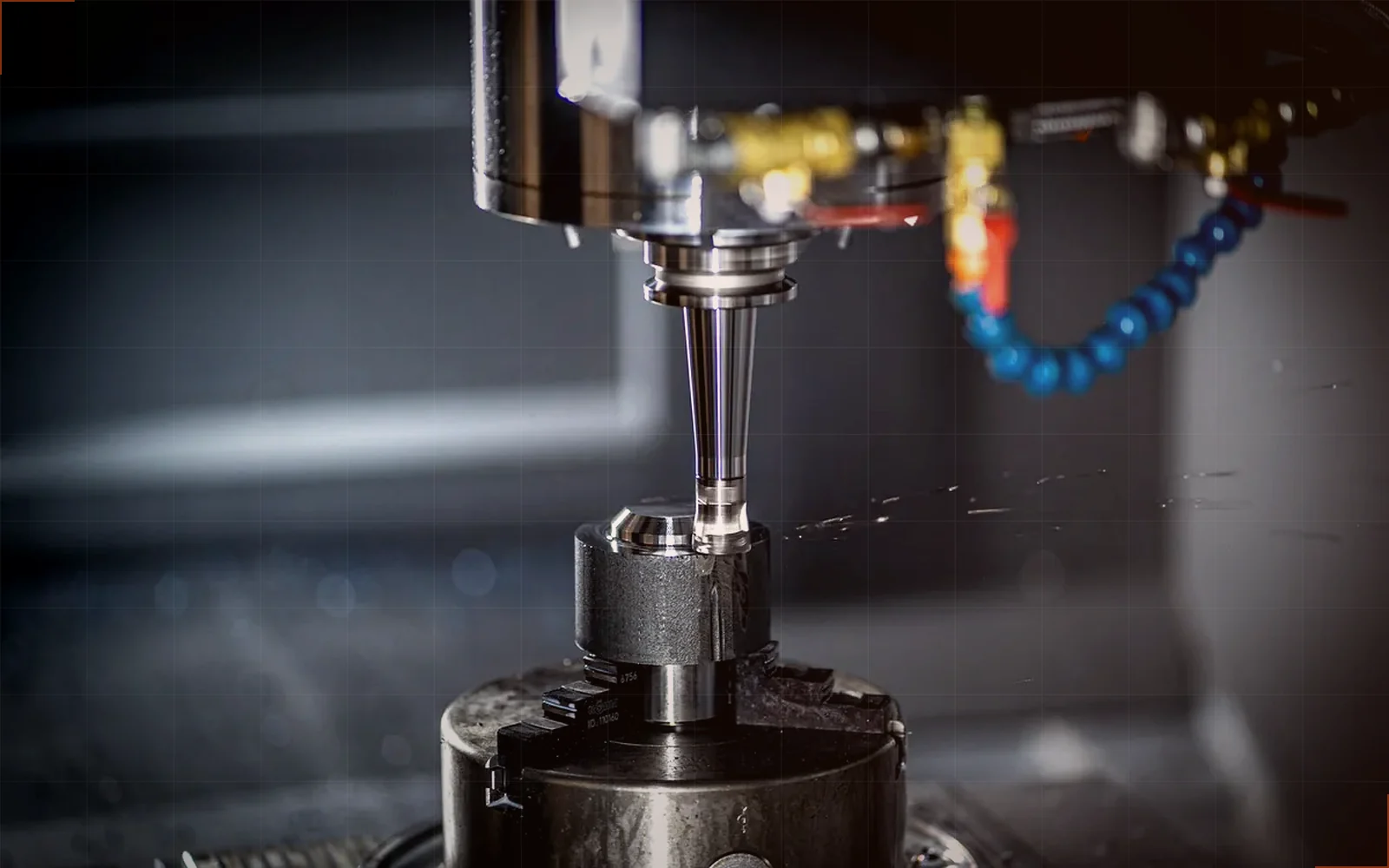
As-Machined
The baseline finish: straight off the machine, fastest and cheapest.
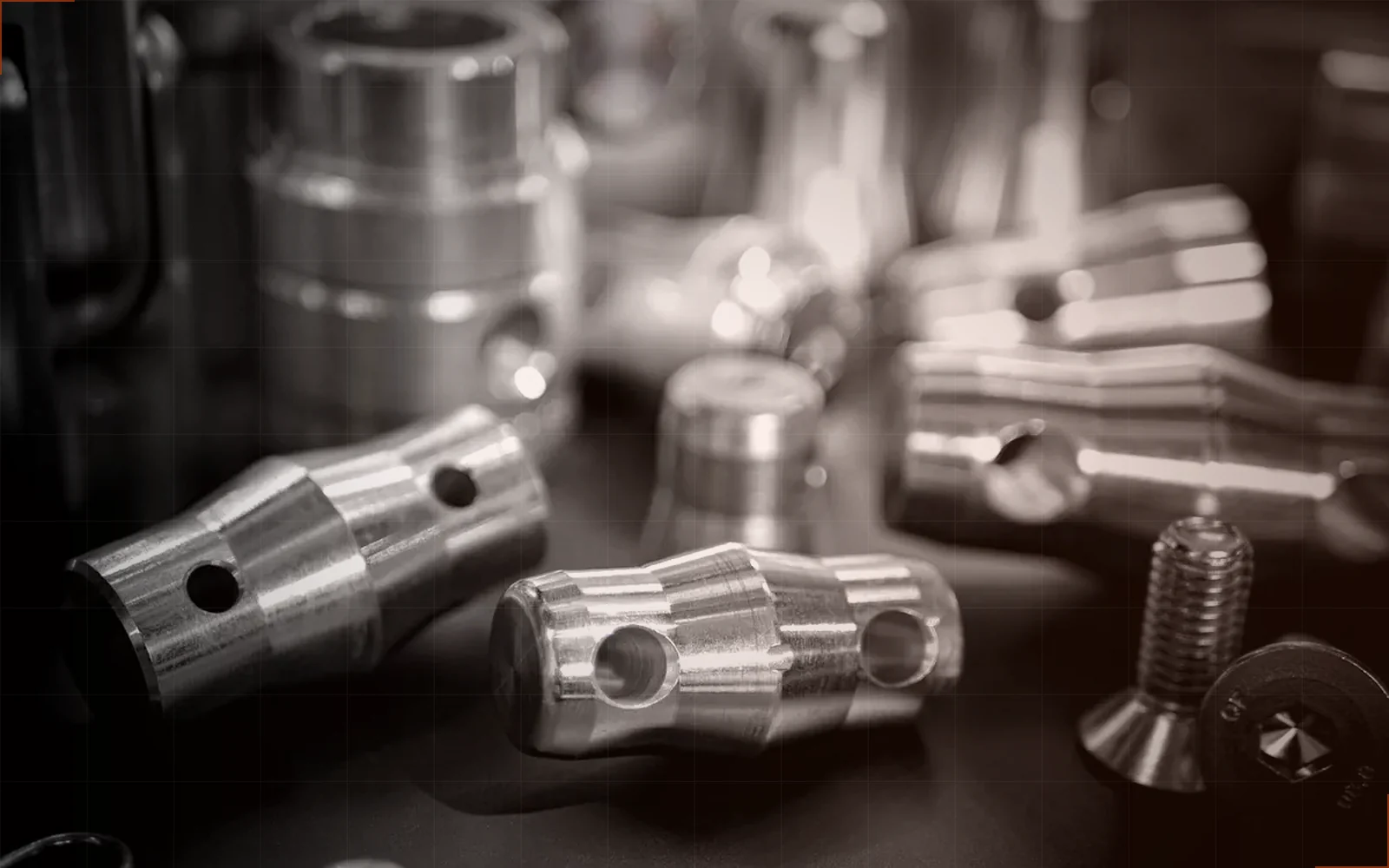
Anodizing Type II (Clear)
The standard aluminum finish: hard, clear oxide that keeps the metallic look.
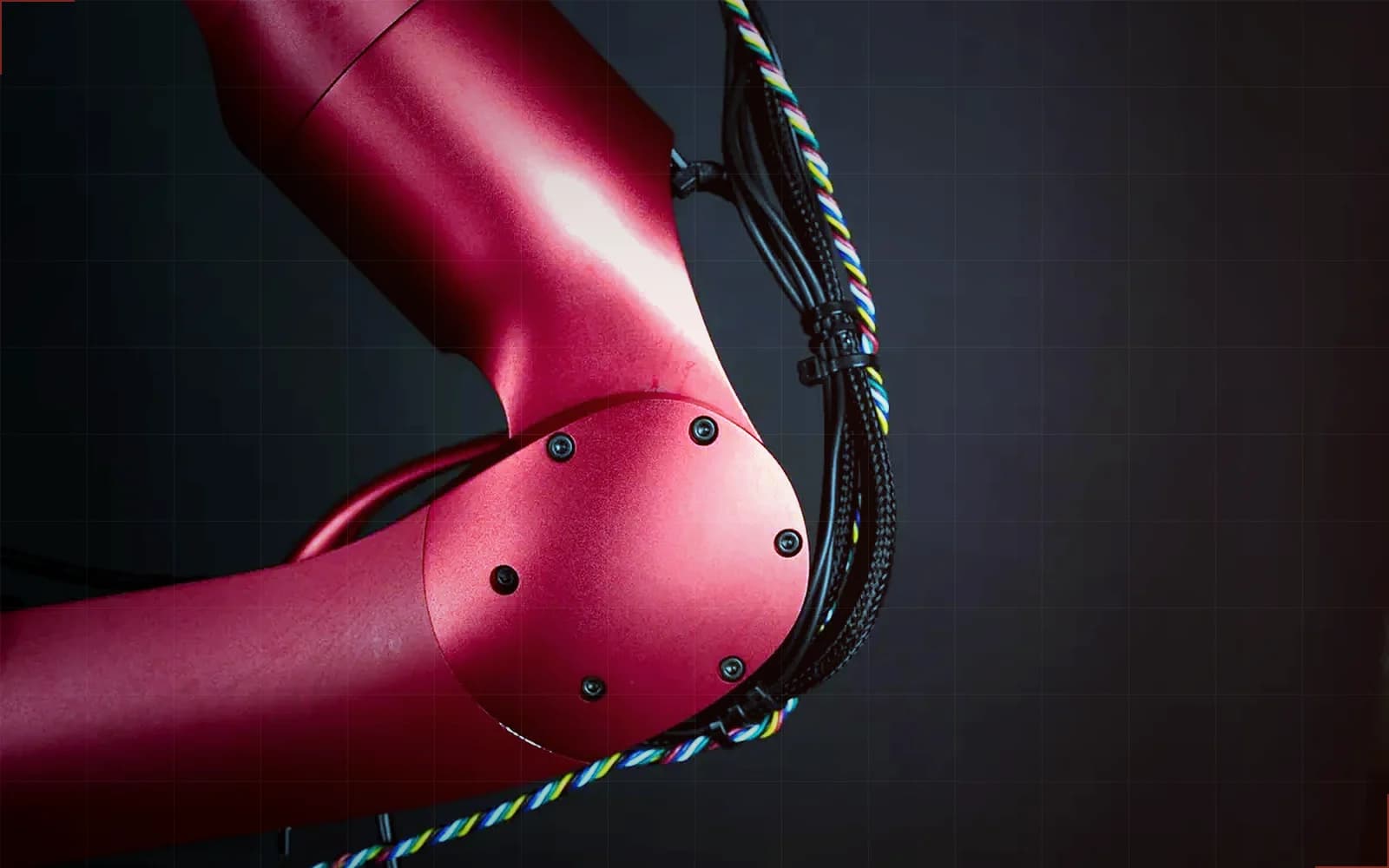
Anodizing Type II (Dyed)
Color that cannot peel: dye locked inside the part’s own oxide layer.
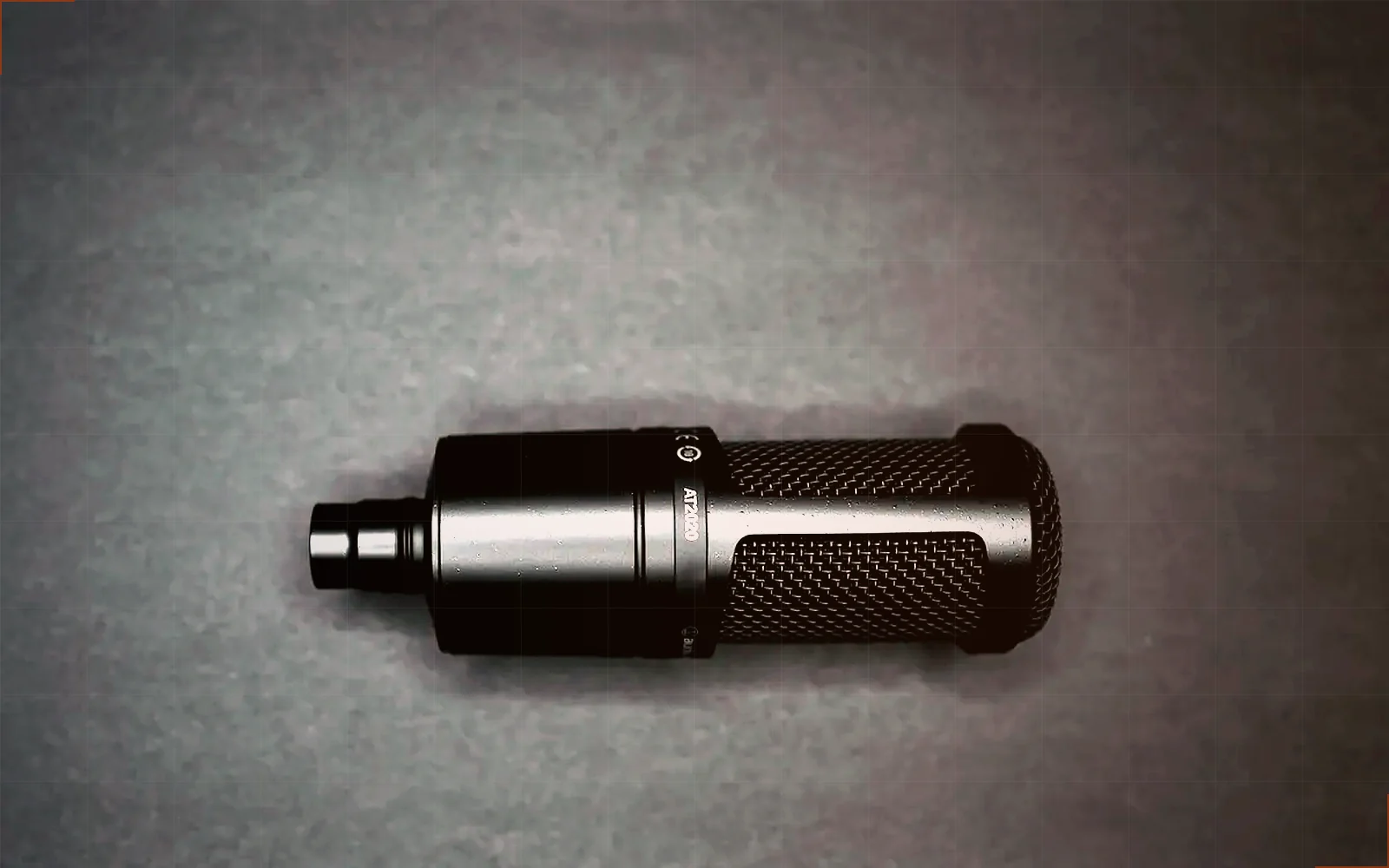
Hardcoat Anodizing Type III
Wear armor for aluminum: an oxide layer as hard as tool steel.
Chromate Conversion (Alodine / Chem Film)
Corrosion protection that stays conductive — the EMI-grounding finish for aluminum.
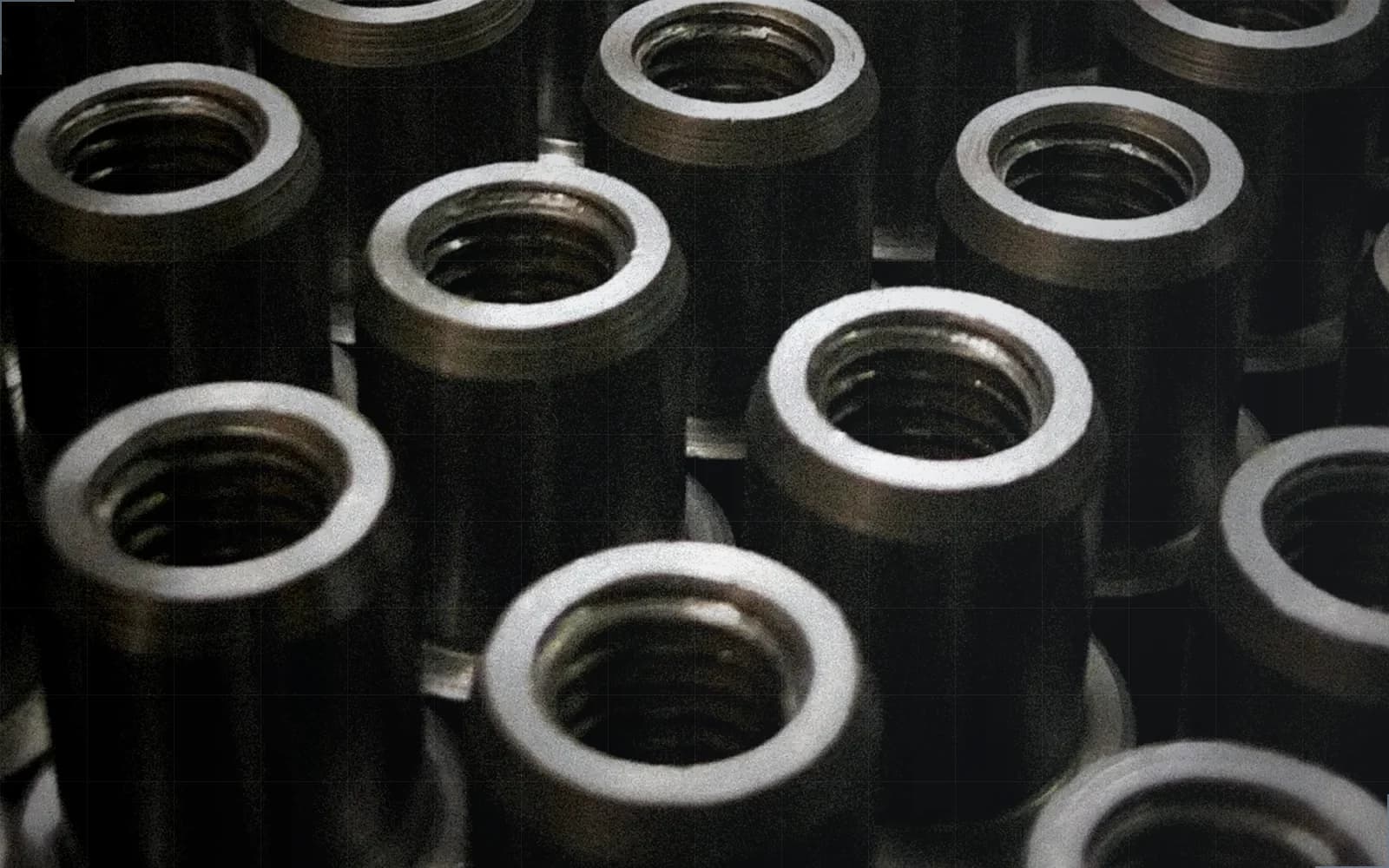
Electroless Nickel Plating (ENP)
Plating without electricity: dead-uniform thickness everywhere, bores and threads included.
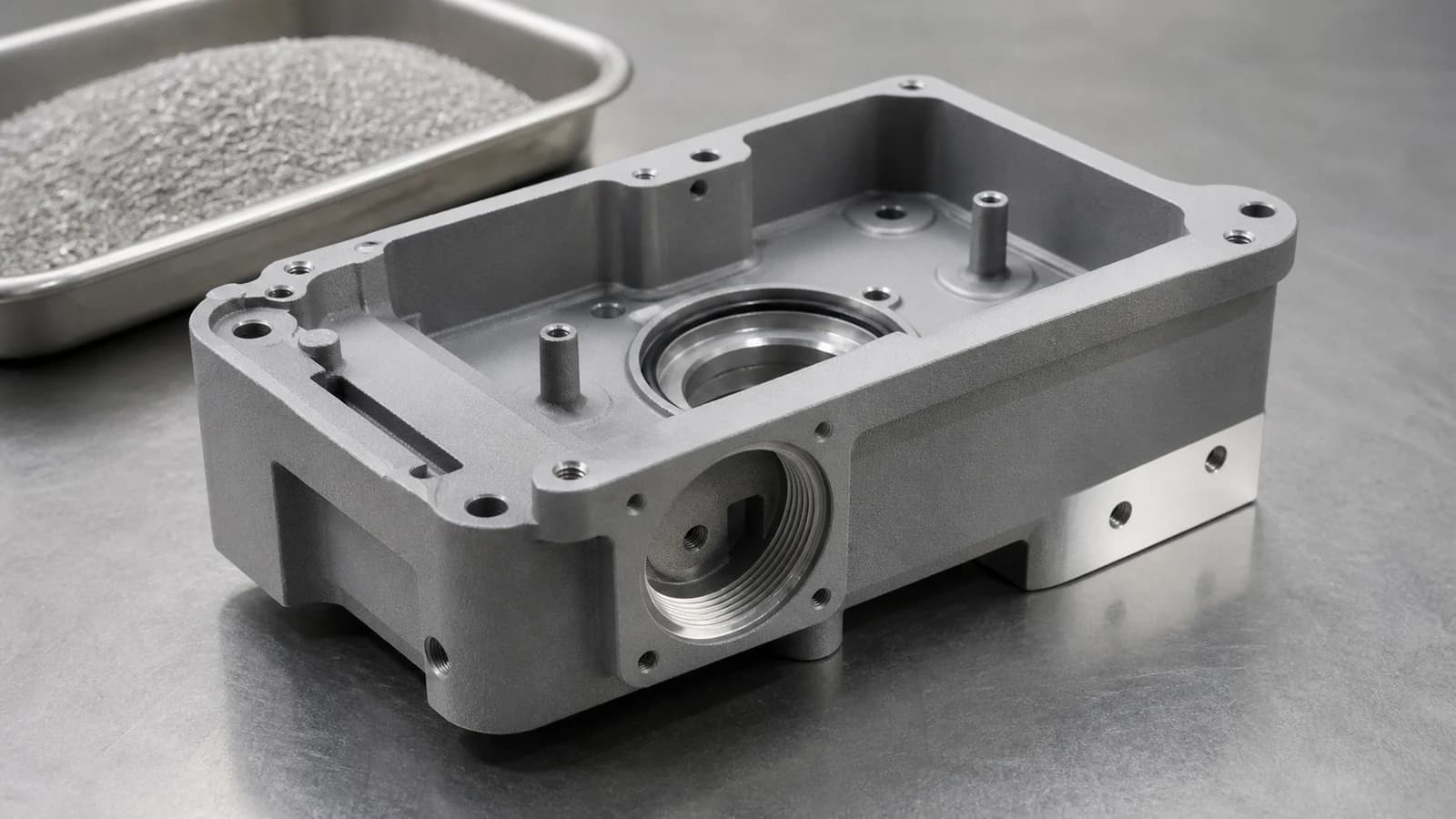
Bead Blasting
The uniform matte look: erases tool marks, hides fingerprints, preps perfect anodizing.
Brushed Finish
The appliance-grade look: directional satin grain on panels, bezels and show faces.
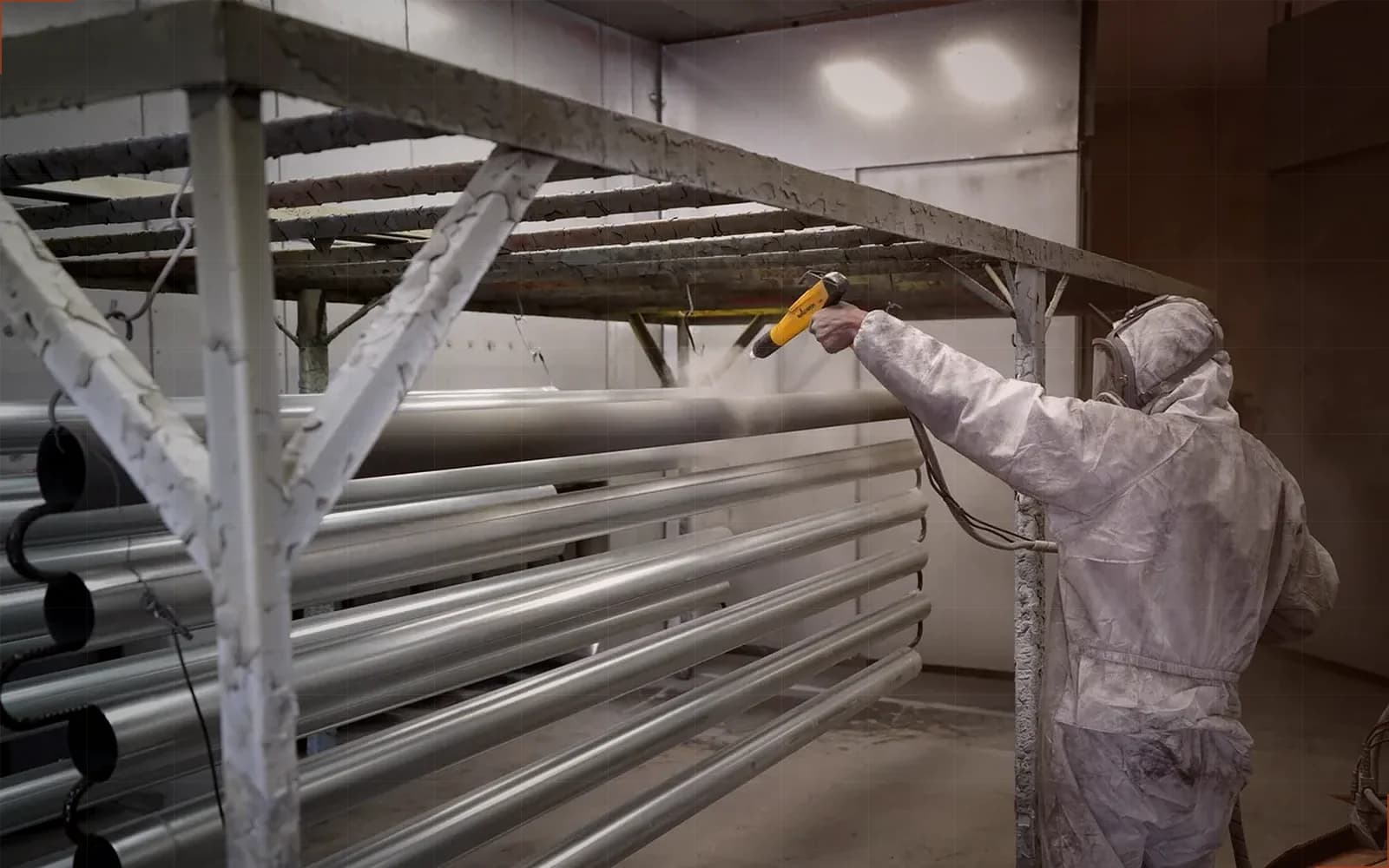
Powder Coating
Baked-on polymer armor: any RAL color, outdoor-proof, the toughest cosmetic coating.
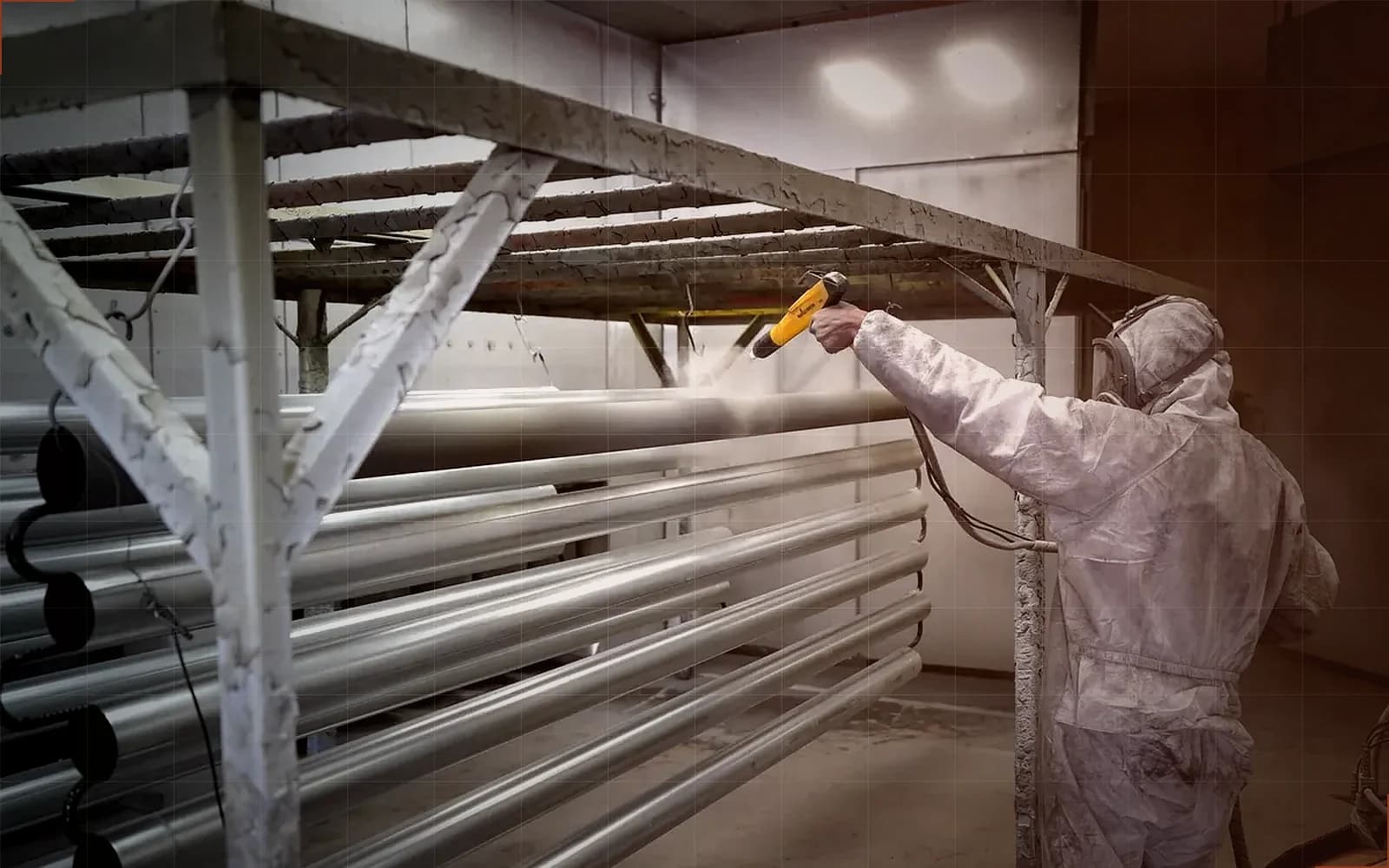
Wet Painting
Any color, any gloss, any substrate: the flexible coat for plastics and appearance prototypes.

Vibratory Tumbling
Batch deburring by the bowl-full: every edge broken, every burr gone, at volume prices.
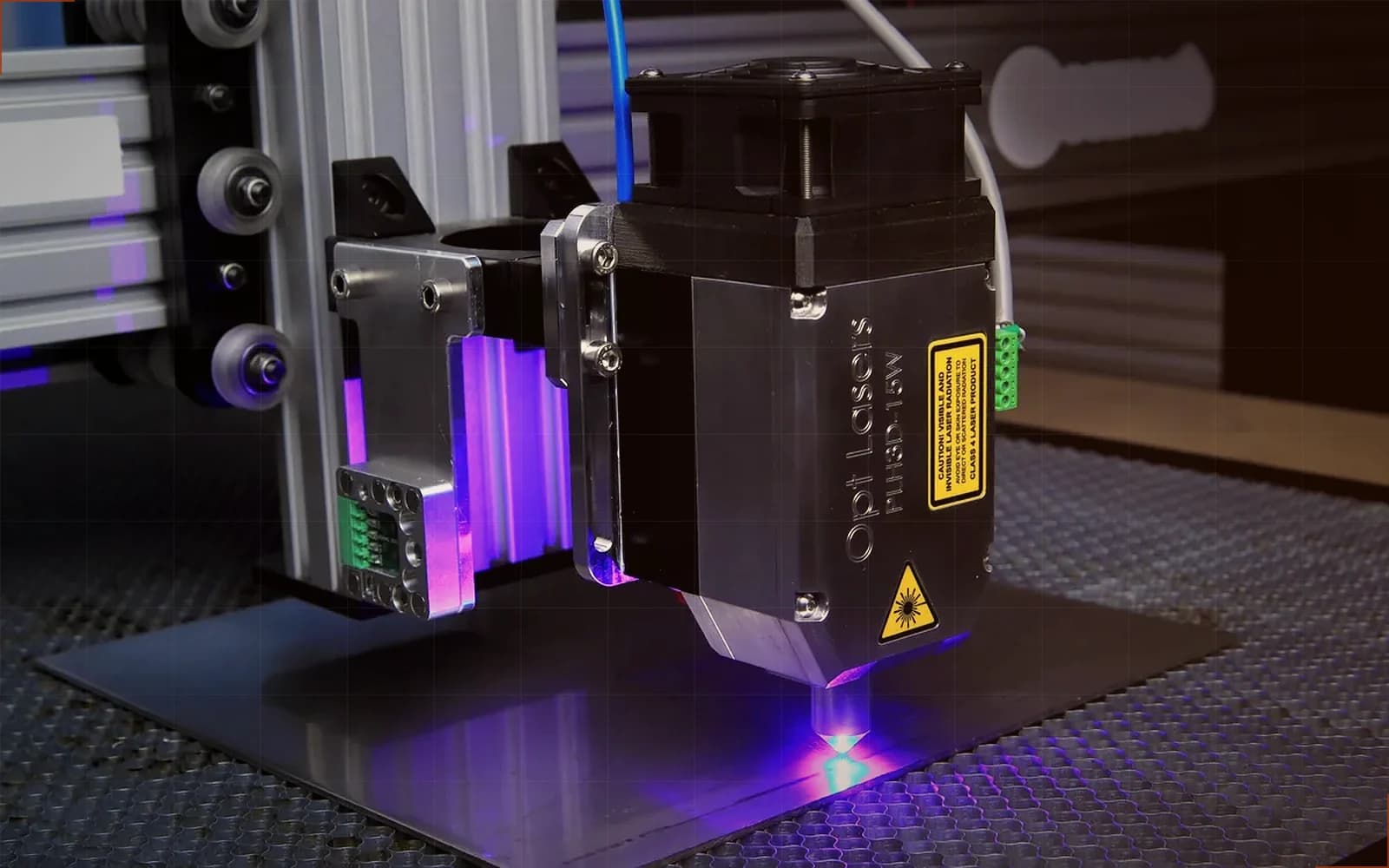
Laser Marking
Permanent identification with zero dimensional change: serials, logos and codes burned in, not stuck on.
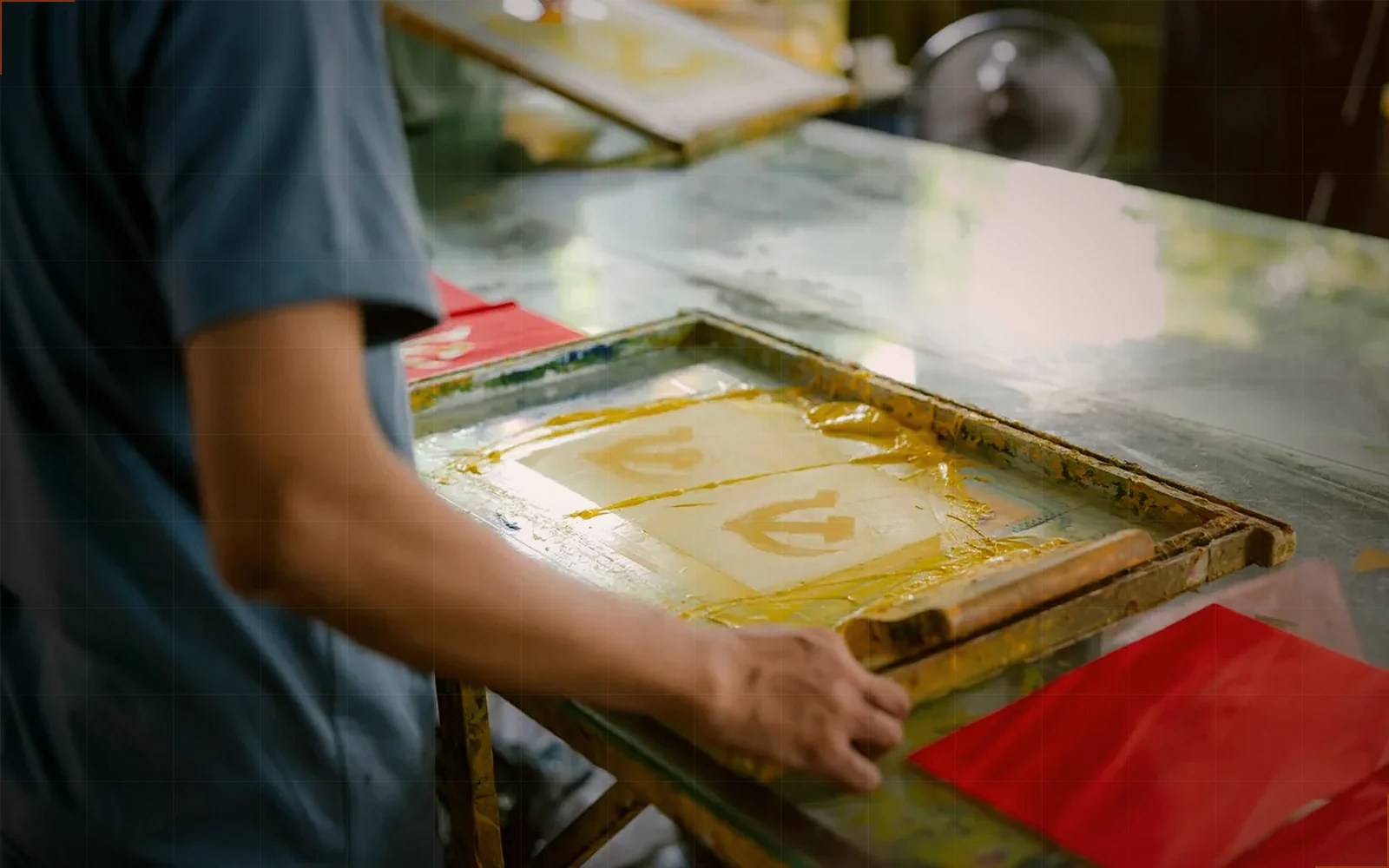
Silk Screening
The multi-color marking: inked legends and logos where laser’s single tone is not enough.
Typical applications
- Highly loaded robot joints and frames
- Drone racing frames and gimbal cores
- Aircraft fittings and brackets
- High-performance vehicle components
Compared with similar grades
| Property | Aluminum 7075-T6 | Aluminum 6061-T6 | Aluminum 6063-T5 | Aluminum 2024-T351 |
|---|---|---|---|---|
| Tensile strength | 572 MPa | 310 MPa | 186 MPa | 470 MPa |
| Yield strength | 503 MPa | 276 MPa | 145 MPa | 325 MPa |
| Hardness | 150 HB | 95 HB | 60 HB | 120 HB |
| Density | 2.81 g/cm³ | 2.70 g/cm³ | 2.69 g/cm³ | 2.78 g/cm³ |
| Price index | $$ | $ | $ | $$ |
| Machinability | 3/5 | 5/5 | 4/5 | 3/5 |
Aluminum 7075-T6 buyer questions
017075-T6 or 6061-T6 for a machined part — how do I decide?
Decide on what limits the part. If it is strength- or fatigue-limited, 7075-T6 wins clearly: roughly 500 MPa yield against about 275 MPa for 6061-T6, which is what lets you thin a wall or shrink a section. If it is stiffness-limited, 7075 buys nothing — both alloys have essentially the same elastic modulus (about 70 GPa), so a bracket that deflects too much in 6061 will deflect the same in 7075 at higher cost. If the assembly will be welded, use 6061. Put the temper on the drawing in both cases; "7075" alone is not a specification.
02Can 7075 be welded?
Not by conventional fusion welding. 7075 is prone to hot cracking, and the heat-affected zone loses the T6 properties the alloy was chosen for. Design the joint mechanically instead — fasteners, press fits, threaded inserts, dowels — or move the welded members to 6061 and keep 7075 for the machined, loaded parts. Friction stir welding of 7075 exists, but it is a specialist process, not a machine-shop operation.
03Does 7075 anodize as well as 6061?
It anodizes, but not identically. Type II and Type III hardcoat both work on 7075; the zinc and copper in the alloy make the anodic layer duller and a little darker than on 6061, and colour anodizing comes out less vivid and can vary between heats. Treat anodizing on 7075 as a functional finish — corrosion and wear protection — and put cosmetic colour on 6061 parts where you can. Specify masking for threads and datum faces, and state which dimensions apply after coating. Unlike 6061, bare 7075 should not be left exposed: anodize or chromate any surface that will see moisture.
04T6, T651 or T73 — which temper should the drawing call out?
T651 is T6 plate that has been stress-relieved by stretching. Specify it for anything thin-walled or asymmetric machined from plate: removing material from ordinary T6 stock releases residual stress and the part moves. T73 (T7351 for plate) is over-aged to resist stress-corrosion cracking at a cost of roughly 10–15% strength; call it where the part carries sustained tensile stress in a humid or marine environment, especially across the short-transverse grain direction. Plain T6 is fine for compact, symmetric parts in benign service. Whatever you choose, write it on the drawing next to the alloy.
05What is the real limit when machining thin walls in 7075?
Distortion, not cutting. 7075 machines cleanly and holds dimension well; the difficulty with thin walls is residual stress in the stock releasing as material comes off, plus cutting pressure flexing the wall. The practical answers are stress-relieved T651 stock, symmetric roughing from both sides, a finishing pass with light engagement, and — for the thinnest sections — a stress-relief step between roughing and finishing. On the drawing, identify which wall thicknesses and flatness callouts are functional so inspection is planned in the intended restraint condition rather than free-state everywhere.
067075 vs 6061 machinability — which one is actually harder to machine?
Harder to cut, easier to finish. 7075-T6 runs around 150 HB against roughly 95 HB for 6061-T6, so it takes more spindle power and wears tooling faster — that is the sense in which it is the harder material, and the reason it rates lower for machinability and costs more per part. But it is far less gummy: 6061 tends to build up on the cutting edge and produce stringy chips, while 7075 breaks chips cleanly and holds a finer surface finish, which is why a finishing pass is often more predictable in 7075. The real machining risk on 7075 is neither hardness nor chips — it is distortion as residual stress leaves the plate, and the answers to that are stress-relieved T651 stock, symmetric roughing from both sides and a light finishing pass. Choose the alloy on the load case first; machinability changes the price, not the engineering.
Related engineering guides
CNC machining for robotics parts
CNC Machining for Robotics Parts: Lightweight, Repeatable and Assembly-Ready
A robotics CNC machining guide for joint housings, actuator brackets, gearbox plates, end effectors and structural parts.
aluminum 7075 CNC machining
Aluminum 7075 CNC Machining: Strength, Anodizing and Design Rules
A sourcing guide for CNC machined aluminum 7075 parts: robotics, aerospace, drones, fixtures, tolerances and finish considerations.
6061 vs 7075 CNC machining
Aluminum 6061 vs 7075 for CNC Machining: Which Alloy Should You Quote?
A practical comparison of 6061 and 7075 aluminum for CNC machined prototypes, robotics, aerospace brackets and production parts.
CNC machining for drones
CNC Machining for Drones and UAVs: Lightweight Structures and Flight-Test Parts
How to source CNC machined drone and UAV parts: carbon fiber plates, aluminum frames, motor mounts, brackets and vibration-critical hardware.
CNC machining service by country
Have a part in mind?
Upload CAD or drawings. Eligible CNC work gets an instant estimate; other processes move to engineer review. NDA-protected from the first byte.
Start an RFQ