FabVector

Case studies

CNC machining application cases

Engineering playbooks by application — the manufacturing route, materials and documentation we evaluate before a firm quote. These are engineering guides, not customer stories.

The manufacturing route

Which operations the part moves through, in what order — and where the route typically goes wrong for this application.

The controls that matter

The critical characteristics, how they are measured, and what documentation travels with the batch.

What to put in the RFQ

The inputs that turn an estimate into a firm quote — before any back-and-forth starts.
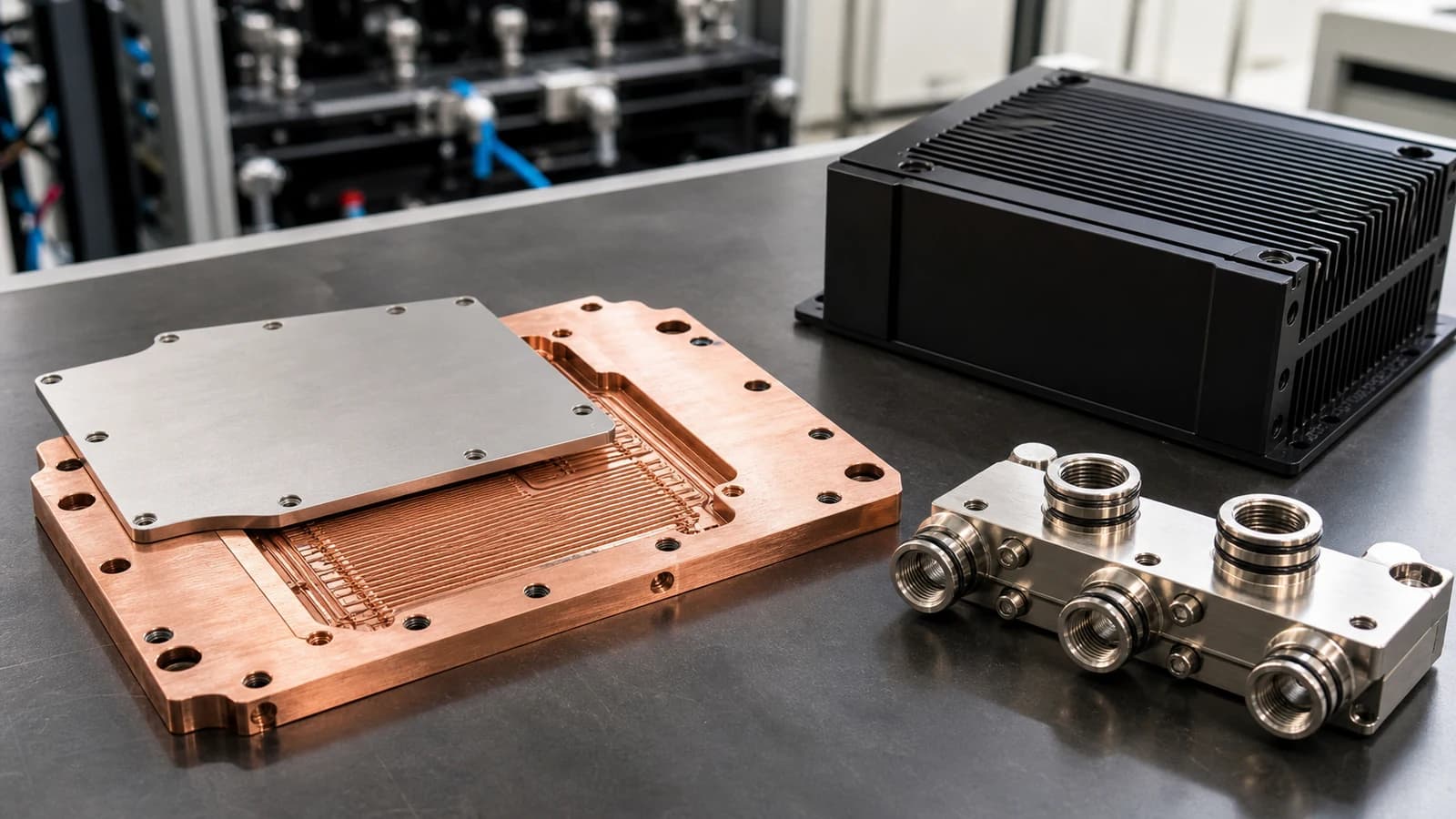
AI server cold plate application reference

AI server cold plate CNC machining

AI Server Cold Plate CNC Machining RFQ Playbook

A practical RFQ playbook for CNC machined AI server cold plates with copper, sealing faces, O-ring grooves and pressure-test planning.
Route
Rough machine copper blank, finish datum and thermal faces, then machine channels and sealing grooves. → Review whether cover bonding, brazing or mechanical sealing is part of the supplier scope. → Inspect flatness, groove dimensions, port position and post-finish coating thickness.
Materials
C110 copper for thermal performance., Electroless nickel plating when coolant compatibility or oxidation control is required., 6061 aluminum may be appropriate for cover plates or manifolds.
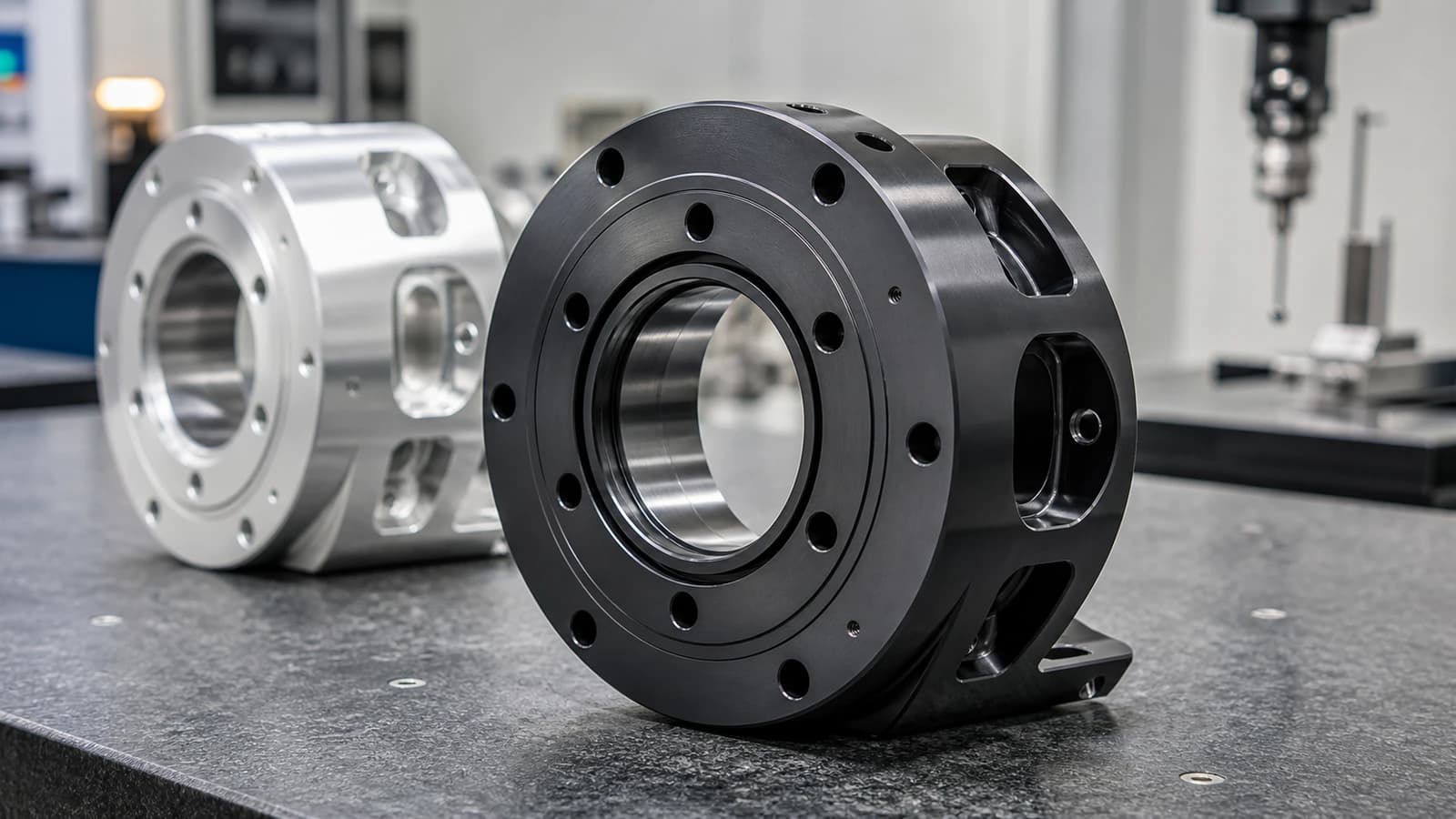
Robot joint housing CNC machining reference

robot joint housing CNC machining

7075 Aluminum Robot Joint Housing

A robot joint housing RFQ playbook covering 7075 aluminum, bearing bores, cable passages, anodizing and CMM inspection.
Route
Machine datum faces and bearing bores in controlled setups. → Use 5-axis or indexed operations for cable ports and angled mounting faces. → Apply anodizing with masking or allowance for bearing and dowel features.
Materials
7075-T6 for high stiffness and thread strength., 6061-T6 if cost and anodizing cosmetics are more important than maximum strength., Hardcoat anodizing for sliding or wear-prone surfaces.
Semiconductor fixture CNC machining reference

semiconductor vacuum fixture CNC machining

Semiconductor Vacuum Fixture CNC Machining

A semiconductor vacuum fixture RFQ playbook for aluminum tooling plates, vacuum grooves, flatness, cleaning and inspection documents.
Route
Machine datum plane, vacuum grooves and hole patterns with flatness checks. → Add PEEK inserts or isolation features where electrical or thermal separation is needed. → Clean, deburr and package according to the contamination risk.
Materials
Stable aluminum tooling plate for flat fixtures., PEEK for insulating or chemical-resistant contact features., Electroless nickel plating when wear and corrosion control are required.
Medical PEEK CNC machining application reference

PEEK surgical guide CNC machining

PEEK Surgical Guide and Medical Fixture Machining

A medical PEEK machining RFQ playbook covering grade selection, sterilization exposure, edge quality, certificates and inspection.
Route
Machine with sharp tools and low-stress clamping. → Finish critical slots and holes after roughing to improve stability. → Deburr edges and document dimensions that interact with instruments or anatomy models.
Materials
PEEK for high-performance polymer medical hardware., PEI/Ultem for heat-resistant fixtures where PEEK is not necessary., Titanium Grade 5 when metallic strength and biocompatibility are required.
Drone carbon fiber and aluminum CNC machining reference

drone carbon fiber aluminum CNC machining

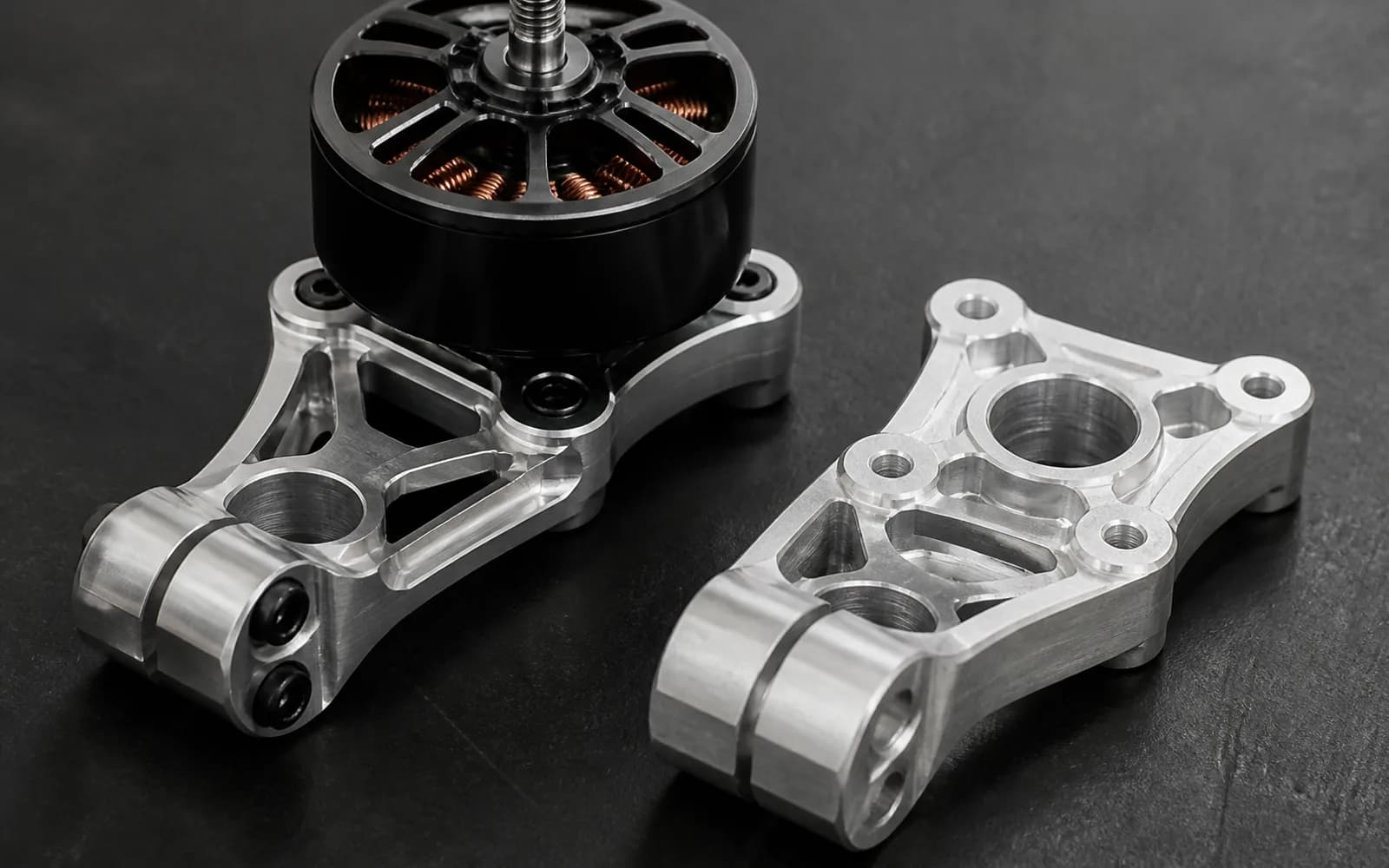
Drone Carbon Fiber Plate and Aluminum Motor Mount Assembly

A drone/UAV machining RFQ playbook covering carbon fiber routing, 7075 motor mounts, vibration, edge sealing and fast prototype cycles.
Route
Route carbon fiber plates with proper dust control and edge finish. → Machine motor mounts from 7075 or 6061 depending on load. → Check hole patterns, standoff interfaces and fastener edge distance.
Materials
Carbon fiber sheet for stiffness-to-weight plates., 7075-T6 aluminum for compact high-load mounts., 6061-T6 aluminum for lower-cost development brackets.
Optics and photonics CNC machining application reference

Invar optical alignment stage CNC machining

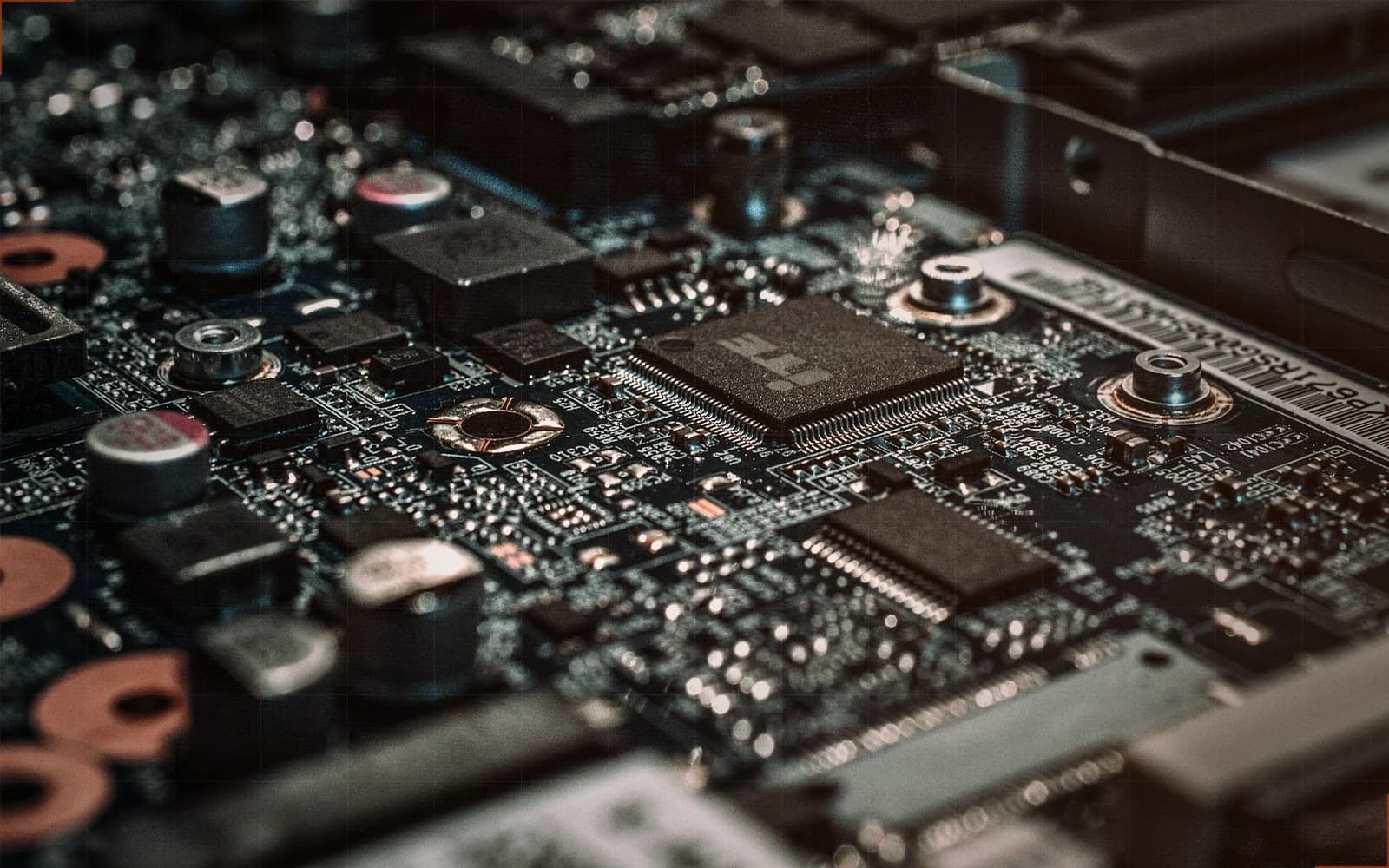
Invar Optical Alignment Stage CNC Machining

An optics and photonics RFQ playbook for Invar 36 alignment stages, low thermal expansion, datum control and inspection planning.
Route
Machine datum surfaces and slot patterns with stress and flatness review. → Use controlled finishing for alignment faces and fastener seats. → Inspect geometry against optical datum assumptions rather than only external shape.
Materials
Invar 36 for very low thermal expansion., Aluminum 6061 when weight and cost are more important than thermal stability., Stainless or titanium when stiffness, corrosion or vacuum compatibility dominate.
Copper busbar CNC machining application reference

copper C110 busbar CNC machining

Copper C110 EV Busbar and Power Electronics Terminal

A copper busbar CNC machining RFQ playbook covering conductivity, burr control, plating, hole quality and inspection.

Route
Machine holes, slots and contact faces with controlled deburring. → Review bend, plating or assembly operations if they happen after machining. → Inspect contact surfaces and mounting holes after finish when plating is applied.
Materials
C110 copper for conductivity., Tin plating for solderability or contact behavior when required., Nickel barrier layers when corrosion or diffusion concerns exist.
Aerospace titanium bracket CNC machining reference

aerospace titanium bracket CNC machining

Aerospace Titanium Bracket CNC Machining

An aerospace titanium bracket RFQ playbook for Grade 5 titanium, 5-axis access, weight reduction, traceability and inspection.

Route
Use 5-axis indexed machining to reduce setup count and preserve positional accuracy. → Rough, stress review and finish critical holes or pads in controlled sequence. → Inspect datums, hole positions and thickness after final finishing.
Materials
Titanium Grade 5 for high strength-to-weight., 7075 aluminum may be reviewed if weight matters but titanium strength is not required., Passivation or controlled cleaning depending on customer specification.

From playbook to production programme

A case describes how the part should be made; a programme proves it piece by piece. The path is the same across every application above: a qualification batch from 10 pieces, FAI in AS9102 format, then series production under SPC with Cpk ≥ 1.33 on critical characteristics — from 50 to 1,000,000+ parts a year.

Already have drawings and an incumbent supplier? Start with the production transfer route. New part? Upload CAD on the instant quote.

Several of these parts arrived as transfers from another supplier. How a transfer is scoped and qualified.

NDA protected · files encrypted