Application Case: 7075 Aluminum Robot Joint Housing
A robot joint housing RFQ playbook covering 7075 aluminum, bearing bores, cable passages, anodizing and CMM inspection.
2026-07-01 · FabVector Engineering
Application context
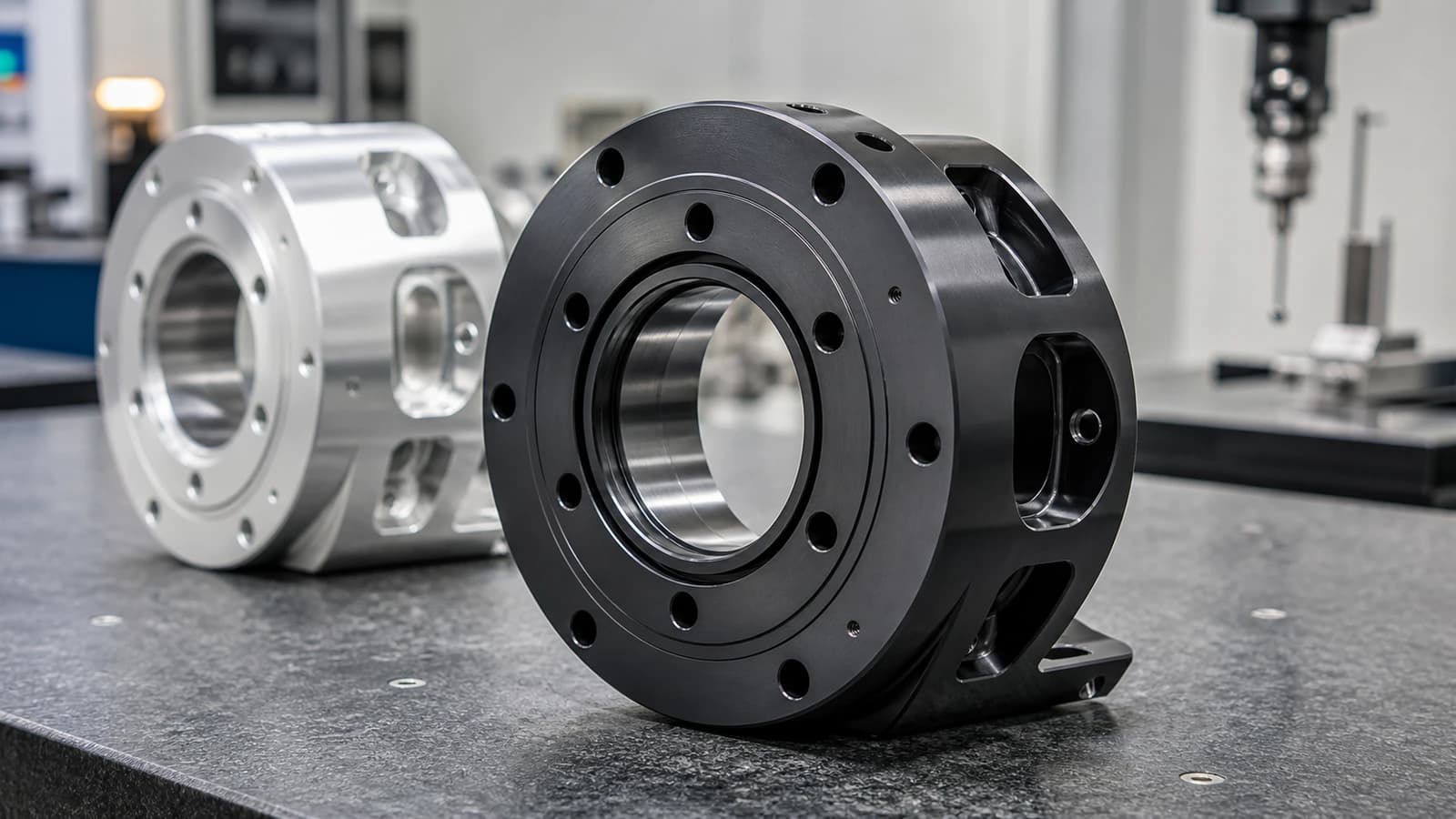
A compact robot joint housing usually combines bearing seats, motor interfaces, cable routing and cosmetic external surfaces. The hard part is preserving alignment after aggressive weight reduction.
This is an application case playbook, not a fabricated customer success story. It describes the engineering information a buyer should prepare and the manufacturing route FabVector would evaluate before issuing a firm quote.
Suggested manufacturing route
- Machine datum faces and bearing bores in controlled setups.
- Use 5-axis or indexed operations for cable ports and angled mounting faces.
- Apply anodizing with masking or allowance for bearing and dowel features.
Material and finish decisions
- 7075-T6 for high stiffness and thread strength.
- 6061-T6 if cost and anodizing cosmetics are more important than maximum strength.
- Hardcoat anodizing for sliding or wear-prone surfaces.
Quality and risk controls
- Bearing bores need explicit diameter, roundness and coaxiality callouts.
- Thin-wall pockets should be reviewed for chatter and post-machining movement.
- Anodizing growth must not close precision fits.
What to include in the RFQ
- Bearing model, motor interface drawing and assembly datum scheme.
- Target weight, wall limits and finish requirement.
- CMM or inspection report requirement for bores and datums.
Related FabVector resources
Use the RFQ workflow when the project needs price, lead time, inspection scope, material certificates or a production-ready handoff package.
Buyer questions
Questions about this manufacturing route
What matters most when sourcing robot joint housing CNC machining?
The critical inputs are CAD revision, material grade, tolerance stack, surface finish, quantity, inspection scope and delivery target. Missing any one of these usually creates quote revisions later.
Can FabVector quote from a STEP or STL file?
Yes. STEP and STL can start the structured RFQ. Drawings, GD&T, material certificates and inspection requirements should be attached when the part has regulated or tolerance-critical features.
What process route is usually reviewed first?
Machine datum faces and bearing bores in controlled setups.
What documentation can be requested?
For application cases, request dimensional inspection for critical features and add material certificates, CoC, FAI or CMM reporting when the assembly risk justifies it.
Related resources
RFQ next step
Turn this requirement into a quote package.
Upload CAD, select material, finish, tolerance, inspection and delivery context. FabVector keeps the quote inputs tied to the same engineering request.
Start structured RFQ